When an electromagnetic flowmeter transmitter suffers from water ingress, darkening, abnormal display or local blackening, it should not simply be attributed to insufficient enclosure waterproof rating. It is critical to examine moisture migration and condensation after vapour enters via cable entries and housing joints, as well as whether the display zone features continuous, low-stress transparent encapsulation protection. If there are no obvious damp traces, further inspection of the LCD, drive circuits and connecting structures is required. Not all display failures can be blamed on potting materials.
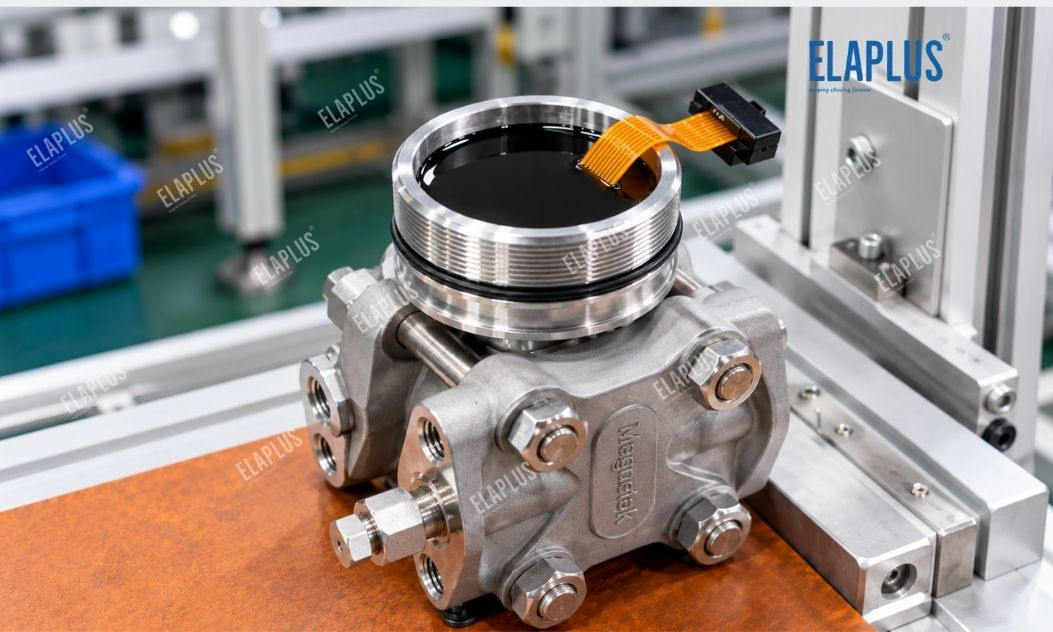
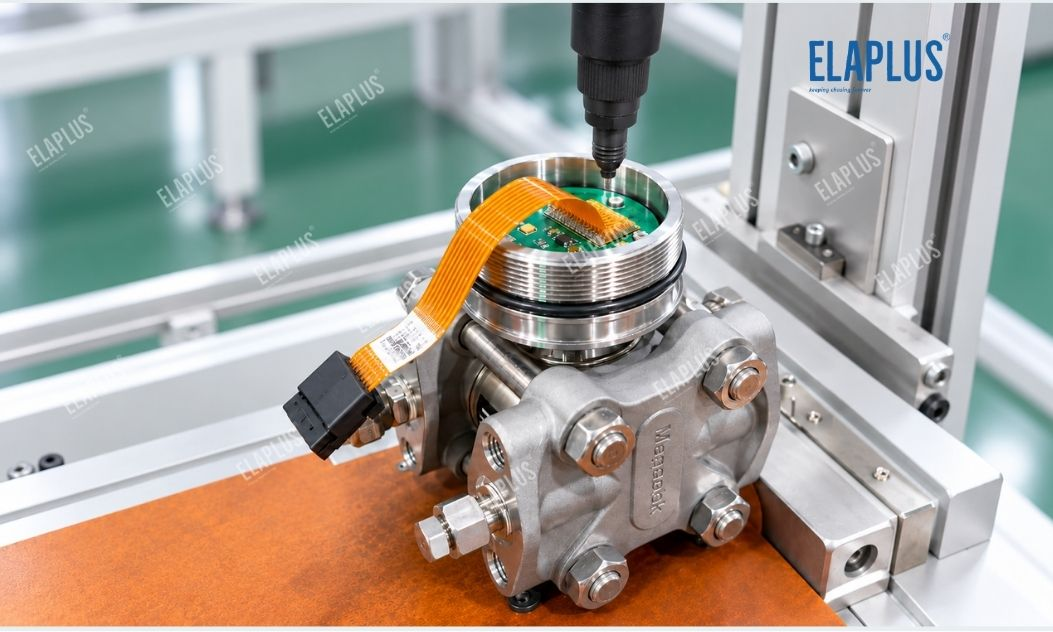
Electromagnetic flowmeters are commonly installed on industrial pipelines, water supply systems, sewage treatment facilities and outdoor metering sites. Although the transmitters are not in direct contact with pipeline media, they are constantly exposed to high humidity, day-night temperature swings, rainfall, washing and internal temperature fluctuations inside the housing. Many units pass short-duration rain spray tests but develop vapour fogging or display faults inside the display window after several months of operation. The root cause lies in the difference between short-term waterproof performance and long-term moisture resistance.
Why Can Moisture Still Build Up Inside Even If IP Testing Is Passed?
IP protection mainly evaluates resistance against liquid water and solid foreign objects under specified test conditions. Real outdoor service environments involve prolonged thermal cycling. The enclosure heats up under sunlight or internal circuit heat during daytime and cools rapidly at night, continuously altering the state of internal air. Tiny vapour passages at cable glands, cover seals, harness inlets or other gaps allow moist air to seep in slowly.
When the temperature of a local zone inside the transmitter drops to the dew point, vapour tends to condense preferentially on the display cover plate, PCB or metal structures. Therefore, the absence of visible leakage marks externally does not rule out long-term moisture migration internally.
Why Is the Display Zone a Priority for Protection?
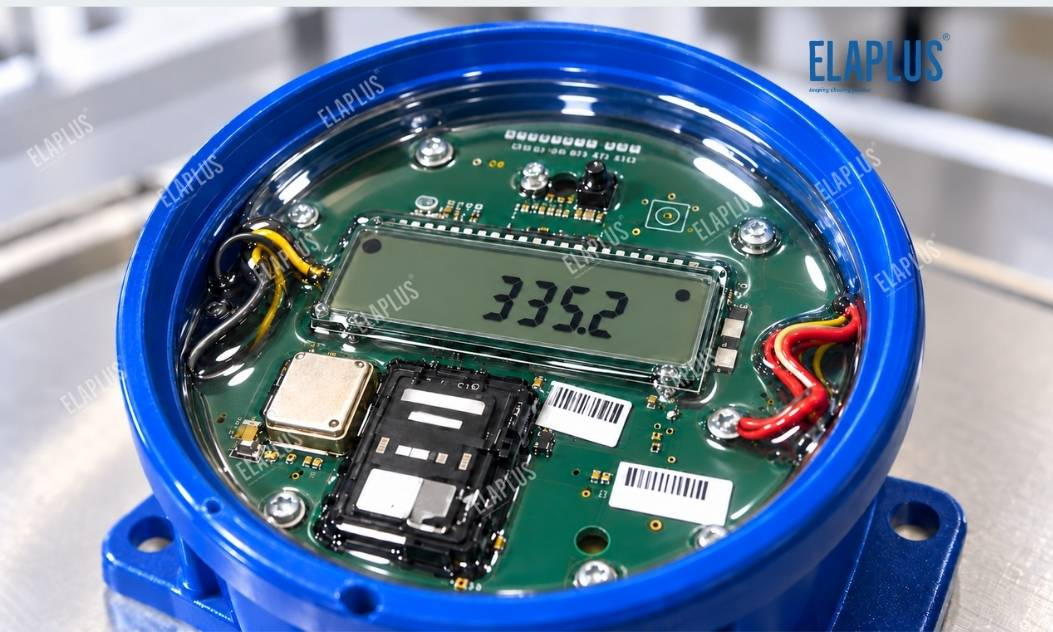
An electromagnetic flowmeter transmitter integrates display modules, PCBs, connectors and power/signal circuits. Moisture intrusion into the display area does not always trigger an immediate short circuit. Typical symptoms include fogging, corrosion, reduced insulation resistance, poor contact or unstable display performance.
Within ELAPLUS industrial sensor solutions, SIGEL 1876 and EP 1708-7# are both suitable for protecting the display sections of electromagnetic flowmeters, with the core goal of blocking vapour ingress and stabilising display performance.
SIGEL 1876 versus EP 1708-7#: How to Select
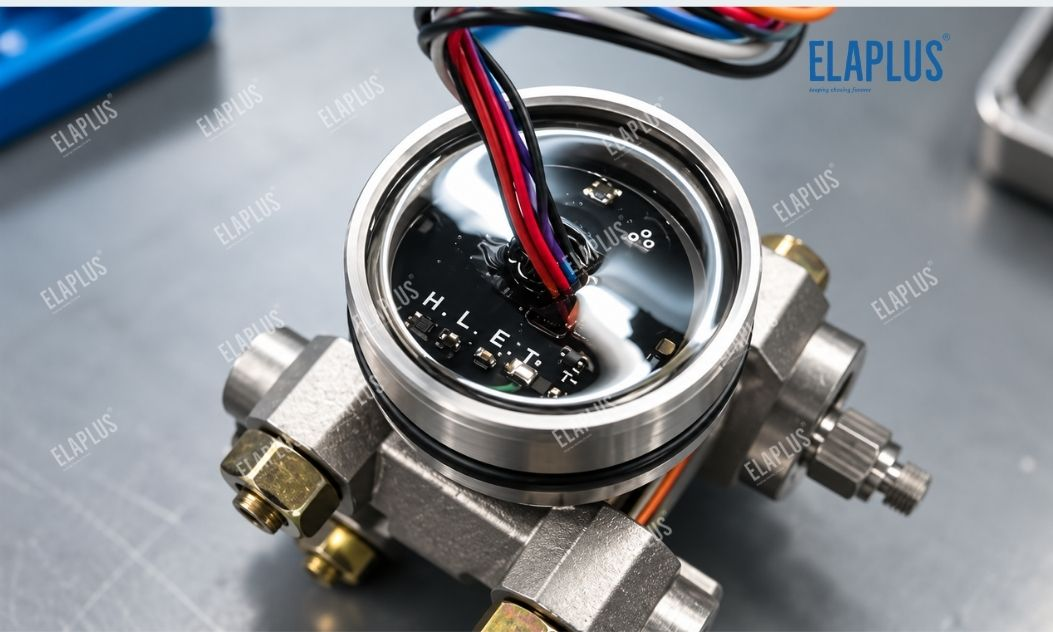
Both deliver transparent protection but follow different material design principles. SIGEL 1876 is a transparent two-component self-healing silicone gel that remains extremely soft after curing. It blocks moisture and contaminants and buffers thermal and mechanical stress via its low-stress properties. EP 1708-7# is a transparent two-component epoxy potting compound formulated to form a rigid, dimensionally stable transparent protective layer.
| Selection Criteria | SIGEL 1876 | EP 1708-7# |
|---|---|---|
| Material Form | Soft silicone gel | Transparent epoxy |
| Restraint on Sensitive Electronic Structures | Low | Relatively higher |
| Mechanical Protection | Flexible cushioning | Rigid protection |
| Display Visibility | Transparent | Transparent |
| Stress Response under Temperature Variation | Optimised for stress relief | Requires structural evaluation |
| Structural Fixation Capability | Not the primary advantage | Recommended for assessment |
| Ideal Scenarios | Low-stress requirement, moisture resistance, flexible protection | Transparent coverage, protection, higher mechanical strength |
Instead of asking simply “which one offers better waterproofing”, the practical question should be whether the display assembly is threatened by moisture, thermal stress or structural loosening.
Does Transparency Mean Compatibility with Any Display Window?
Transparency is only one surface property of the material. For display modules, additional factors must be considered, such as adhesive thickness, surface flatness, interfacial condition between material and cover plate, and unintended mechanical constraint imposed on the display area.
Transparent epoxy provides stable coverage when applied for environmental protection around display modules. Soft silicone gel is preferred if the adhesive is placed close to stress-sensitive electronic components. EP 1708-7# is engineered for transparent potting applications including display modules, photoelectric sensors and smart water meters, offering moisture resistance, contamination resistance and electrical insulation.
Why Does Fogging Always Appear at the Same Corner on Some Transmitters?
If multiple units develop vapour or fogging at the identical location, check whether that spot sits near cable entries, housing seams, cold metal components or structural dead zones. Repeated positional failures usually stem from structural defects rather than random material variation.
By contrast, if dampness occurs at random positions across different units, inspect dispensing volume, assembly cleanliness, seal condition and process consistency. ELAPLUS diagnostic material selection logic follows this rule: investigate structural design first for fixed-location anomalies, examine manufacturing processes for random faults, and consider material replacement only at the final stage.
Why Is More Potting Compound Not Always Better for Display Zone Encapsulation?
Insufficient potting material fails to form a continuous protective layer. Excessive filling, however, expands the coverage over components, increases rework difficulty and introduces extra mechanical constraint after curing. Especially near display modules, the function of the adhesive must be clearly defined: vapour barrier, PCB fixation or sensitive component protection.
The proper workflow is to define protection boundaries first, then determine potting height and material system, rather than filling the entire transmitter cavity indiscriminately.
Key Validation Items for Mass Production
During prototype development, apart from standard waterproof tests, thermal cycling or high-humidity exposure tests are recommended to monitor internal condensation, display stability, insulation performance and potting interfaces. For transparent materials, visual inspection can detect delamination, voids or abnormal interfacial defects in the display zone.
If the product operates under obvious day-night temperature fluctuations, a single ambient-temperature water spray test cannot fully replicate long-term field risks.
Common Industry Pitfalls
Four frequent pitfalls for transmitter protection are listed below: Treating IP qualification as a guarantee against condensation; Only inspecting cover plate seals while ignoring cable and harness entry points; Assuming all transparent adhesives suit display modules; Increasing potting volume immediately once display faults emerge without tracing the vapour ingress path.
For transmitter protection, locate the moisture entry route first, then decide whether the display area requires low-stress silicone gel or high-strength transparent epoxy, and finalise qualification with actual housings, display modules and real environmental conditions.
Application Guidance
SIGEL 1876 flexible gel is recommended for electromagnetic flowmeters exposed to persistent high humidity, drastic thermal cycling and fitted with stress-sensitive electronics in the display zone. EP 1708-7# transparent epoxy can be evaluated when the display area needs both transparent protection and enhanced mechanical anchoring.
If the root failure is bulk water penetration through defective seals or poorly designed glands, display potting adhesive cannot act as a backup remedy. The primary sealing structure should be rectified first.
FAQ
Q: Why may fogging occur inside even when the electromagnetic flowmeter meets its specified IP rating?
A: Short-term waterproof testing differs fundamentally from long-term moisture migration and condensation caused by thermal cycling. Evaluation must match real temperature and humidity operating conditions.
Q: Epoxy or silicone gel for transmitter display encapsulation?
A: Silicone gel is preferred where low-stress flexible protection is critical. Transparent epoxy is suitable when higher mechanical protection together with optical clarity is required.
Q: Can EP 1708-7# be used for display modules?
A: Yes. EP 1708-7# is a transparent two-component epoxy potting material, typically used for display modules, photoelectric sensors and smart water meters.
Q: Does blackening always result from water ingress?
A: Not necessarily. If accompanied by dampness, corrosion or condensation marks, trace the vapour path first. Without moisture evidence, examine the display device and drive circuits themselves.
Q: How to distinguish structural problems from process issues?
A: Repeated dampness at the same position points to structural issues; randomly distributed anomalies indicate inconsistent assembly, dispensing or sealing processes.
Previous post: Poor Relay Contact after Conformal Coating on Industrial Control Boards? Inspect Non-Coating Zones and Coating Residues at Contacts First
Next post: Slower Charging and Higher Temperature Rise after Wireless Charging Coil Potting? Check Coil Offset and Magnetic Sheet Clearance First before Changing Adhesives