Zero‑point shift, increased temperature drift or altered output curves after potting robot torque sensors and tactile sensors are not always caused by chip damage. Modulus, curing shrinkage, thermal expansion, potting thickness of encapsulant, as well as contact mode with sensitive areas, may generate extra mechanical loads.
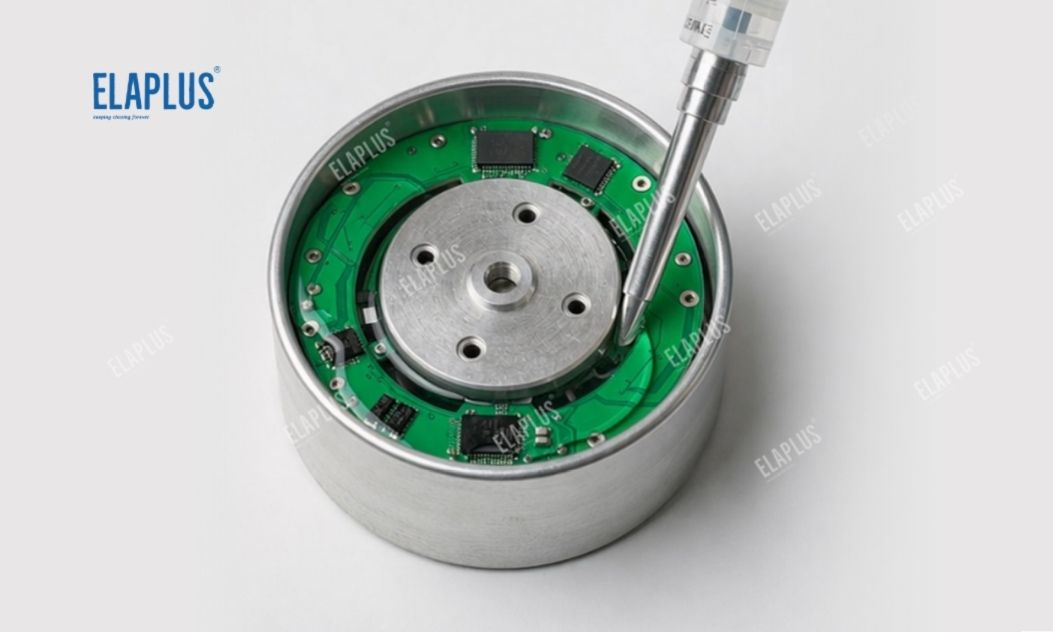
Torque Sensor Potting
For ordinary PCBs, the priority is robust protection.
For torque sensors, the requirement is protection with minimal interference to measurement.
How to Judge Different Zero‑point Drift Phenomena
| Phenomenon | Suspected Root Cause | Recommended Verification |
|---|---|---|
| Immediate zero‑point change right after potting | Curing shrinkage / mechanical constraint | Zero‑point reading before and after potting |
| Significant drift upon temperature rise | Thermal expansion stress | Temperature‑zero‑point curve |
| Incomplete recovery after cooling | Residual stress | Thermal cycle test |
| More obvious drift with thicker adhesive | Excessive structural coupling | Different potting thickness |
| Noticeable variation among batches | Process consistency | Adhesive dosage / curing condition |
| Drift after medium exposure | Material compatibility | Immersion test |
Why Low‑stress Property Outweighs High Strength
Torque sensors measure tiny mechanical variations. If the protective material forms a high‑modulus shell after curing, extra constraint will be imposed on the deformation of sensitive structures. Hence evaluation criteria differ greatly from adhesives for magnet steel bonding.
| Magnet Steel Structural Bonding | Torque Sensor Protection | |
|---|---|---|
| High shear strength | High priority | Normally not the primary factor |
| Low modulus | Secondary (design‑dependent) | High priority |
| Curing shrinkage | Concerned | Critical concern |
| Temperature drift impact | Indirect | Direct verification required |
| Moisture‑proof & insulation | Required | Required |
| Structural load‑bearing | Required | Interference shall be avoided |
FSGEL 3200
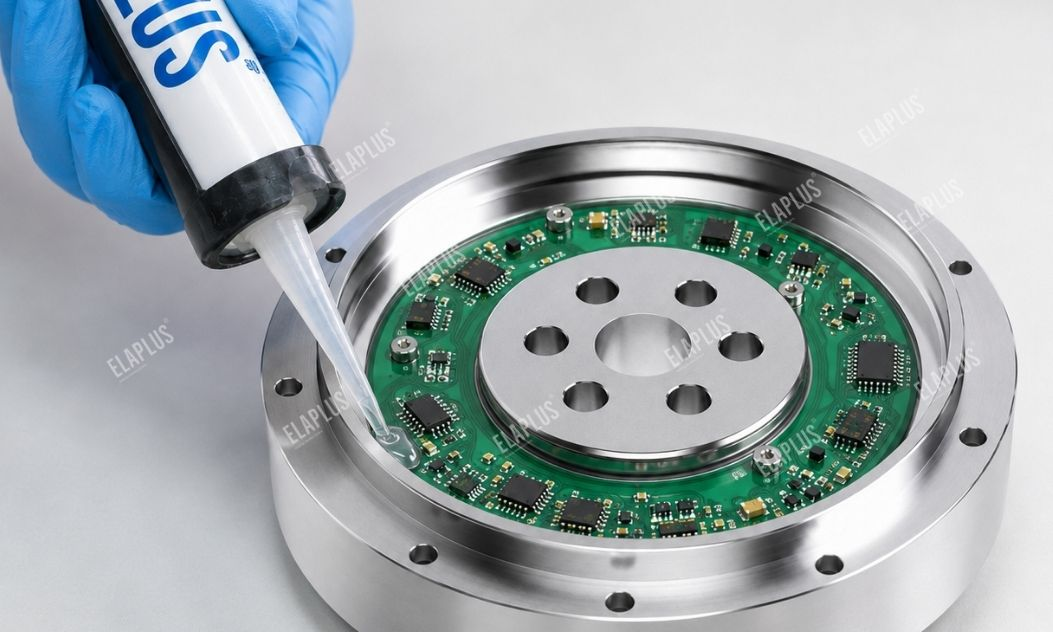
Torque Sensor Potting
FSGEL 3200 is a one‑component fluoro‑silicone gel for protection of sensors and power modules. It features medium‑resistance encapsulation, insulation and protection for sensitive components. In robot‑related applications, FSGEL 3200 serves low‑stress flexible cushioning and precision electronics protection for torque / tactile sensors.
Industry Pitfall
The most common mistake: only conducting waterproof test without sensor performance test. Passing IP waterproof rating merely proves sealing performance.
For torque sensors, the following items shall be tracked sequentially: Zero‑point before potting → Zero‑point after potting → Zero‑point after curing → Zero‑point after thermal cycling → Zero‑point after aging.
Scenario‑based Adaptation
| Scenario | Is Low‑stress Gel Recommended? |
|---|---|
| Torque sensor | Yes |
| Tactile sensor | Yes |
| MEMS sensitive component | Yes |
| Pressure‑sensitive element | Yes |
| Magnet steel structural fixation | No |
| Load‑bearing housing bonding | No |