Protective materials for robot torque and tactile sensors shall primarily deliver insulation, moisture resistance, environmental isolation and mechanical buffering for sensitive elements, while minimizing residual stress induced by material curing and temperature fluctuation. For MEMS, pressure‑sensitive and other delicate electronic components, FSGEL 3200 one‑component fluoro‑silicone gel is a recommended flexible protective option. This material is developed for flexible, media‑resistant encapsulation and protection of sensors and sensitive electronics.
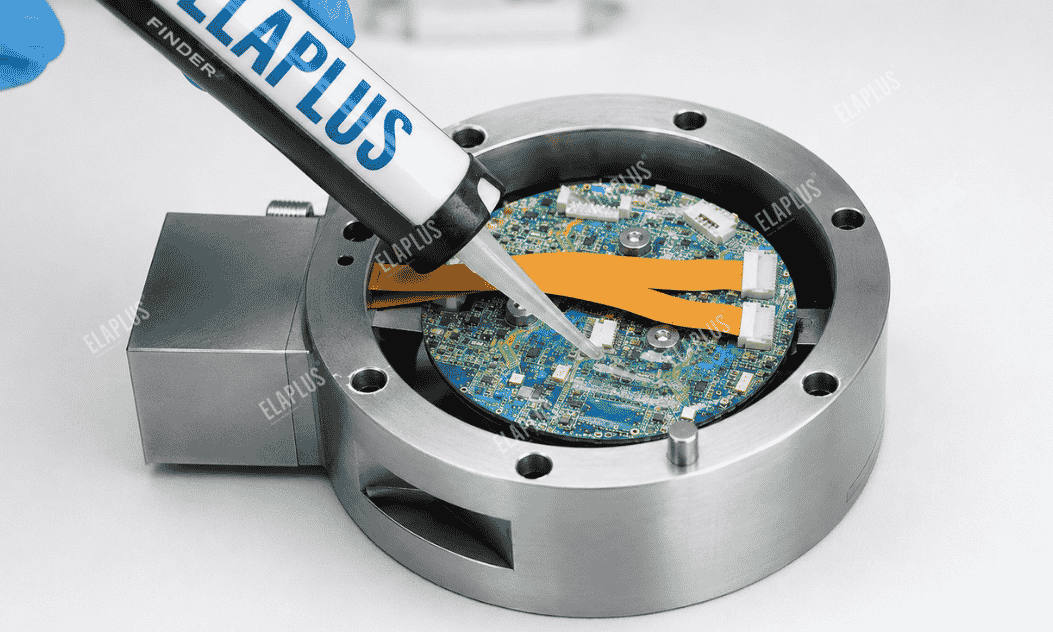
Potting for Robot Torque Sensors
Why Torque Sensors Are Vulnerable to Over‑Rigid Adhesives
The operating principle of torque sensors relies on detecting extremely subtle mechanical deformation.
When high‑modulus material is potted around sensitive structures, the following factors from the cured compound become interfering variables:
‑ curing shrinkage
‑ thermal expansion
‑ mechanical restraint
For such components, the protective material must not act as an unintended force source.
Core Functions of Silicone Gel
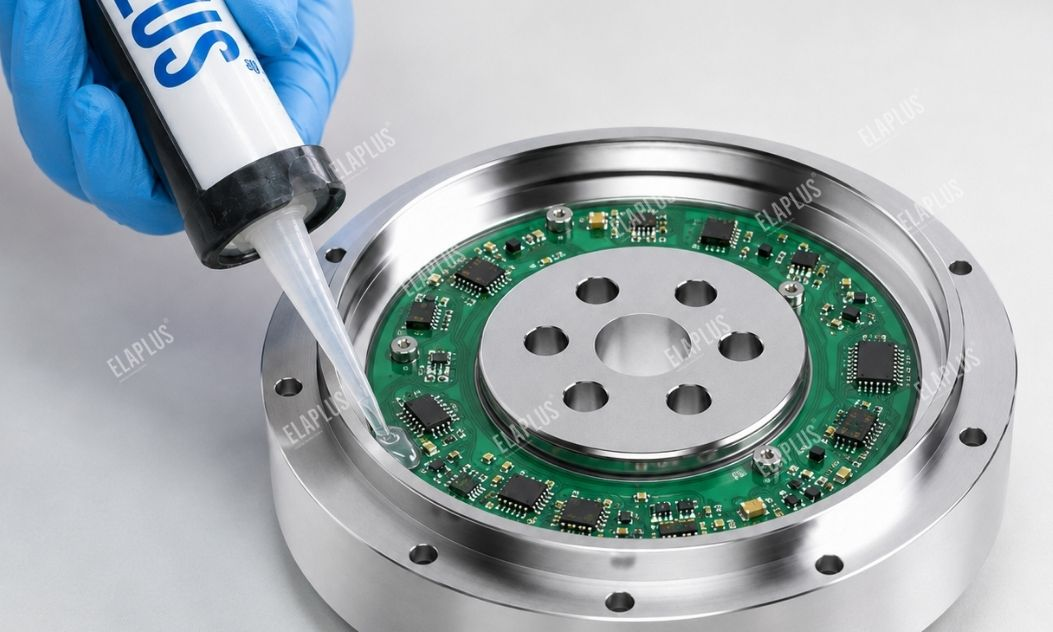
It is not designed for high‑strength structural bonding of joint assemblies. Its key role is to form a flexible electronic protective layer:
■ moisture isolation
■ shock buffering
■ protection for leads and chips
■ electrical insulation
■ reduction of mechanical constraint
FSGEL 3200 is a fluoro‑silicone gel, well‑suited for sensor encapsulation requiring chemical resistance and flexible protection.
Industry Pitfalls | Common Mistakes in Sensor Encapsulation
Only verifying waterproof performance without zero‑point drift validation.
Water‑tightness does not guarantee neutral measurement performance.
Assuming thicker gel delivers better protection.
Excessive gel thickness affects mass, thermal response and structural behaviour.
Selecting the softest compound from general PCB potting products.
Mechanical interference shall be treated as an independent evaluation criterion for sensors.
Application Scenarios for Low‑Stress Gel
Ideal for: torque sensors, tactile sensors, MEMS devices, pressure‑sensitive elements, precision chips and electronics requiring flexible insulation protection.
If high‑strength mechanical fastening is required for the assembly, separate material solutions shall be adopted for structural bonding and sensitive‑component protection respectively.
FAQ on Gel Potting for Torque Sensors
Can silicone gel replace structural adhesive?
No direct substitution, as they serve distinct functions.
Does softer potting gel always avoid interference with sensor accuracy? Not necessarily. Validation through actual zero‑point, sensitivity and temperature drift tests is required.
Why does media compatibility matter for gel materials? Material compatibility is critical when sensors operate long‑term in oily, humid or special chemical environments.
ELAPLUS
Original Manufacturer|Selection Support|Free Samples Available
info@elaplus.cc