When the sensitivity of a rain & light sensor declines after dispensing transparent adhesive, the first check should target the optical interface for bubbles, local voids, uneven adhesive thickness and surface contamination, rather than merely checking whether the adhesive is “transparent enough”. For optical sensors, the adhesive layer itself forms part of the light path; any discontinuous interface may alter light propagation.
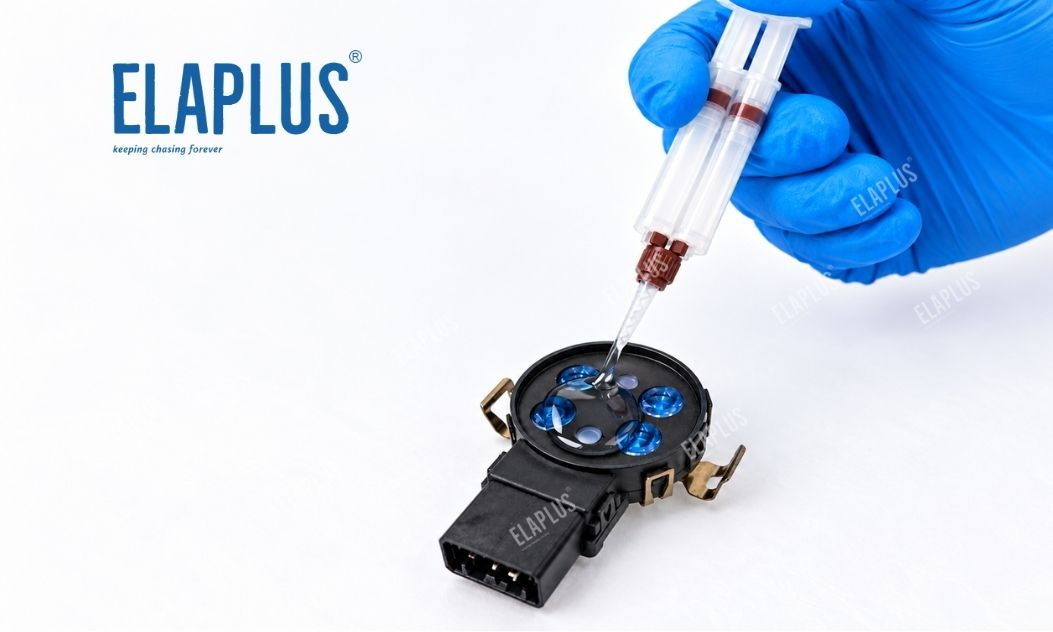
Rain & light sensors form a coupled optical interface with the windshield through their optical structure. One function of transparent gel/silicone is to eliminate irregular air gaps between the sensor and glass. Poor assembly alone can lead to abnormal sensor operation.
1. Why Does the Sensor Become Less Responsive Even With Transparent Adhesive?
First: Visual transparency does not guarantee an intact optical interface. A transparent adhesive layer may contain:
- Micro bubbles
- Edge cavities
- Local delamination
- Fine contamination
It may still look clear to the naked eye. But for light travelling inside the sensor, these areas create new refraction and reflection interfaces. Therefore, the main risk for rain & light sensors is not simply “non-transparent adhesive”, but unintended air layers and inconsistent interfaces within the light path.
2. How Can a Tiny Bubble Interfere With Detection?
Air and transparent adhesive have different optical properties. Under designed conditions, light is expected to travel continuously: Sensor optical surface → Transparent adhesive layer → Windshield
If an air bubble forms inside the adhesive, an extra interface is introduced. This changes local light behaviour including:
- Reflection
- Refraction
- Scattering
Ultimately, the signal received by the photodetector will be altered. For rain & light sensors, “no large visible bubbles” is insufficient. Special attention must be paid to the optically active area for:
- Microbubbles
- Crescent voids
- Starved adhesive at edges
3. Does More Adhesive Ensure Stable Optical Performance?
No. Over-dispensing may cause:
- Excess adhesive thickness
- Heavy squeeze-out during assembly
- Elevated sensor position
- Uneven adhesive thickness across the part
Insufficient dispensing, on the other hand, may result in:
- Starved centre area
- Incomplete edge contact
- Trapped air pockets locally
The target is a stable, continuous and uniform optical adhesive layer, not simply a “fully filled appearance”.
4. Priority Inspection Points for Different Failure Modes
| Symptom | Priority Check | Likely Root Cause |
|---|---|---|
| Sensitivity drops immediately after dispensing | Bubbles / voids | Incomplete optical coupling |
| Large data variation within the same batch | Dispense volume | Inconsistent adhesive thickness |
| One side responsive, the other abnormal | Local bonding | Tilted sensor assembly |
| Degradation only after full cure | Curing process | Displacement, shrinkage or stress |
| Gradual failure after vehicle mounting | Long-term interface | Contamination, ageing, delamination |
| Marked abnormality after rework | Residual adhesive | Incomplete removal of old adhesive |
This distinction is critical: If failure occurs right after dispensing, inspect the interface first. If it develops over time, evaluate long-term material stability.
5. Why Is Incomplete Old Adhesive Removal Especially Risky During Rework?
Residual old adhesive makes the new adhesive thickness and bonding condition uncontrollable. For example, residual old adhesive left on the optical surface, covered by newly dispensed adhesive, may look fully filled, but can actually create multiple interfaces:
- Old adhesive
- New adhesive
- Micro air layer
Rework control requirements:
- Complete removal of legacy adhesive
- Dust-free optical surface
- Free of fingerprints and oil stains
- No cleaner residue
- Fully dried surface
For optical sensors, cleaning is not a cosmetic step; it is integral to optical performance.
6. How Can the Dispensing Process Itself Introduce Bubbles?
Frequent needle lifting, adhesive break-off and repositioning during dispensing tend to trap air. The preferred stable practice is continuous dispensing, allowing the adhesive to spread naturally along the programmed path. Avoid agitating dispensed adhesive with the needle. For two-part cartridges, confirm stable A/B output right after changing the mixing nozzle. Unstable mixing at the start of a run will compromise the adhesive layer quality.
7. Optical Adhesive Selection Should Not Rely Solely on Transparency
Material selection for rain & light sensors needs evaluation across multiple dimensions:
| Key Parameter | Significance for Optical Sensors |
|---|---|
| High Transparency | Reduce visible light loss |
| Low Haze | Minimise light scattering |
| Stable Flowability | Fill optical interfaces |
| Low Shrinkage | Reduce post-cure displacement |
| Elastic Cushioning | Accommodate dimensional variation between glass and module |
| Yellowing Resistance | Maintain long-term light transmittance |
| Environmental Stability | Withstand temperature and humidity cycling |
A general “transparent electronic adhesive” is not equivalent to an optical coupling material. Even if cured adhesive remains transparent, issues below can still undermine long-term sensor stability:
- Yellowing
- Hazing
- Shrinkage
- Delamination
8. How to Position SIPA 1840
SIPA 1840 is an optical-grade two-component liquid silicone. It should be evaluated as an optical interface material rather than a conventional potting compound.
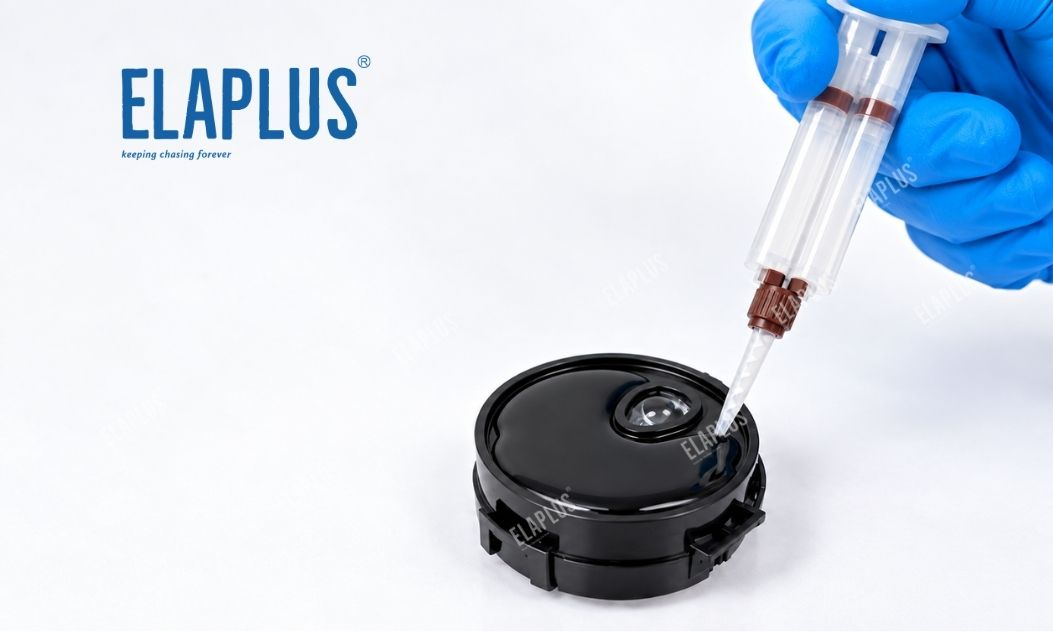
It is a colourless transparent system with viscosity of 4000–6000 mPa·s at 25°C. Suitable applications include optical component modules, optical lens casting and optical waveguide coupling. Its design features high transparency, UV resistance, yellowing resistance and stable optical performance under temperature and humidity exposure.
For rain & light sensors, the real validation target is whether it can form a bubble-free, uniform and stable optical interface within your specific structure, rather than judging only by a single transmittance report.
9. Integrate Optical Performance Into Dispensing Validation for Mass Production
- Record the sensor baseline before dispensing Do not wait until full module assembly to run tests
- Test immediately after dispensing If signal changes are obvious at this stage, check dispense volume, bubbles and bonding
- Retest after full cure Identify whether curing causes positional or interface shift
- Retest after temperature cycling Verify long-term optical interface stability
This separates issues into:
- Dispensing-related defects
- Curing-related defects
- Long-term ageing defects Instead of ending up with a vague conclusion: “insufficient sensor sensitivity”.
10. How to Reduce Batch Variation in Mass Manufacturing
- Fix the dispense volume per unit Do not rely purely on visual judgement by operators
- Fix needle position and dispense path Minimise human-induced variation
- Keep modules horizontal Prevent adhesive flow offset to one side
- Establish acceptance criteria for bubbles Especially for the optically active zone
- Include sensor signal measurement in process inspection For optical components, the final acceptance criterion is not “nice adhesive appearance”, but stable optical performance.
This is ELAPLUS’s core approach for optical adhesives: material datasheet parameters are only a starting point; validation must always be carried out against the actual light path and assembly conditions.
FAQ
Q: Is high transparency the only requirement for rain & light sensor adhesive?
A: No. Haze, bubbles, adhesive thickness, cure shrinkage, long-term yellowing and interfacial bonding stability must also be considered.
Q: Why does the sensor lose sensitivity immediately after dispensing?
A: Check bubbles, local voids and adhesive thickness first. Immediate failure after dispensing is normally related to the optical interface instead of long-term ageing.
Q: Can extra adhesive prevent bubbles?
A: This is not reliable. Over-dispensing may lead to excessive thickness, squeeze-out and module positional shift.
Q: Why do reworked rain & light sensors tend to fail more easily?
A: Residual adhesive, dust, cleaner residue and uneven surfaces create new optical interfaces. Rework requires rebuilding a clean and continuous coupling layer.

Previous post: Why Temperature Resistance Alone Is Not Enough for Pressure Sensor Potting: High-Temperature Performance, Low CTE and Low Stress Must Be Evaluated Together
Next post: Why Creepage and Partial Discharge Still Occur After High-Voltage Module Potting: Full Filling Does Not Equal Reliable Insulation