ELAPLUS SIPA 3015 A/B and SIPA 3040 A/B two-component silicone potting compounds are recommended for evaluation on outdoor LED display driver boards. Both materials feature a 1:1 mixing ratio, adhesive addition-cure chemistry, and support room-temperature or heat curing. For display driver modules requiring circuit insulation, environmental protection and adhesion to plastic or metal housings, compare their actual flowability, thermal management compatibility and curing process first, followed by validation on complete display assemblies.
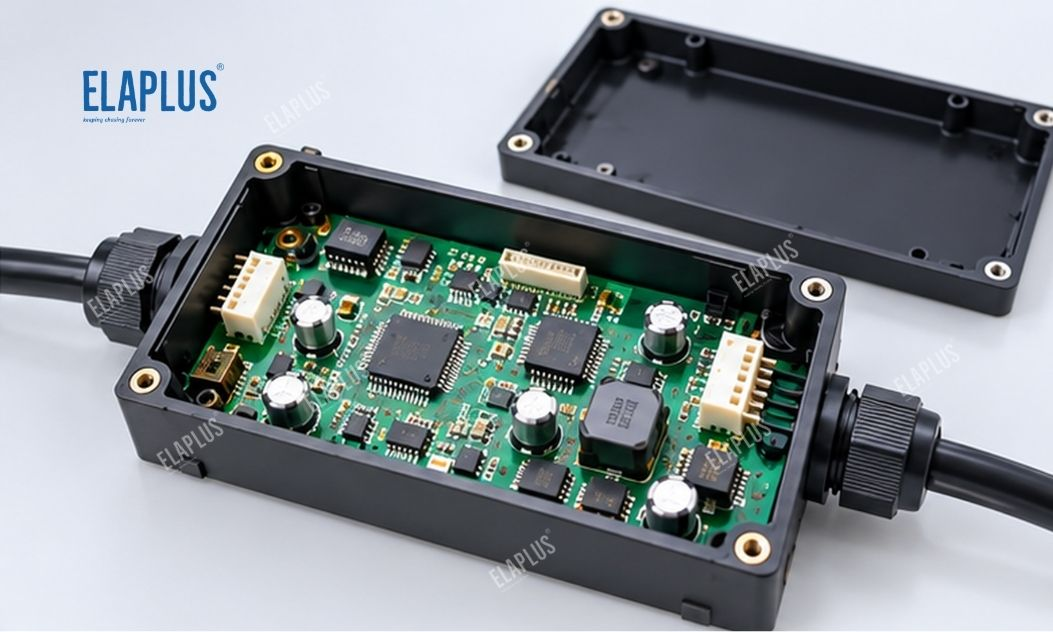
Outdoor LED displays are widely used for commercial advertising, traffic message broadcasting, industrial information display and other public signage applications. Compared with indoor displays, outdoor systems must withstand harsher environmental conditions, so internal drive circuits and power control assemblies require dedicated environmental protection design.
The electronic structure of display modules may include LED chips, driver ICs, PCBs, terminals and plastic or metal brackets. Protection requirements vary by location. Potting for driver boards targets designated circuit zones and cavities, and must not be confused with optical encapsulation of the LED light-emitting surface.
Therefore, when selecting potting adhesive for outdoor displays, define the dispensing area first, then select materials according to electrical, thermal and mechanical requirements.
1. Why Do Outdoor LED Display Driver Boards Need Potting?
During long-term operation, outdoor displays are exposed to day-night temperature cycling, humid air, dust and self-generated heat. For driver PCBs housed in dedicated cavities, potting compound covers specified circuits, solder joints and components to provide insulation and environmental protection for electronic assemblies.
Some display modules secure PCBs with plastic brackets or metal housings; the potting material also offers component support and auxiliary fixation. If the material bonds properly to the housing substrate, it helps maintain stable adhesion of the potting layer inside the assembly.
Nevertheless, driver board potting cannot replace the overall housing sealing design of the full display module. Overall waterproof performance remains dependent on housing joints, connectors, cable entry points and other structural features and must be verified on finished units.
For assemblies containing LED optical zones, define the usage boundary for black or other opaque potting materials to avoid covering light-emitting devices or interfering with the designed optical path.
2. Why Adhesive Silicone Potting Compounds Are Suitable for Outdoor Displays
Outdoor drive modules combine PCBs, plastic supports, metal parts and electronic components with differing coefficients of thermal expansion. Elastomeric silicone potting systems are suitable candidates to accommodate temperature fluctuations and mechanical loads.
For housings made of engineering plastics such as PBT, PC and PA, the interfacial bond between adhesive and substrate is a key selection criterion. If the potting boundary serves as an environmental barrier, curing condition inside the bulk material alone is insufficient for assessment.
Both SIPA 3015 and SIPA 3040 are two-component addition-cure silicones formulated for adhesive potting. Both can be evaluated for compatibility with common engineering plastics and metals, but final adhesion must be confirmed using mass-production-grade actual parts.
Housings with coatings, release agents or other process residues require substrate-specific testing. Compatibility with one grade of plastic does not guarantee primer-free performance on all parts from different suppliers.
3. Differences Between SIPA 3015 and SIPA 3040
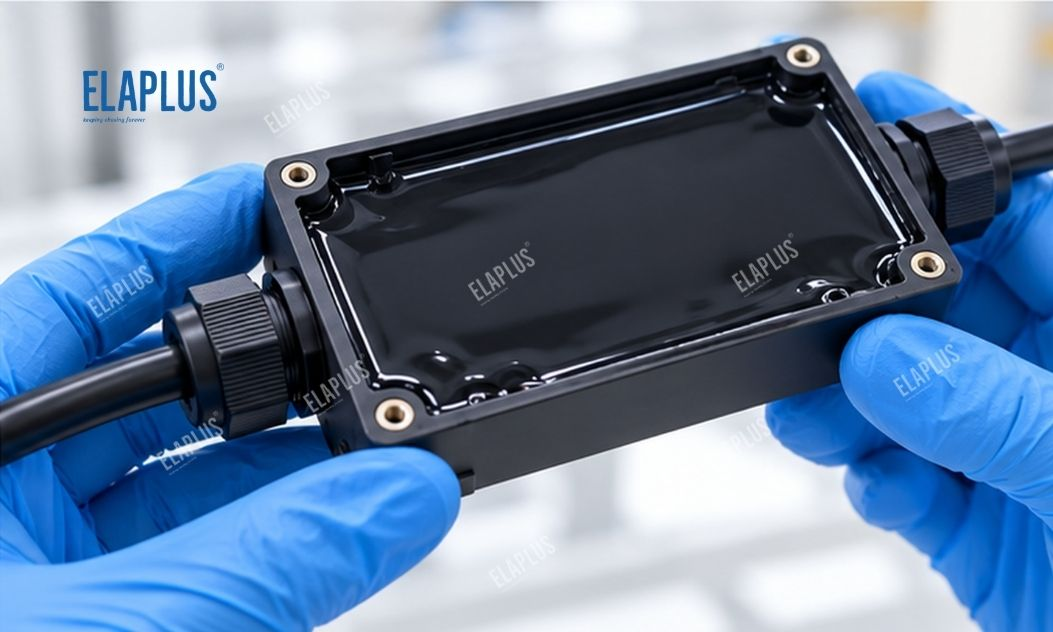
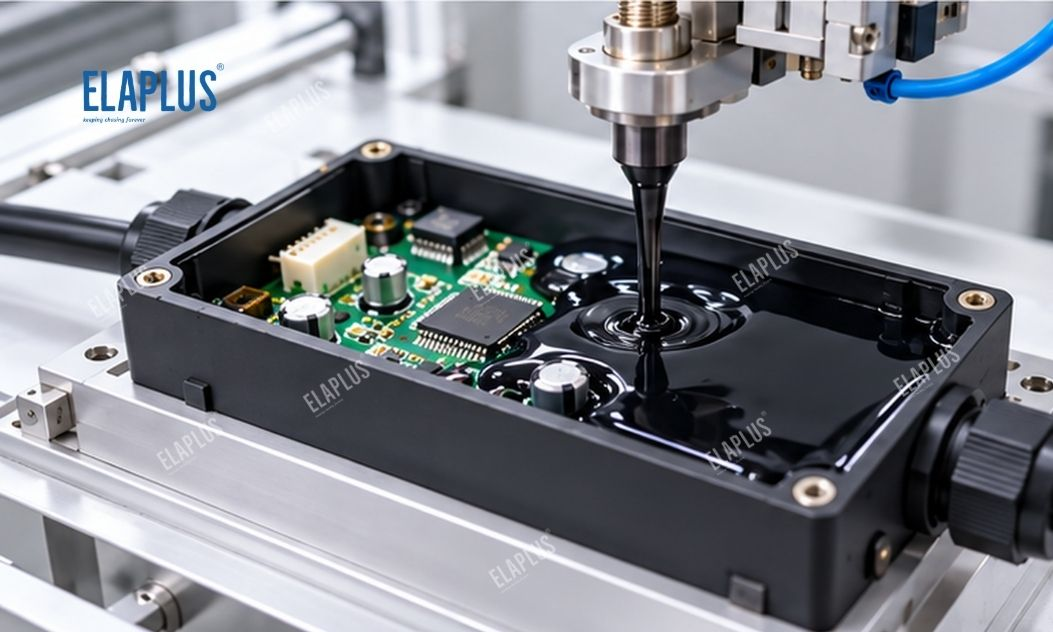
Both are two-component silicone systems with a 1:1 mix ratio, designed for adhesive potting, and compatible with room-temperature or heat curing.
SIPA 3015 features low viscosity, excellent flow, elastic protection and multi-substrate adhesion, and is preferred for structures requiring reliable coverage of defined PCB zones. SIPA 3040 is an adhesive thermally conductive silicone potting compound, shortlisted for display drive assemblies with explicit thermal management requirements.
| Selection Item | SIPA 3015 A/B | SIPA 3040 A/B |
|---|---|---|
| Material System | Two-component addition-cure silicone | Two-component addition-cure silicone |
| Mixing Ratio | A:B = 1:1 | A:B = 1:1 |
| Primary Application | Adhesive electronic potting & protection | Adhesive thermally conductive potting & protection |
| Curing Method | Room-temperature or heat curing | Room-temperature or heat curing |
| Typical Substrates | PC, PET, PA, PBT and selected metals | PC, PET, PA, PBT and selected metals |
| Selection Focus | Flow & filling, insulation, interfacial adhesion | Insulation, interfacial adhesion, thermal management compatibility |
| Common Applications | Outdoor displays, industrial control boards, etc. | Outdoor displays, industrial control boards, etc. |
If the driver board mainly requires insulation and environmental protection, evaluate the process performance of SIPA 3015 first. If the module has defined heat transfer requirements, benchmark SIPA 3040 and verify its thermal performance and thermal path design.
Note: Thermal conductivity cannot be judged quantitatively from product names alone. Final engineering validation shall rely on official datasheet parameters and full-unit temperature-rise test results.
4. How to Define the Potting Scope for Outdoor LED Display Driver Boards
Define the mounting configuration, PCB dimensions and maximum allowable glue height before potting. For modules with independent driver cavities, identify circuits and components that require protection according to the layout.
Mark non-potting zones for terminals, detachable interfaces and other functional areas per design specifications. For components with special encapsulation restrictions, confirm whether direct contact or full encapsulation by the compound is permitted.
If a thermal path is designed between the PCB and metal housing, confirm whether the potting layer participates in heat transfer. If heat is dissipated mainly through other heat-dissipating structures, do not simply increase glue volume to boost protection.
For optically functional LED zones, never reuse driver board potting material on light-emitting surfaces or lenses. Optical encapsulation requires separate evaluation of transmittance, refractive index and long-term optical stability.
5. How to Select the Interfacing Method between Potting Compound and Housing
Outdoor display modules may adopt plastic brackets, metal frames or composite structures, with different interfacial requirements for each substrate. For adhesive silicone potting compounds, priority is given to verifying adhesion to the actual housing surface.
For PBT or PC plastic housings, test using the exact resin grade, surface treatment and manufacturing process used in mass production. For glass-fibre-reinforced engineering plastics, pay attention to surface differences compared with unfilled grades.
If the potting area contacts aluminium alloy or other metal parts, inspect the metal surface for oil contamination, oxide layers or coatings and assess bonding performance accordingly.
For long-term outdoor service, interfacial reliability must be validated under temperature cycling and environmental exposure; initial room-temperature adhesion alone is not sufficient to judge long-term performance.
6. Automation Compatibility of SIPA 3015 and SIPA 3040
Both are 1:1 two-component systems suitable for automated potting trials with compatible metering and mixing equipment. Configure feeding systems, mixers and dispensers according to material viscosity and process requirements.
Before dispensing, confirm the PCB has passed required electrical tests, the cavity is clean, and connectors and forbidden zones are properly masked.
For rectangular or irregular driver board cavities, place dispense points rationally so the material gradually covers target circuits and components. For PCBs with components of varying heights, control dosage and glue height according to flow behaviour.
After dispensing, cure under the specified profile for that product. If heat curing is used, verify that PCBs, plastic housings, connectors and other parts can withstand the curing temperature.
On continuous production lines, record mixing ratio, dispensed volume, mixer status and curing parameters to ensure batch consistency.
7. Performance Verification Required for Outdoor Display Driver Boards
Prepare test samples using the actual BOM including PCBs, driver ICs, terminals, plastic brackets and metal housings, and pot using the planned mass-production process.
First, inspect potting coverage, glue height, component coverage and housing contact to confirm the material does not interfere with assembly or electrical connections.
Next, run insulation and functional tests per circuit design, and record temperatures of the driver board and key heat-generating devices under specified operating conditions. When benchmarking SIPA 3015 and SIPA 3040 for thermal suitability, perform temperature-rise testing under identical conditions.
Environmental validation includes thermal cycling, damp-heat and other required tests. After testing, inspect bonding integrity between the potting layer, PCB and housing.
If the product must meet a specific IP rating, carry out tests on fully assembled units. Moisture resistance of the potting compound alone cannot be used to claim full-unit ingress protection.
ELAPLUS: Select adhesives based on service conditions, not just stack parameters. The potting scheme for outdoor display driver boards shall consider circuit layout, housing material, thermal management and manufacturing process, and be finalized via real-product validation.
8. Potting Selection for Different Outdoor LED Displays
For standard outdoor information display modules where the driver PCB mainly needs insulation and environmental protection, prioritize evaluation of SIPA 3015 for flowability, adhesion compatibility and curing behaviour.
For high-power display modules with defined thermal management requirements, evaluate SIPA 3040 and run temperature-rise tests matching the metal housing and designed thermal path.
For modules deployed in traffic signage, industrial outdoor terminals and other continuously operated systems, define potting depth, housing sealing method and maintenance requirements based on site environmental conditions.
Even displays with similar PCB layouts differ in heat output, wiring and installation clearance. Therefore glue dosage and cure parameters from one product cannot be copied directly to another.
FAQ
Q: What potting adhesive is recommended for outdoor LED display driver boards?
A: Evaluate SIPA 3015 A/B and SIPA 3040 A/B adhesive silicone potting compounds and select according to thermal management requirements.
Q: What is the mixing ratio for SIPA 3015 and SIPA 3040?
A: Both use A:B = 1:1. Follow the official product specification.
Q: Must thermally conductive potting adhesive be used for outdoor display driver boards?
A: Not necessarily. The need for thermal conductivity is determined by heat generation, thermal path and temperature-rise limits.
Q: Can potting compound cover the LED light-emitting surface directly? A: It should not be assumed acceptable. Driver board potting and LED optical encapsulation are separate applications requiring separate material selection.
Q: Can silicone potting adhesive bond PBT or PC housings directly?
A: SIPA 3015 and SIPA 3040 are formulated for adhesion to these substrates, but validation with actual mass-production parts is mandatory.