Potting adhesives are critical to ensure long-term reliable operation of automotive ultrasonic parking sensors under extreme temperature & humidity, continuous vibration and high-pressure water spray. From the perspective of automotive electronics engineers, this article compares two mainstream solutions: silicone potting compounds and polyurethane potting compounds. It covers mixing ratios of two-component potting adhesives, low-temperature performance and waterproof potting processes for sensors. Meanwhile, we recommend two rigorously validated potting solutions from ELAPLUS for automotive sensors.
When you shift into reverse, the dashboard lights up and the familiar beeping sound goes off — this is how a parking radar system works in daily use.
Yet few people know what harsh conditions the ultrasonic sensors hidden inside the rear bumper have to endure: frigid temperatures as low as -40°C in winter in Northeast China, temperatures approaching 100°C after direct sunlight exposure in summer, direct impact from high-pressure water guns during car washing, weeks of high humidity in rainy seasons, plus constant vibration caused by countless starts and stops every day.
A parking radar normally stays in service for over a decade, and its invisible yet essential protective layer is the potting adhesive.
Industry research shows that the global parking radar market exceeded 60 billion RMB in 2026. With the widespread adoption of L2+ autonomous driving, ultrasonic radars are installed in more vehicles with higher reliability requirements. For sensor manufacturers, the selection of potting adhesives directly affects product aging resistance and end-user reputation. Choosing the right potting material for automotive electronics helps reduce after-sales failure rates and extend product service life.
Based on real demands from automotive electronics engineers, ELAPLUS presents two fully qualified potting solutions for parking sensors.
Potting Adhesive Selection for Parking Radars: Strict Performance Requirements for Sensors
Before introducing specific products, let’s review the core criteria for selecting potting adhesives for parking radars. Both silicone and polyurethane solutions must meet the below requirements for automotive electronic potting:
■ Wide temperature resistance: Sensors are mounted close to bumpers. The temperature can drop to -40°C on cold starts and rise above 100°C under combined direct heat and chip operation. The adhesive must maintain stable physical and electrical properties across this wide range.
■ Thermal shock resistance: Sensors undergo drastic temperature changes, such as driving from a heated garage into freezing outdoor air or being hit by heavy rain on hot days. Repeated expansion and contraction may crack solder joints if the adhesive is too hard, or fail to provide sufficient protection if too soft.
■ Temperature-humidity aging resistance: The basic reliability standard for automotive electronics is 85°C / 85% RH (Double 85 Test), while higher standards now adopt 95°C / 95% RH (Double 95 Test). After thousands of hours of aging under hot and humid conditions, the adhesive must resist hydrolysis, delamination and deterioration of insulation performance.
■ Vibration resistance: Continuous micro-vibration during vehicle operation may cause delamination between the adhesive and housing, allowing moisture to penetrate.
Water & moisture resistance: Parking radars are exposed to rain most of the time. Water absorption rate and sealing performance of the potting material determine the service life of sensors.
With these criteria clarified, product selection becomes much simpler.
Silicone Potting Solution: SIPA 3015 Two-Component Potting Compound
SIPA 3015 is an addition-cure two-component silicone potting adhesive with a convenient 1:1 mixing ratio. As a low-stress solution for automotive sensors, it acts as a reliable low-stress protector.
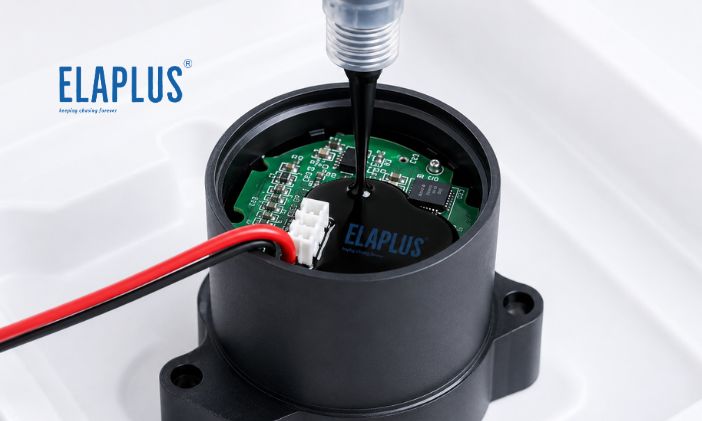
It cures to an ultra-soft state with hardness of Shore A 5–10, similar to jelly candy. This extreme softness minimizes stress transfer during thermal expansion and contraction, effectively protecting delicate piezoelectric ceramics, tiny solder joints and fine wires inside parking radars from damage caused by temperature cycling.
It features an ultra-wide operating temperature range from -60°C to 220°C, fully covering all actual working conditions of parking radars and leaving ample performance margin for sensors with higher integration and heat generation.
No primer is required for strong adhesion to common materials including PC housings, PET films, nylon brackets, aluminum cavities and epoxy resin on PCBs. Removing the priming process shortens production cycle and simplifies manufacturing.
It delivers outstanding electrical performance: volume resistivity up to 2×10¹⁵ Ω·cm and dielectric strength of 25 kV/mm. The cured compound maintains excellent insulation even in long-term humid environments.
Another practical advantage is reworkability. Thanks to its low hardness, the fully cured adhesive can be peeled off easily for reworking defective units, effectively cutting production costs.
Summary of SIPA 3015: Ideal for parking radar designs requiring ultra-low stress and wide temperature tolerance. Highly recommended for protection of piezoelectric components and mass production where rework is needed.
Polyurethane Potting Solution: PUR 1670 A/B Two-Component Potting Compound
PUR 1670 A/B is a solvent-free two-component polyurethane potting adhesive with a 1:1 mixing ratio. If SIPA 3015 is a flexible solution, PUR 1670 is a high-strength option optimized for superior waterproofing and heavy-duty automotive electronic applications.
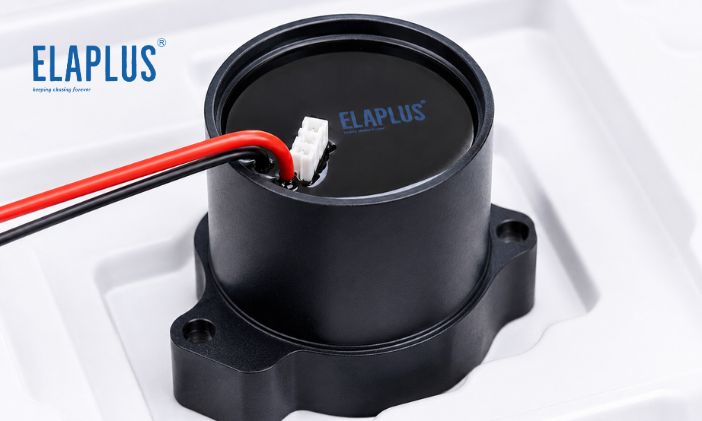
Key strengths:
■ Excellent mechanical properties: Cured hardness is Shore A 60±10, tensile strength 5 MPa and elongation at break 180%. It balances rigidity and flexibility to withstand impact from water jets and flying debris without cracking, perfectly suited for parking radars mounted on outer bumpers prone to physical contact.
■ Superior adhesion: Polyurethane bonds better with metal than silicone. PUR 1670 adheres firmly to metals such as aluminum and iron, as well as most engineering plastics, with shear strength over 2.2 MPa. It stays securely bonded to housing inner walls and resists delamination under long-term vibration.
■ Outstanding water resistance: Water absorption rate is below 0.2%. It resists hydrolysis and maintains stable adhesion and insulation after long exposure to Double 85 / Double 95 aging environments.
■ Low-temperature performance: Glass transition temperature (Tg) reaches -60°C. It remains elastic instead of turning brittle in extreme cold, ensuring stable operation at -40°C and making it an ideal choice for cold-region markets.
In terms of processing, it offers a long working life of 40–100 minutes at 25°C and viscosity around 800 mPa·s for good fluidity. The long pot life ensures stable mass production. Free of heavy metals, it complies with strict automotive environmental regulations.
Summary of PUR 1670: Perfect for parking radars demanding high mechanical strength, strong housing adhesion and superior waterproof performance. Recommended for sensors with metal housings and applications exposed to severe environmental impacts.
Comparison: SIPA 3015 vs PUR 1670
| Selection Criteria | SIPA 3015 (Silicone) | PUR 1670 (Polyurethane) |
| Core Advantages | Ultra-low stress, wide temperature range | High mechanical strength, strong adhesion |
| Cured Hardness | Shore A 5–10 (Ultra-soft) | Shore A 60±10 (Flexible & rigid) |
| Operating Temperature | -60°C ~ 220°C | -60°C ~ 120°C |
| Tensile Strength | Approx. 0.4 MPa | 5 MPa |
| Elongation at Break | Approx. 140% | 180% |
| Volume Resistivity | 2×10¹⁵ Ω·cm | 1×10¹⁵ Ω·cm |
| Water Absorption | Extremely low | <0.2% |
| Reworkability | Easy to peel off | Requires mechanical removal |
| Recommended Housing | PC, PET, Nylon and other plastics | Aluminum, iron and other metals |
| Typical Applications | Piezoelectric components, precision microcircuits | Metal housings, high-vibration environments |
{Selection Guidelines}
Choose SIPA 3015 silicone potting compound if your parking radar adopts plastic housings, contains stress-sensitive piezoelectric components, or needs to withstand high-temperature processes up to 220°C.
Choose PUR 1670 polyurethane potting compound for sensors with metal cavities, working under continuous high vibration or requiring maximum bonding strength.
The two products can also be used in combination for mixed models in one product line. ELAPLUS technical team provides customized evaluation services.
FAQ about Parking Radar Potting Adhesives
Q1: Which material is best for parking radar potting?
Flexible silicone or soft polyurethane potting compounds are preferred. Prioritize thermal shock resistance, vibration damping, waterproofing, moisture resistance and electrical insulation. ELAPLUS recommends SIPA 3015, PUR 1650 and PUR 1670.
Q2: Why is soft polyurethane suitable for parking radars?
It features good toughness, elasticity and low-temperature performance, and effectively absorbs vibration and thermal cycling stress. It is widely used for parking radars and other exterior automotive electronic modules.
Q3: Why conduct Double 85 / Double 95 tests?
Parking radars are constantly exposed to humidity, rain, water spray and temperature fluctuations. These tests verify long-term stability in terms of moisture resistance, insulation and adhesion.
Q4: Is PUR 1670 suitable for parking radar potting?
Yes. It has low viscosity, high toughness, elasticity, excellent low-temperature resistance, weatherability, stable insulation and superior waterproof performance, ideal for parking radars, ultrasonic sensors and general automotive electronic modules.
Q5: How to choose between SIPA 3015 and PUR 1670?
Select SIPA 3015 for silicone-based solutions focusing on weather resistance and flexible protection. Select PUR 1670 for low-viscosity filling, high toughness and waterproofing. Evaluate PUR 1650 if you prioritize housing adhesion and low-temperature reliability.
Conclusion
Flexibility, waterproofing, weather resistance and long-term reliability are the core requirements for parking radar potting. Beyond initial curing effect, the material must withstand repeated thermal shock from -40°C to 100°C, continuous vibration, long-term high-temperature & high-humidity aging, and maintain stable waterproofing and insulation.
For parking radars, ultrasonic sensors, parking assist sensors and other automotive electronic sensors, ELAPLUS provides SIPA 3015, PUR 1650 and PUR 1670 series potting solutions. We help customers select optimal materials based on product structure, housing material, reliability standards and mass production processes.
ELAPLUS — Make automotive sensor potting more reliable, for long-term stable operation of parking radars.
Previous post: ELAPLUS SIPA 1850 High Thermal Conductivity & Anti-Poisoning Silicone Potting Compound – Recommended for LED Power Supplies
Next post: How to Choose Sensor Potting Compound, Motor Potting Compound, and Power Supply Potting Compound? Elaplus Functional Materials Provides Reliable Solutions for Electronics, Automotive, and New Energy Equipment