There is no single‑fits‑all adhesive for humanoid robot joint motors. Potting compounds, structural adhesives, thermal interface materials, silicone gels, conformal coatings and sealants shall be selected respectively for stator windings, rotor magnets, power MOSFETs, torque sensors, control PCBs and wire harness exits. For highly‑integrated robot joints, the effective material selection approach is not to search for one universal grade. Instead, break down thermal, mechanical, electrical and environmental requirements for each position, then match suitable materials accordingly.
Framed torque motors feature compact construction and high torque density. Hence heat generation, vibration, mechanical stress and space constraints are concentrated inside a tiny joint cavity. Stator windings require thermally‑conductive potting; magnets demand long‑term structural fixation; driving MOSFETs need low‑thermal‑resistance heat transfer paths; meanwhile sensors must not be rigidly locked by high‑modulus materials.
This is the key characteristic of adhesives for robot joints: Within one single joint, some areas require firm fixation, while others call for soft‑type protection.
Six Typical Adhesive Application Points for Robot Joints
- Stator Potting for Framed Torque Motors Main functions: thermal conduction, winding fixation, electrical insulation, moisture resistance and vibration protection.
Recommended candidate:
ELAPLUS EP 1715 (2#) Two‑Component High‑Thermal‑Conductivity Epoxy Potting Compound
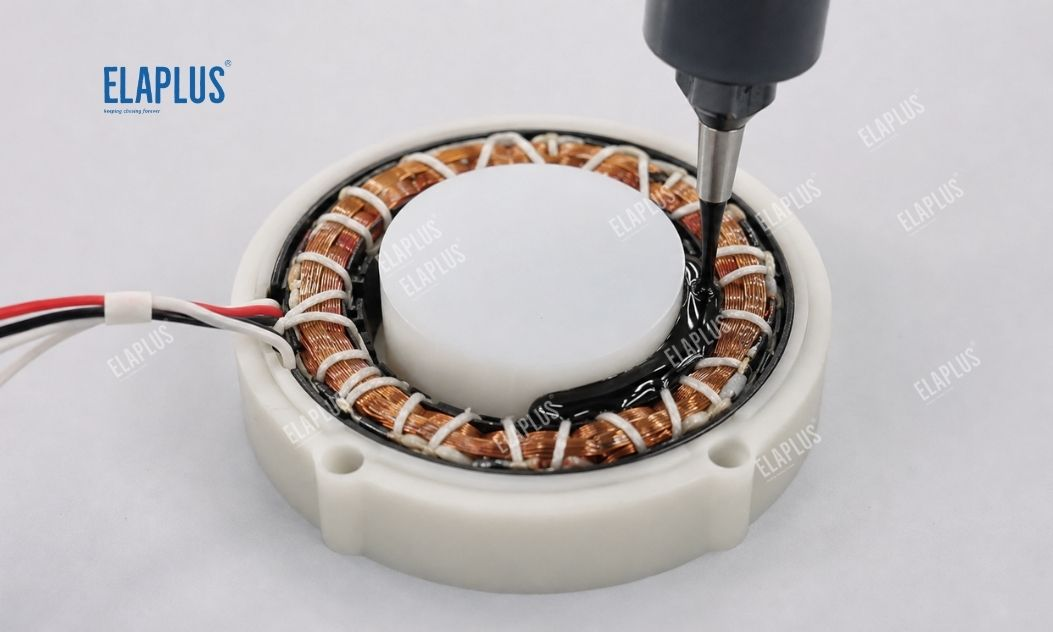
Potting for robot joint motors
It is a two‑part thermally‑conductive epoxy potting material. Available data shows its thermal conductivity is around 1.5 W/m·K, Tg ranges from 95‑105 ℃, and CTE below Tg is approximately 25 μm/m·℃. It supports room‑temperature or medium‑low‑temperature curing.
- Rotor Magnet Bonding Magnets are subjected not only to static bonding force, but also long‑term high‑speed rotation, repeated start‑stop, commutation impact, thermal cycling and vibration.
Recommended candidate:
EP 1769 Two‑Component Epoxy Potting Compound
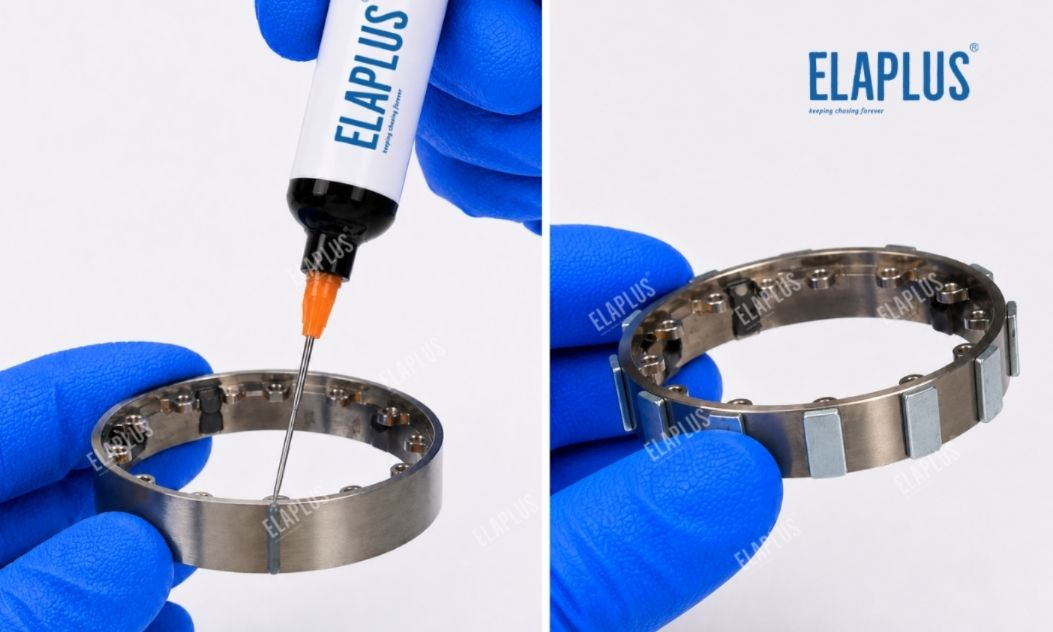
Motor magnet bonding adhesive
Serving as structural adhesive for robot joint motor magnet bonding, it focuses on high bonding strength, fatigue resistance and anti‑vibration performance, rather than merely comparing initial room‑temperature shear strength.
- Thermal Management for Driving MOSFETs Heat generated by MOSFETs on joint drive boards shall be transferred to metallic heat‑dissipation structures promptly. TCMP‑series thermal conductive gels are well‑suited for such applications.
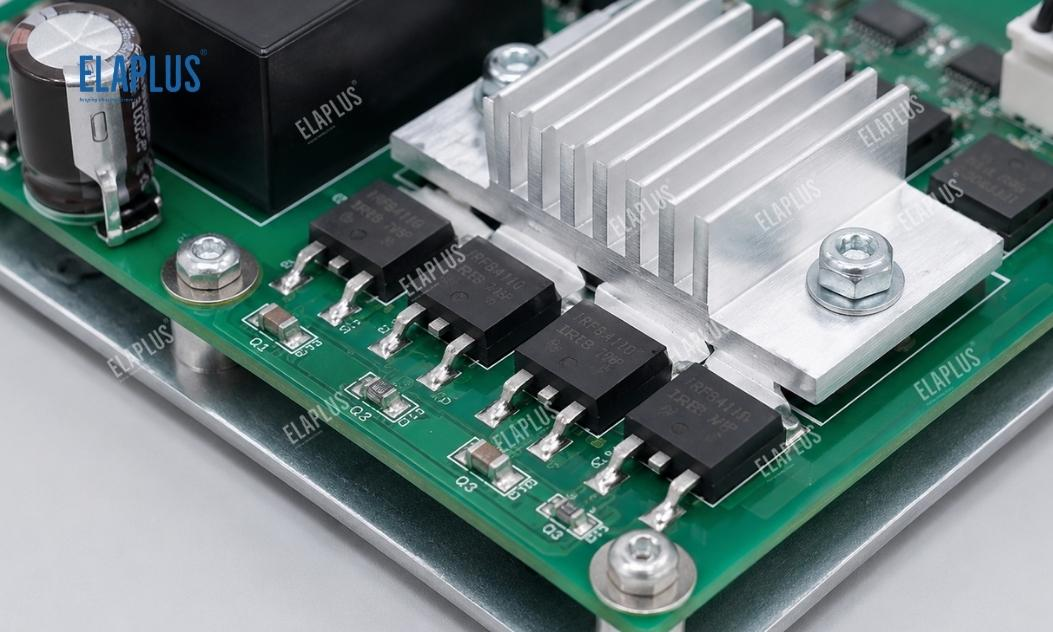
Heat Conduction of Driver MOS
For instance, TCMP 3380 is designed for gap filling and thermal management of electronic components. The exact grade shall be determined according to actual gap dimension and compression requirement.
- Torque / Tactile Sensor Protection Sensors need protection, yet protective materials must not interfere with measurement performance. Therefore, high hardness is not the target. Key requirements include low modulus, low stress, insulation and flexible buffering.
Solutions such as FSGEL 3200 fluorosilicone gel can be evaluated for flexible protection of sensitive electronic components, subject to sensitive element structures.
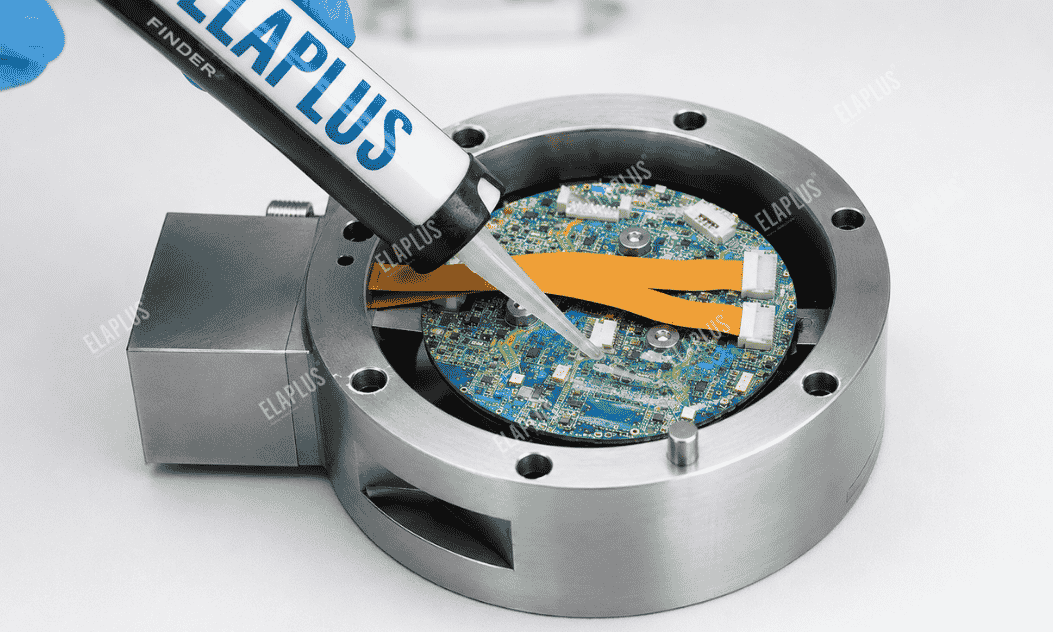
Potting of Robot Force‑Torque Sensor
- Conformal Coating for Control‑Board PCB Robot joint interiors face risks including moisture, condensation, flux residue and long‑term environmental contamination.
Recommended candidate: COATING 9060‑M
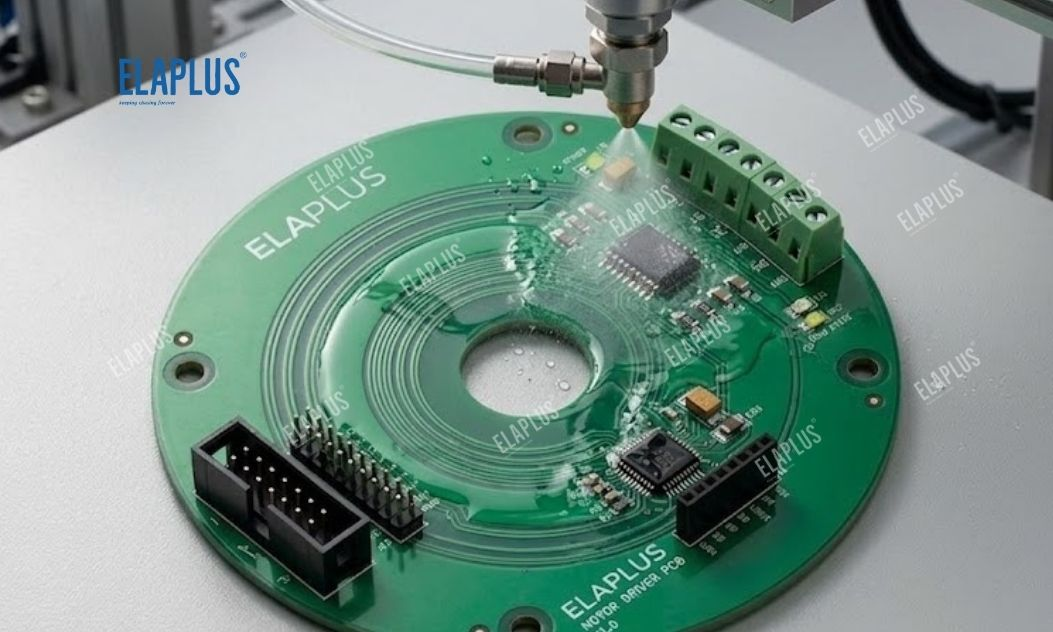
Robot PCB three‑proof coating
UV/moisture dual‑cure conformal coating for PCB moisture‑proofing, dust protection, corrosion resistance and electrical insulation.
View detailshttps://www.elaplus.cc/products/1390/
- Potting for Wire Harness Root Robot joints perform repeated motions over service life. Wire harness roots are typical mechanical‑stress‑concentration zones. Adhesives here deliver sealing, moisture resistance, harness fixation, buffering and stress relief.
Hard high‑modulus materials that fully lock wire harnesses are not recommended. Elastic sealing or potting systems shall be selected based on wire diameter, swing angle and fixation method.
Industry Pitfalls|3 Common Adhesive‑Selection Mistakes for Robot Joints
Mistake 1: Pursue maximum strength for all positions Over‑hard materials applied on sensors and harness roots may transmit mechanical stress to sensitive structures.
Mistake 2: Evaluate stator potting only by thermal conductivity Even high‑thermal‑conductivity materials deliver degraded heat dissipation if voids exist inside coil windings.
Mistake 3: Treat thermal conductive gels as structural adhesives Thermal conductive gels function for thermal interfaces and shall not undertake major structural fixation tasks such as magnet bonding.
Suitable Application Scenarios for ELAPLUS Solutions
The position‑specific adhesive‑selection strategy fits projects as below: Framed torque motors, humanoid robot joints, collaborative robots, servo joints, integrated drive joints and small‑size motors with high power density.
It is especially suitable for joints integrating motor, driver, sensor, PCB and wire harness, where material compatibility needs comprehensive assessment.
FAQ for Adhesives Used in Humanoid Robots
How many types of adhesives are required for one humanoid robot joint?
There is no fixed number, which depends on mechanical structures. Highly‑integrated joints commonly adopt different materials for different zones instead of using one single adhesive everywhere.
Can magnet‑bonding adhesive be used for stator potting?
Generally not recommended. Structural bonding and large‑volume thermally‑conductive potting have different formulation targets and processing requirements.
Why cannot ordinary rigid epoxy be directly used for torque sensor encapsulation?
Mechanical stress generated by rigid potting materials may affect sensitive structures, hence low‑stress performance is critical.
If you are working on robot joint material selection, leave a message with 【Joint】. A self‑check checklist covering six adhesive application points for robot joints can be sorted out for reference later.
Technical Support / Free Sample Request: info@elaplus.cc