Common electronic adhesives for humanoid robots mainly include thermal conductive potting compounds, structural adhesives, thermal conductive gels, silicone gels, conformal coatings and sealants. One single material cannot fit all positions. For joint‑motor stators, thermal conductivity, insulation and mechanical fixation are critical. For magnet bonding, high‑temperature adhesion and vibration resistance are essential. Power devices such as MOSFETs require thermal‑interface materials with low thermal resistance. Torque / pressure sensors are best protected by low‑stress silicone gels. Control PCBs generally adopt conformal coatings for moisture‑proof and insulation protection.
For these applications, ELAPLUS provides electronic functional‑material solutions including EP 1715 (2#), EP 1769, SIPA 1850, TCMP series, FSGEL 3200, COATING 9060 UV and others.
1. Why Do Humanoid Robots Need Electronic Adhesives?
Humanoid robots are highly integrated with frameless torque motors, reducers, drivers, AI computing modules, torque sensors, encoders, control PCBs, batteries and wiring harness systems.
During walking, running, jumping, handling, emergency stop and frequent direction switching, internal electronic and mechanical components are continuously exposed to:
- Persistent heat generation from motors and power devices
- High‑frequency joint vibration and shock
- Alternating loads caused by frequent start‑stop cycles
- Coefficient‑of‑thermal‑expansion mismatch among dissimilar materials
- Moisture, dust and environmental contaminants
- Mechanical fatigue from repeated bending of wiring harnesses
Accordingly, electronic adhesives for humanoid robots serve six core purposes:
thermal conduction, electrical insulation, structural bonding, potting protection, vibration damping and moisture‑proof sealing.
The higher the robot’s motion performance, the less designers should rely merely on initial bond strength or single thermal‑conductivity values. Thermal cycling, vibration, shock, fatigue and property retention after long‑term aging must also be evaluated.
2. Which Adhesive for Humanoid‑Robot Joint‑Motor Stators?
Recommended: Thermally conductive epoxy potting compound
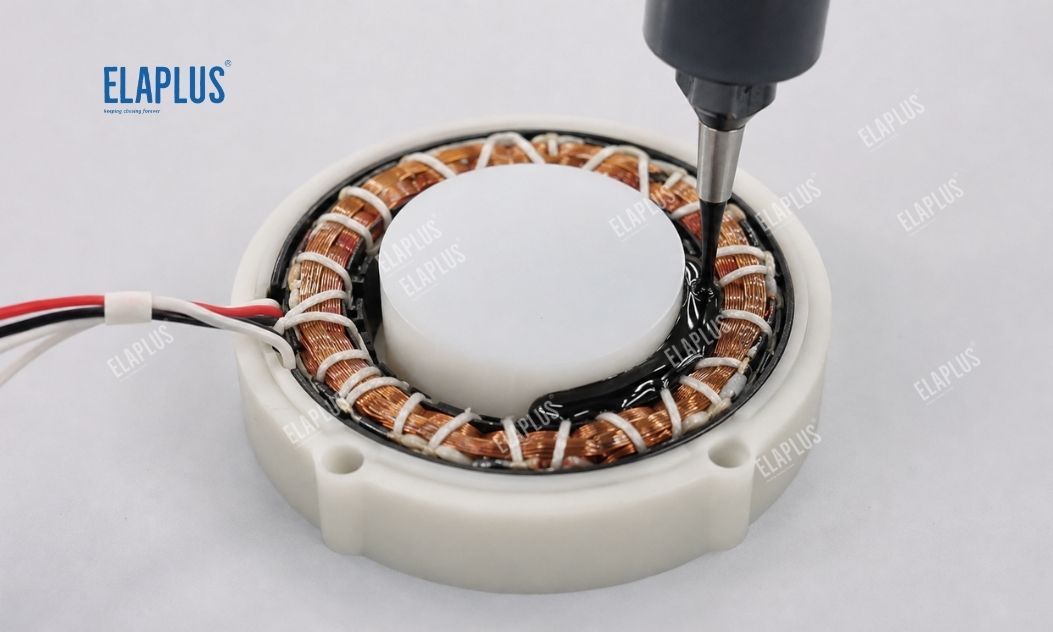
The stator of a humanoid‑robot joint motor requires potting materials delivering thermal conduction, electrical insulation and mechanical fixation.
In frameless torque motors, copper windings continuously generate heat. Large air gaps between windings and metal housings severely degrade heat dissipation efficiency.
Potting establishes a heat‑transfer path:
Windings → Potting Material → Motor Housing
while mechanically locking the coils in place.
Recommended Model: ELAPLUS EP 1715 (2#)
EP 1715 (2#) is a two‑component thermally conductive epoxy potting compound for robot joint‑motor stators and other applications requiring balanced heat dissipation and structural fixation.
Typical properties:
- Thermal conductivity: approx. 1.5 W/(m·K)
- Tg: approx. 95‑105 °C
- Hardness after curing: Shore D 90
- Good electrical insulation
- Balanced coil fixation and heat transfer
Key Selection Criteria for Joint‑Motor Potting Compounds
Evaluate thermal conductivity, viscosity, insulation performance, cure shrinkage, hardness, temperature resistance and cracking risk under thermal cycling.
Higher hardness does not always mean better performance.
Where prominent CTE mismatch, vibration or shock exist, modulus and structural stress shall be comprehensively assessed.
3. Which Adhesive for Humanoid‑Robot Motor Magnets?
Recommended: High‑strength epoxy structural adhesive
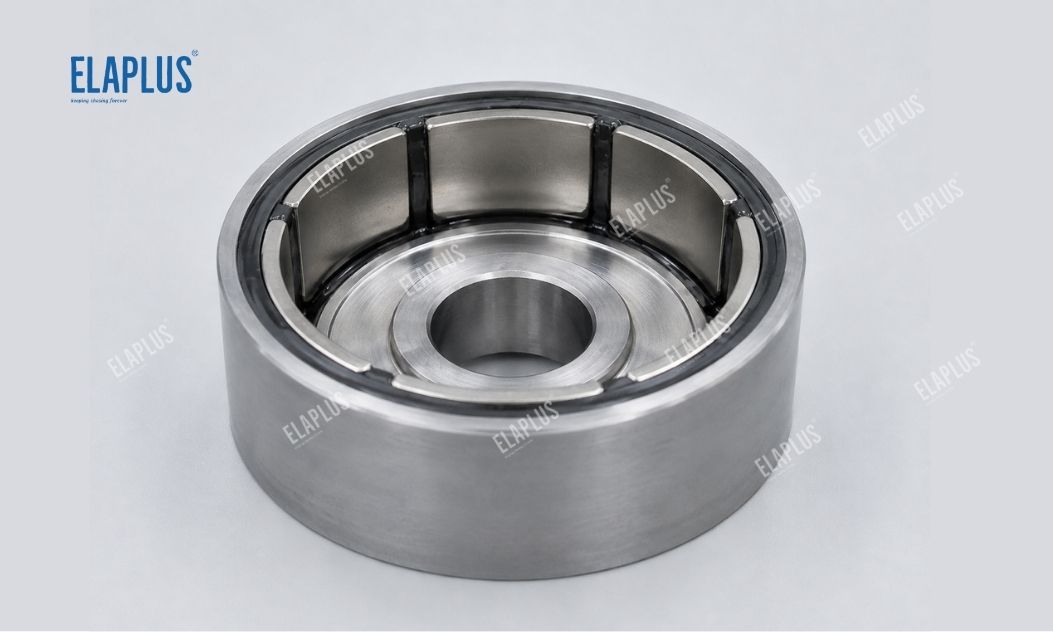
Magnets in robot joint motors sustain shear force, centrifugal force, temperature variation and impact loads from frequent start‑stop cycles.
Therefore, magnet bonding cannot be judged only by room‑temperature initial tensile strength.
More critical is whether magnets remain stably positioned after high‑temperature exposure, vibration and long‑term thermal cycling.
Recommended Model: ELAPLUS EP 1769
EP 1769 is a one‑component epoxy adhesive for magnet bonding and structural fixation in frameless torque motors and robot joint motors.
Key evaluation points for robot magnet bonding:
- Adhesion performance to metals and magnetic materials
- Bond retention at elevated temperatures
- Shear performance
- Vibration resistance
- Thermal‑cycle reliability
- Compatibility with curing processes and automated dispensing
For high‑speed, highly dynamic robots, magnet adhesives must address not only “initial bonding”, but also displacement, debonding and interfacial fatigue after long‑term dynamic operation.
4. Which Adhesive for Humanoid‑Robot Joint Drivers?
Joint drivers integrate MOSFETs, driver chips, capacitors, inductors and control PCBs.
As joint sizes shrink and power density rises, heat must be dissipated within limited space. Two categories of materials are required.
4.1 MOSFET & Power Devices: Thermal Conductive Gel
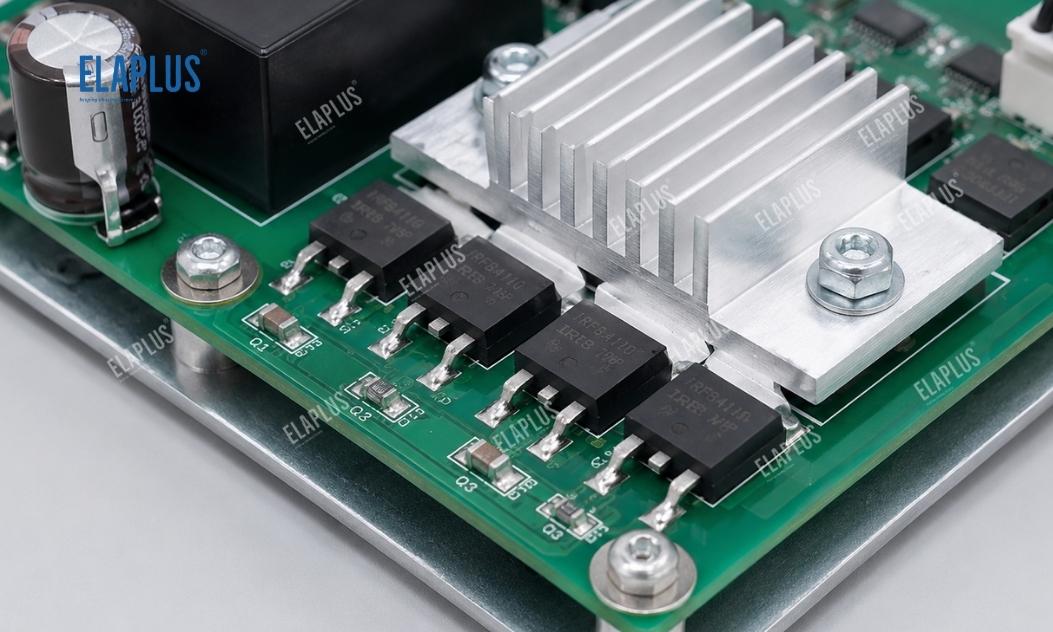
Recommended: TCMP Series Thermal Materials
TCMP series applies to:
- MOSFETs
- Power chips
- Drive modules
- Controllers
- Gap filling between chips and metal heat‑dissipation structures
Thermal conductive gels do not simply “cover chips”. They fill micro‑gaps between devices and heat sinks to form continuous thermal‑transfer paths.
Besides thermal conductivity, assess interfacial thermal resistance, compressibility, bond‑line thickness, pump‑out effect, thermal‑cycle stability and reworkability.
4.2 Overall Protection for Drive Modules: Thermal‑Conductive Potting Compound
Recommended: SIPA 1850 Series
For drivers, power supplies or control modules requiring full potting protection, SIPA 1850 series silicone thermal‑conductive potting compounds are available.
Core functions: thermal conduction, insulation, flexible buffering and electronic‑component environmental protection.
For robots enduring long‑term vibration and thermal cycling, flexible silicone systems mitigate mechanical‑stress transfer to PCBs and electronic parts.
5. Which Adhesive for Humanoid‑Robot Torque Sensors?
Recommended: Low‑stress silicone gel
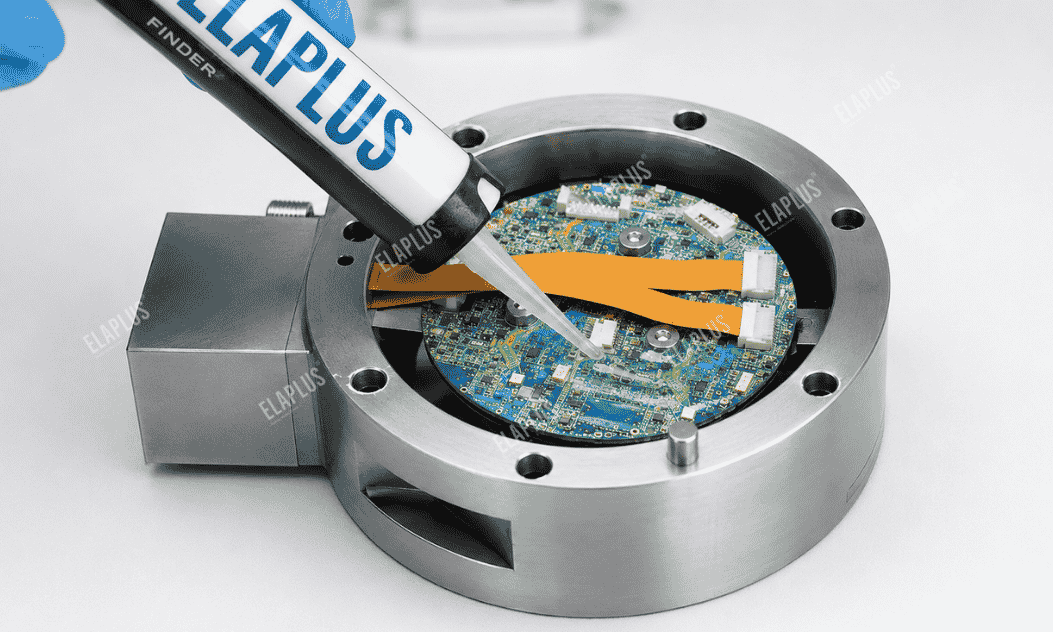
Torque sensors, pressure sensors and MEMS devices differ from ordinary electronic modules: encapsulation materials must not significantly interfere with sensor operation.
High‑modulus or high‑shrinkage materials may transmit mechanical stress to sensitive structures, impairing zero‑point stability and measurement accuracy.
Recommended Model: FSGEL 3200
FSGEL 3200 silicone gel delivers flexible protection for MEMS pressure sensors and precision electronic components.
Main applications:
- Low‑stress protection
- Flexible shock buffering
- Moisture resistance
- Protection for sensitive electronic components
Sensor potting selection should not pursue high hardness or maximum bond strength.
Priority shall be given to low modulus, low stress, environmental protection and long‑term aging influence on sensor output.
In short: structural adhesives focus on “fixation”; sensor‑protection gels focus on “protection with minimal interference”.
6. Why Do Humanoid‑Robot PCBs Need Conformal Coatings?
Recommended: UV‑ / moisture dual‑cure conformal coating
Though housed inside robot enclosures, internal control PCBs, drive PCBs and sensor PCBs are still exposed to moisture, condensation, dust, ionic contaminants and temperature fluctuations during long‑term operation. Protection becomes even more critical when robots are deployed in factories, warehouses, outdoor and other harsh environments.
Recommended Model: COATING 9060 UV
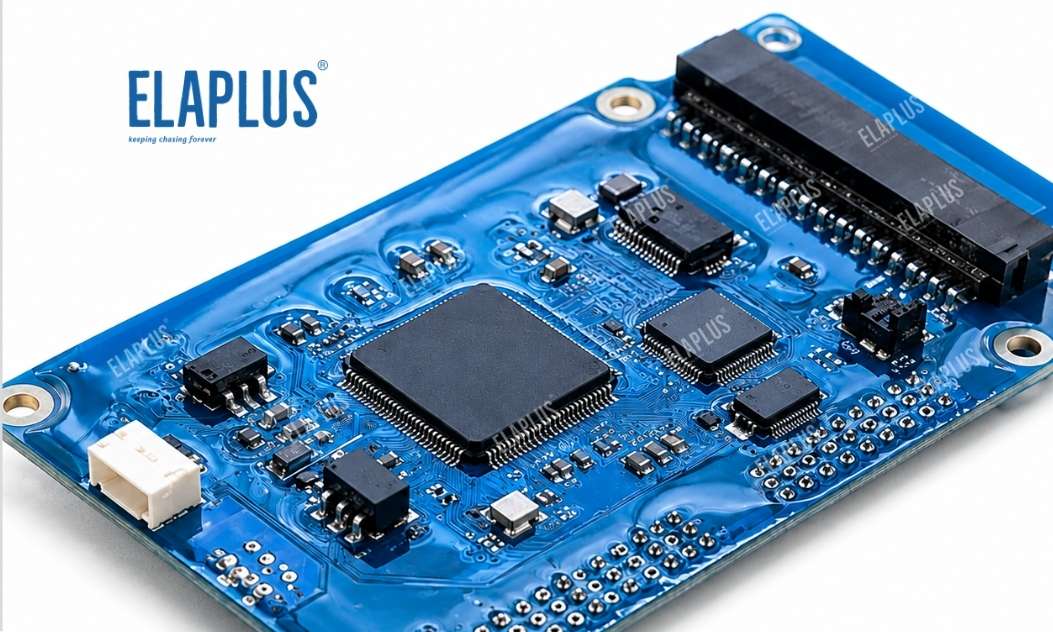
COATING 9060 UV is a UV‑ / moisture dual‑cure PCB conformal coating for:
- Robot control boards
- Joint drive boards
- Power‑supply PCBs
- Sensor PCBs
UV enables fast curing, while shadow areas achieve secondary curing via moisture, supporting automated coating for complex PCB layouts.
Main functions: moisture resistance, anti‑corrosion, electrical insulation and protection against environmental contaminants.
7. Why Potting or Fixation for Harness Root Sections in Humanoid Robots?
Every lifting, walking, bending and rotating movement repeatedly flexes internal wiring harnesses. Over service life, stress concentrates at connector outlets, PCB solder joints and harness roots rather than distributing evenly along harness lengths.
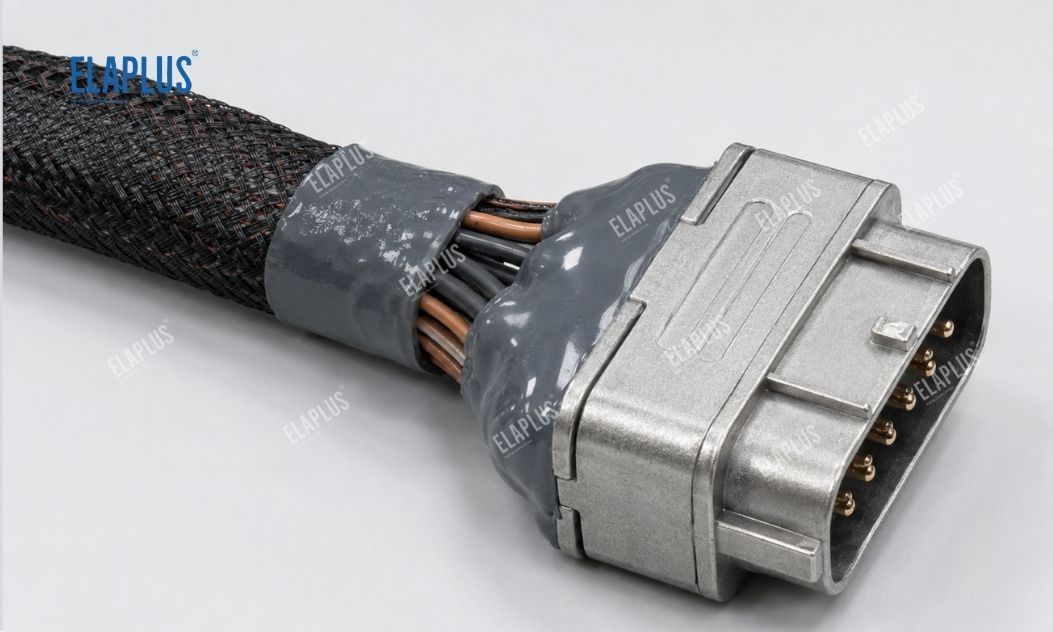
Flexible potting compounds or sealants can be applied for local fixation according to mechanical structures.
Main purposes:
- Disperse mechanical stress at harness roots
- Reduce vibration transmission
- Alleviate cyclic stress on solder joints
- Improve connection stability
- Assist moisture‑proofing and sealing
Harness‑root fatigue is a noteworthy yet easily overlooked reliability risk for highly dynamic robots.
8. Adhesive‑Selection Summary for Humanoid Robots
| Application Position | Core Requirements | Recommended Materials / Model |
|---|---|---|
| Joint‑motor stator | Thermal conduction, insulation, fixation | EP 1715 (2#) |
| Motor magnet | High‑strength structural bonding | EP 1769 |
| Joint driver | Thermal conduction, potting, buffering | SIPA 1850 Series |
| MOSFET / power chip | Low interfacial thermal resistance | TCMP Series |
| Torque / pressure sensor | Low‑stress protection | FSGEL 3200 |
| Control PCB | Moisture resistance, anti‑corrosion, insulation | COATING 9060 UV |
| Harness / connector root | Fixation, vibration damping, sealing | Flexible potting / sealing materials |
9. FAQ on Adhesives for Humanoid Robots
Q1: What main adhesives are used for humanoid robots?
A: Epoxy structural adhesives, thermal‑conductive potting compounds, silicone potting compounds, thermal‑conductive gels, silicone gels, PCB conformal coatings and sealants. Material selection varies for motors, drivers, sensors, PCBs, batteries and other positions.
Q2: Epoxy or silicone for robot joint‑motor potting?
A: Depends on structural requirements. Thermal‑conductive epoxy is preferred for high structural rigidity; silicone suits scenarios prioritizing flexibility, low stress and thermal‑cycle buffering. Final validation shall cover thermal conductivity, modulus, viscosity, curing profile and reliability testing.
Q3: What adhesive fits robot motor magnets?
A: Epoxy structural adhesives with high structural‑bonding capacity and temperature resistance are commonly adopted. Besides initial bond strength, high‑temperature shear, vibration, thermal cycling and long‑term fatigue performance shall be considered.
Q4: Can ordinary epoxy potting be directly applied to robot torque sensors?
A: Not recommended. Precision sensors require strict control of encapsulation‑induced stress. MEMS and pressure sensors are better protected by low‑modulus silicone gels.
Q5: Does higher thermal‑conductivity always mean better thermal‑interface materials for robots?
A: No. Thermal management for robot power devices also considers interfacial thermal resistance, bond‑line thickness, compressibility, long‑term pump‑out, thermal‑cycle stability and matching with heat‑dissipation structures. Thermal‑conductivity values alone cannot represent real heat‑dissipation performance.
Q6: What is the most important principle for selecting electronic adhesives for humanoid robots?
A: Select materials according to failure modes of different positions. Prioritize thermal and vibration performance for motors, shear and fatigue resistance for magnets, low interfacial thermal resistance for power devices, low stress for sensors, and moisture / contaminant resistance for PCBs. Thermal‑cycle, vibration and aging validation under real working conditions are required for commercial long‑term operation.
From “Can the Robot Jump?” to “How Long Can the Robot Jump?”
As humanoid robots move toward industrialization, competition shifts from “whether movements can be performed” to “whether movements can be repeated stably over long service life”.
Accordingly, electronic‑adhesive value cannot be measured by single‑parameter indicators. Robot materials must address combined challenges of thermal, mechanical, electrical and environmental reliability.
ELAPLUS provides material‑selection support for thermal conduction, potting, bonding, conformal coating and low‑stress protection for robot joint motors, drivers, sensors, PCBs and electronic‑control systems.
ELAPLUS
Original Manufacturer|Selection Support|Free Samples Available
info@elaplus.cc