Prolonged response time, delayed temperature rise detection or slow cooling recovery of NTC temperature sensors after encapsulation shall be primarily attributed to the thickness of encapsulation adhesive, heat transfer path between the sensing tip and measured medium, and the mounting position of the thermistor, rather than directly concluding degradation of the NTC element. Encapsulation materials serve mainly to protect sensitive components, fix leads and isolate the external environment, while the encapsulation structure simultaneously governs the speed of heat transfer to the temperature-sensing element.
NTC temperature sensors are widely adopted in new energy vehicle thermal management, energy storage battery temperature monitoring, industrial controllers, motor windings and household appliances. A typical product consists of an NTC thermistor, leads, insulating protective layer, encapsulation adhesive and metal or plastic housing. Sensors with different structures show obvious differences in thermal response speed.
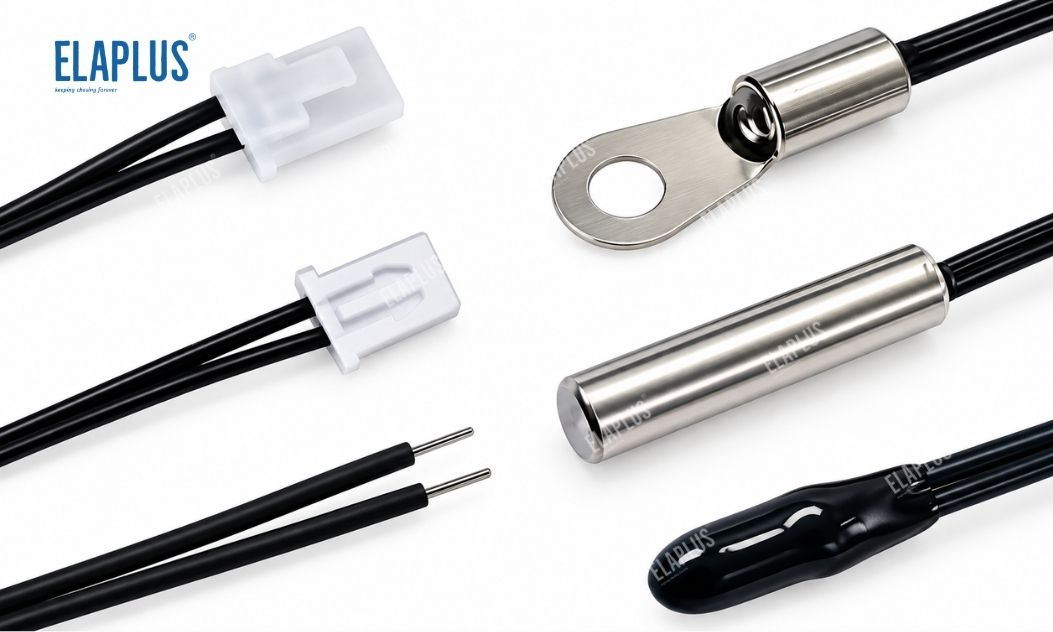
Some probes measure temperature accurately when the element is bare, yet suffer slow response to temperature changes after epoxy potting or installation into metal sleeves. It is necessary to distinguish steady-state measurement error from dynamic response lag first, as they correspond to different failure mechanisms and improvement directions.
Why Temperature Response of NTC May Slow down after Encapsulation
NTC thermistors measure temperature by virtue of resistance variation with temperature. Before encapsulation, the sensitive element exchanges heat directly with air or test media. After encapsulation, heat has to travel through the external medium, probe housing, encapsulation adhesive and the element surface before reaching the thermistor.
Under comparable conditions, a thicker adhesive layer, longer heat transfer path or internal gaps that hinder heat transfer will extend the time required for the sensing element to reach the target temperature.
Besides, encapsulation materials and housings possess heat capacity. When the overall heat capacity of the probe rises, more heat needs to be absorbed or released during temperature fluctuation, which also degrades dynamic response.
Therefore, NTC encapsulation design shall not only consider waterproofing and mechanical strength, but also control thermal resistance and heat capacity between the sensing element and measured medium.
How to Tell Response Lag, Temperature Deviation and Element Damage Apart
Constant-temperature stability test and temperature step-response test are recommended separately. The former verifies measurement accuracy after the probe reaches thermal equilibrium; the latter monitors response speed during temperature variation.
If the probe can finally reach the correct temperature yet responds slowly during transition, inspect the heat transfer path first. If consistent deviation persists after stabilisation, further check NTC resistance, measurement circuit, calibration parameters and installation environment.
| Fault Symptom | Possible Cause | Priority Verification Method |
|---|---|---|
| Steady temperature reading normal but slow response | Increased adhesive thermal resistance or probe heat capacity | Temperature step-response test |
| Obvious lag for both heating and cooling | Long heat transfer path of encapsulation structure | Compare different adhesive layer thicknesses |
| Repeated abnormal response at the same spot | Improper element position or probe structure | Inspect mounting position of sensing element |
| Fluctuating response time across batches | Variations in dispensing volume, element positioning or assembly | Measure adhesive thickness and assembly dimensions |
| Deviation even at steady temperature | Abnormal NTC resistance, calibration or measurement circuit | Constant-temperature test and resistance recheck |
| Intermittent anomaly after thermal cycling | Lead connection failure, element damage or interfacial degradation | Inspect electrical connection and encapsulation structure |
For recurring anomalies at fixed positions, review structural design and heat transfer paths first. For random defects, focus on consistency of dispensing, assembly and curing processes.
Does High Thermal Conductivity of Encapsulation Adhesive Guarantee Faster Response?
Thermal conductivity describes a material’s ability to conduct heat, while the actual response speed of the probe is determined by the complete assembly. Even with high thermal conductivity adhesive, response lag may still occur if the adhesive layer is too thick, the element sits far from the measuring surface, or the housing itself has large heat capacity.
For NTC probes, a more rational evaluation takes adhesive thermal conductivity, layer thickness, element position and housing structure into account comprehensively.
For instance, with the same material, optimising element placement and removing redundant adhesive thickness often delivers better results than simply upgrading thermal conductivity.
Nevertheless, the adhesive layer cannot be infinitely thin. An overly thin protective layer compromises insulation, moisture resistance and mechanical protection. A proper design balance between thermal response and reliability must be achieved.
Selection of Epoxy, Silicone and Polyurethane Encapsulation Materials
Different material systems meet diverse structural protection requirements, and response speed cannot be judged merely by material type.
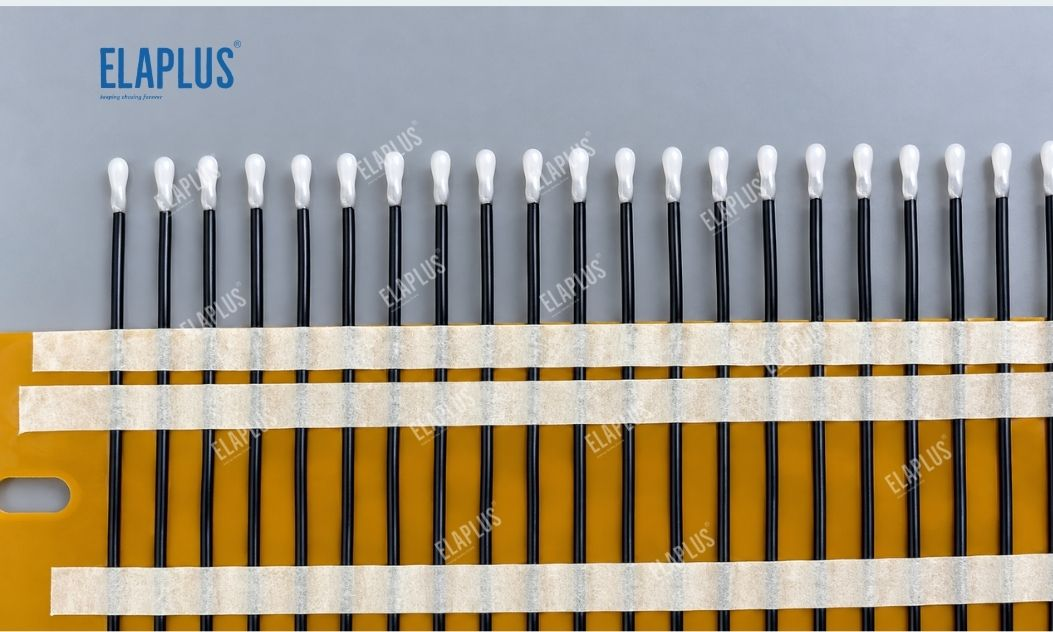
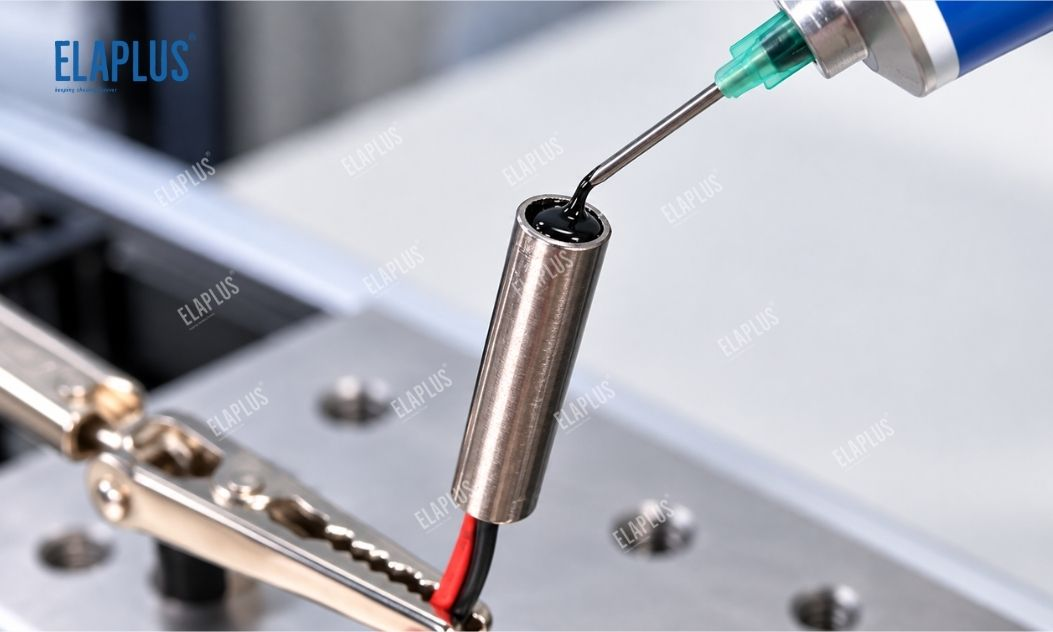
| Material System | Key Selection Features | Notes for NTC Encapsulation |
|---|---|---|
| Epoxy Encapsulation Adhesive | Strong structural fixation and stable potting performance | Control adhesive thickness, curing and thermal stress |
| Silicone Encapsulation Adhesive | Good flexible protection and mechanical buffering | Optimise heat conduction path and element positioning |
| Polyurethane Encapsulation Adhesive | Tunable flexibility and adhesion via formulation | Validate long-term temperature and medium compatibility |
| Local Structural Bonding Adhesive | For fixing components, leads or internal probe structures | Shall not replace full waterproof encapsulation |
Epoxy systems can be prioritised for probes requiring rigid mechanical fixation. Flexible encapsulation solutions are recommended for assemblies with obvious temperature swings and stress-sensitive elements.
Final material selection shall be determined by actual probe structure, temperature range and target response time.
Suitable NTC Encapsulation Structures for EP 2029A/B
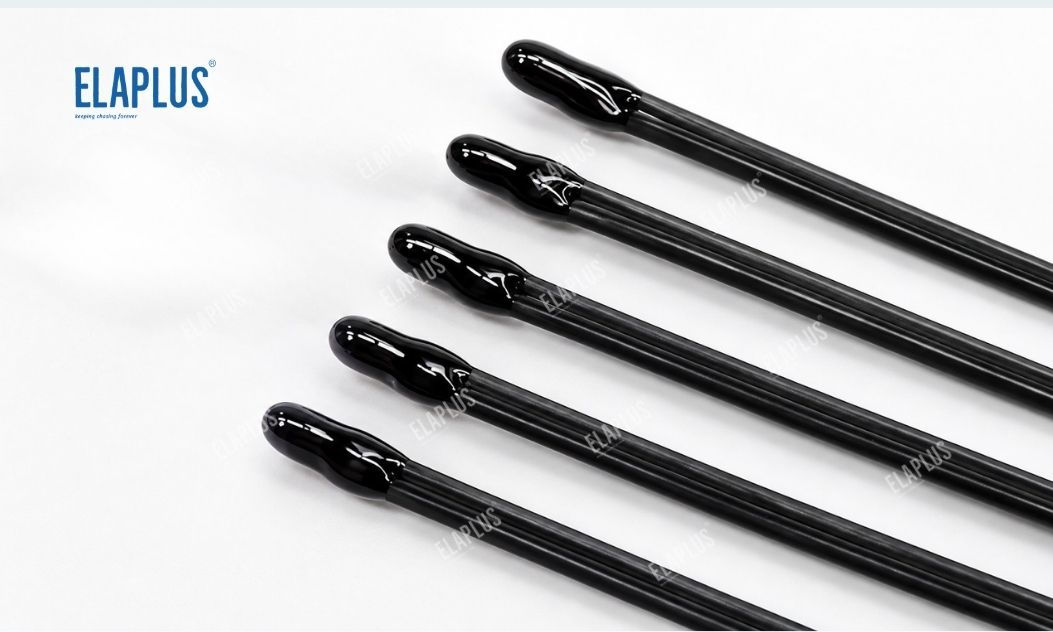
ELAPLUS EP 2029A/B is a two-component high-temperature resistant epoxy structural adhesive curable at room temperature or under heating, with a 100:50 weight mixing ratio for A and B components. It delivers high bonding strength and environmental resistance, applicable to high-temperature sensor encapsulation and various structural bonding applications.
EP 2029 can be shortlisted for applications that fix NTC elements, protect lead junctions or provide stable internal structural support for probes.
It should be noted that EP 2029 is a high-viscosity structural bonding system and is not suitable for all deep-cavity potting or probes demanding fast thermal response. For slender metal sleeves, narrow cavities and structures requiring full filling, verify whether the material can flow to the target area and confirm that the final thermal response meets specifications.
The rated temperature range of the material does not equate to sensor measurement accuracy or long service life. Temperature sensing performance of NTC probes must be validated on the complete assembly.
Why NTC Element Position Matters More than Adhesive Appearance
In metal-sleeve temperature probes, the NTC element senses external temperature through a defined heat transfer path. If the element is set too far from the probe tip, or a thick encapsulation layer separates it from the main heat-conducting zone, temperature response will be impaired.
For plastic encapsulated probes, the position of the sensitive element also affects heat transfer. Even with identical external adhesive geometry, internal element offset leads to inconsistent response between batches.
Therefore, mass production inspection should not only check full adhesive coverage. Positioning tooling shall control the relative alignment among NTC elements, leads and probe housings.
How to Establish a Reliable NTC Encapsulation Validation Procedure
Prepare control samples using NTC elements of the same model and batch, and record temperature response curves for bare elements, samples with different encapsulation thicknesses and finished probe assemblies respectively.
Keep the medium, flow rate, temperature step amplitude and mounting method consistent during testing. For probes following approximately first-order thermal response, the time taken to reach roughly 63.2% of the total temperature change is used to characterise response performance. If the product standard adopts alternative definitions of response time, follow the corresponding requirements.
After initial testing, carry out specified thermal cycling, humidity and mechanical reliability tests, then recheck steady-state accuracy and dynamic response. This confirms whether the encapsulation structure remains stable after long-term service.
Common Pitfalls: Waterproofing and Temperature Resistance Are Not the Only Criteria for NTC Encapsulation
- Misconception: Higher adhesive thermal conductivity always yields faster probe response. In fact, adhesive thickness, housing structure and element position all affect heat transfer.
- Misconception: Longer response time equals NTC resistor failure. Compare steady-state resistance and dynamic response first to distinguish element faults from structural issues.
- Misconception: Only inspect external adhesive shape without checking internal element offset.
- Misconception: Only perform room-temperature waterproof testing, without verifying temperature measurement performance after thermal cycling.
ELAPLUS selects adhesives based on service conditions instead of stacking performance parameters. For NTC temperature sensors, define the measured medium, target response time and encapsulation structure first before material selection, and validate using the actual BOM and finished probes.
Application Guidance: Which NTC Probes Suit Epoxy Encapsulation?
EP 2029 and similar epoxy structural adhesives can be evaluated for element fixation and local encapsulation of probes used in new energy vehicle temperature monitoring, industrial controllers, motor temperature detection and scenarios requiring robust mechanical anchoring.
For probes requiring rapid temperature response, focus on optimising sensing element placement and heat transfer paths. For probes exposed to oil, coolant or special media long-term, verify material compatibility with the actual medium.
For deep-cavity filling structures, confirm material flowability and curing performance first; do not finalise selection merely based on temperature resistance and adhesion.
FAQ
Q: Is low adhesive thermal conductivity the only cause of slow response after NTC encapsulation?
A: Not necessarily. Adhesive thickness, probe housing, sensing element position and overall heat capacity all influence response speed.
Q: Is thinner adhesive layer always better for NTC encapsulation?
A: No. An excessively thin layer weakens insulation, moisture resistance and mechanical protection. Optimise the structure to balance thermal response and reliability.
Q: Can EP 2029 be used for NTC encapsulation? A: It can serve as a candidate material for fixing high-temperature-resistant NTC elements and local encapsulation. Its flow, curing and thermal response performance shall be validated according to the probe structure.
Q: How to judge whether an NTC element is damaged?
A: Measure resistance at specified temperatures and steady-state reading performance first, combined with temperature response testing and electrical connection inspection.
Q: Why do NTC probes encapsulated with the same adhesive show different response times?
A: Differences may stem from dispensing volume, element position, adhesive thickness, housing assembly and test conditions. Confirm via structural measurement and control tests.

Previous post: What Adhesive to Use for Sealing between Glass and Aluminum Housing of Underwater LED Lights? For One-Part Silicone, Focus on Seal Gap and Curing Path
Next post: Degraded Insertion Loss of EMI Filter after Potting? Check Parasitic Capacitance and Core Stress before Changing Potting Compound