Electronic potting compound is simply a liquid polymer material poured into electronic components or between the housing and components. After curing, it forms an elastic or rigid protective layer that provides waterproofing, moisture-proofing, shockproofing, insulation, and thermal conductivity protection for circuit boards, modules, and components. It is one of the most widely used and technically demanding categories in the electronic adhesive family.
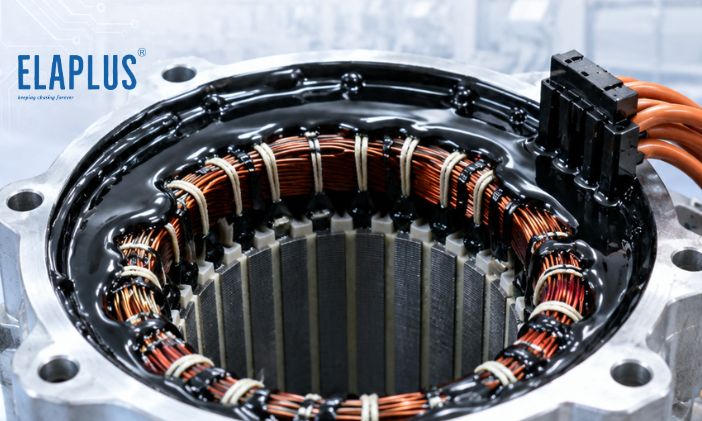
The core mission of potting compound is not to bond, but to protect. When a power module is fully encapsulated with potting compound, moisture is blocked, vibration is dampened, and heat is efficiently dissipated—turning a fragile bare electronic device into a highly reliable unit with multiple times the designed service life.
Currently, mainstream electronic potting compounds on the market fall into three chemical systems: silicone potting compound, epoxy potting compound, and polyurethane potting compound.
■ Silicone systems feature excellent high and low temperature resistance (−60°C to 260°C), low stress, and repairability, making them dominant in high-end applications such as new energy vehicles and photovoltaic inverters.
■ Epoxy systems excel in high strength and strong adhesion, suitable for scenarios requiring strict structural strength.
■ Polyurethane systems offer outstanding flexibility and low cost, widely used in home appliances and
general industrial fields.
Why Is Electronic Potting Compound So Important?
The global electronic potting and encapsulation market is experiencing rapid growth. According to industry research, the global potting resin market reached $4.68 billion in 2025, and the flame-retardant electronic potting compound segment is projected to exceed $5.2 billion by 2032. As the world’s largest electronics manufacturing base and new energy vehicle market, China contributes the largest incremental share.
The explosive demand for potting compounds is driven by three irreversible industry trends:
■ Electronic architecture revolution in new energy vehicles
An electric vehicle uses 3–5 times more electronic components than a traditional fuel vehicle. Battery packs, motors, electronic controls, and charging systems all require extensive potting protection. For power battery pack potting alone, a single vehicle can use dozens of kilograms of material.
■ Large-scale deployment of photovoltaic and energy storage systems
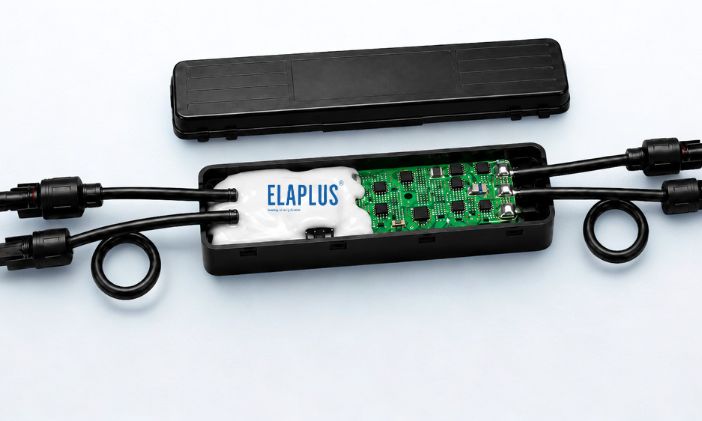
Photovoltaic junction boxes and energy storage inverters operate long-term in outdoor high-temperature and high-humidity environments. Without reliable potting protection, equipment failure rates and operation and maintenance costs will rise sharply.
■ Construction of 5G communication and AI computing infrastructure
Power density in communication base stations and data center power modules continues to climb. Potting compounds must not only protect but also conduct heat—thermal conductivity directly determines the equipment’s thermal management capability.
It can be said that electronic potting compounds have evolved from auxiliary materials into strategic materials that affect the reliability and competitiveness of end products.
How to Select Electronic Potting Compound?
Choosing potting compound should not be based solely on price or datasheet parameters. The real determining factor is the actual working conditions of the application scenario. The following five dimensions are core indicators that enterprise purchasers and technicians must consider when evaluating potting compounds:
■ Thermal Conductivity
For high-heat scenarios such as power modules and automotive motors, thermal conductivity is the primary indicator. Current silicone potting compounds cover 1.0–7.0 W/m·K. Selection should match actual thermal design requirements—not the higher the better, but the more matching the better.
■ Temperature Resistance Grade
Confirm the equipment’s operating temperature range and extreme temperature resistance requirements. Sensor potting in automotive engine compartments needs to withstand temperatures above 150°C, while outdoor photovoltaic devices focus more on flexibility at −40°C.
■ Flame Retardancy Grade
New energy battery packs and energy storage devices have strict flame retardancy requirements, usually needing to meet UL94 V-0. Some high-end applications also require passing horizontal and vertical burning tests.
■ Fluidity and Process Compatibility
Different potting processes (manual potting, vacuum potting, automatic dispensing) have vastly different requirements for adhesive viscosity, working time, and gelation time. A good potting compound should adapt to the production line tempo, not the other way around.
■ Repairability
Epoxy potting compound has high hardness after curing and is difficult to remove, suitable for one-time encapsulation and high-confidentiality scenarios. Silicone potting compound is cuttable and repairable, more suitable for high-value modules requiring later maintenance.
Motor Potting Compound: Triple Challenges of High Temperature, Vibration, and Insulation
Automotive drive motors endure extreme temperature cycling and severe mechanical vibration during operation, imposing extremely demanding requirements on motor potting compounds. From −40°C cold start to 180°C peak temperature, the potting material at the motor winding ends must remain crack-free, non-delaminating, and non-pulverizing.
The core technical indicators of motor potting compound focus on three points:
■ High thermal conductivity (ensures effective heat dissipation from coils)
■ Low stress (low curing shrinkage, no damage to enameled wires)
■ Excellent electrical insulation (breakdown voltage usually above 20 kV/mm)
These performance requirements are exactly the strengths of silicone potting compounds. Elaplus has developed a series of potting solutions for automotive motors of different power levels, with a corresponding product matrix from low-power passenger car drive motors to high-power commercial vehicle main drive motors. In our 8,000 ㎡ factory, 16 flexible production lines can quickly switch formulas according to customer needs, and an annual production capacity of nearly 10,000 tons ensures stable large-scale delivery.
Sensor Potting Compound: Great Details in Small Devices
Sensors are the “nerve endings” of industrial automation, smart vehicles, and consumer electronics—numerous and diverse. Pressure sensors, temperature sensors, position sensors, acceleration sensors—though as small as a fingernail, they often have the most “demanding” requirements for potting compounds.
Why? Because sensor potting has three special challenges:
Extremely small potting space, requiring very low viscosity and excellent fluidity for full filling.
High signal accuracy requirements, so potting compounds must have low dielectric constant and low loss factor without interfering with signal transmission.
Many sensors need long-term contact with oils and chemicals, so potting compounds must have excellent chemical resistance.
Elaplus has accumulated rich formulation experience in sensor potting. From consumer electronics-grade MEMS microphone sensor potting, to automotive-grade oil pressure sensor and oxygen sensor potting, to industrial-grade pressure transmitter potting, different scenarios are matched with different chemical systems and process parameters. Our technicians go to the customer’s production site to provide customized adhesive solutions based on potting equipment, curing methods, and tempo requirements.
Power Supply Potting Compound: The Balance of Heat Dissipation and Protection
Power modules are becoming increasingly compact and “hotter”. A palm-sized DC-DC converter can reach hundreds of watts in power density. Without high-efficiency thermal potting protection, internal temperature rise will rapidly shorten component life.
The selection logic of power supply potting compound is similar to that of motor potting, but with distinct priorities. Power supply potting focuses more on balancing thermal efficiency and electrical safety—rapid heat dissipation while ensuring no breakdown or tracking under high-voltage conditions. In addition, power supply potting usually involves many fine-pitch components, so the compatibility of the adhesive with copper, aluminum, PCB materials, and various packaged devices must be evaluated.
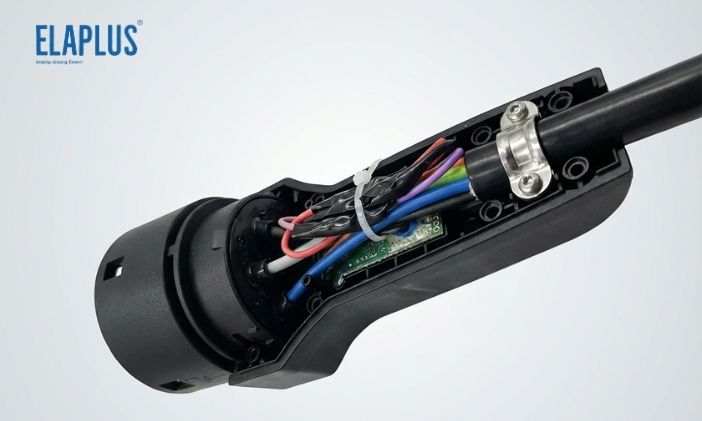
Elaplus’s thermal potting solutions have been verified in mass production for charging gun potting, photovoltaic inverter potting, new energy battery pack BMS potting, and other specific scenarios. Taking charging guns as an example, potting compounds must withstand mechanical stress from frequent plugging and unplugging, as well as complex user-end environments—from dozens of degrees below zero in northern winters to scorching southern summers, with extremely harsh reliability boundary conditions.
How to Choose a Potting Compound Supplier? Four Criteria
Choosing a supplier is more difficult than choosing a product. Product parameters can be compared via datasheets, but a supplier’s capability, stability, and service depth can often only be verified after cooperation. For B-side purchasers and technicians, the following four criteria can be used to “predict” whether a potting compound manufacturer is worthy of cooperation:
■ Complete certification system
IATF 16949 is the quality management threshold for the automotive industry, while ISO 9001, ISO 14001, and ISO 45001 cover quality, environment, and occupational health and safety respectively. Enterprises with all four certificates and passing annual reviews have better guarantees in process control and product consistency.
■ R&D depth
Potting compound is not a “standard product” business; almost all customers have customized needs. The size of the R&D team, number of formulations, testing equipment configuration, and joint development capabilities with customers determine whether the supplier can accompany you for the long term.
■ Manufacturing capacity and production flexibility
Multi-variety and small-batch production is the norm in the electronic adhesive industry, but can the supplier handle peak orders from large customers? The significance of 16 production lines and 10,000-ton annual capacity lies in flexibility.
■ Industry coverage breadth and case accumulation
From charging guns to photovoltaic junction boxes, automotive motors to camera modules, cross-industry application experience means a richer formulation library and more mature failure mode knowledge.
Trust Endorsement: Professionalism Refined in Every Detail
As a pioneer in high-performance functional materials, Elaplus not only provides products but also full lifecycle support from R&D to implementation.
1. Strict System Certifications
We deeply understand the industry’s reverence for quality. The company has fully passed the IATF 16949 automotive industry quality management system certification, and simultaneously operates multiple international standards such as ISO 9001, ISO 14001, and ISO 45001.
2. Strong Scientific Research Foundation
Elaplus adheres to technology-driven development, maintaining a 10%–12% R&D investment ratio year-round. We have established an expert workstation and 5 R&D laboratories equipped with 42 sets of precision testing equipment covering electrical performance testing, mechanical performance testing, and environmental simulation testing, supporting a number of independently developed core patents.
3. Large-Scale Delivery Capacity
Based on 16 modern production lines, Elaplus has achieved large-scale production with an annual capacity of nearly 10,000 tons, enabling rapid response to large-volume delivery demands from global customers.
FAQ: Electronic Potting Compounds
Q1: Where are electronic potting compounds mainly used?
Electronic potting compounds are mainly used for sealing, insulation, moisture-proofing, shockproofing, and thermal conductivity protection of electronic components, sensors, power modules, motors, inverters, photovoltaic junction boxes, new energy battery packs, charging guns, and other products.
Q2: How to choose sensor potting compound?
Sensor potting compound requires attention to moisture resistance, insulation, low stress, high and low temperature resistance, adhesion, and process compatibility. Outdoor sensors should also focus on weather resistance and long-term sealing reliability.
Q3: What properties are required for motor potting compound?
Motor potting compound usually requires good insulation, heat resistance, shock resistance, adhesion, and structural protection. Applications such as automotive motors, servo motors, and new energy motors also need to focus on thermal shock resistance and long-term stability.
Q4: Why is power supply potting compound important?
Power modules tend to generate heat during operation and may be exposed to moisture, dust, and vibration. Power supply potting compound provides insulation, moisture-proofing, thermal conductivity, fixation, and protection, helping to improve the reliability of power products.
Q5: What electronic adhesive products does Elaplus provide?
Elaplus provides potting materials, bonding and sealing materials, structural bonding materials, conformal coating materials, thermal interface materials, thermal grease, and other functional materials, covering applications in electronics, automotive, new energy, and other industries.
Conclusion: Choose Elaplus for Electronic Potting Compounds, Make Electronics More Reliable
From sensor potting, motor potting, power supply potting to new energy module potting, electronic adhesives are becoming indispensable functional materials in modern electronic manufacturing.
Elaplus Functional Materials (Shanghai) Co., Ltd. is committed to the mission of “providing reliable electronic material solutions and creating greater value for customers”, continuously supplying high-quality adhesives and potting material solutions to customers in electronics, automotive, new energy, industrial manufacturing, and other industries.
If you are looking for:
■ Electronic Potting Compound
■ Electronic Adhesive
■ Motor Potting Compound
■ Sensor Potting Compound
■ Power Supply Potting Compound
■ Automotive Electronic Potting Compound
■ New Energy Potting Compound
■ Thermally Conductive Potting Compound Manufacturer
Welcome to contact Elaplus Functional Materials (Shanghai) Co., Ltd. for a professional material solution tailored to your product process.