If insulation drops on a BMS PCB after conformal coating under high-humidity conditions, the first step is to identify whether moisture penetrates through the material or bypasses the protective layer to reach critical areas. Connector roots, board edges, component undersides, uncovered zones and mechanical damage to the coating can all form moisture ingress paths. For BMS requiring deeper environmental isolation, conformal coating and potting shall be selected according to risk zones instead of simply replacing one with the other.
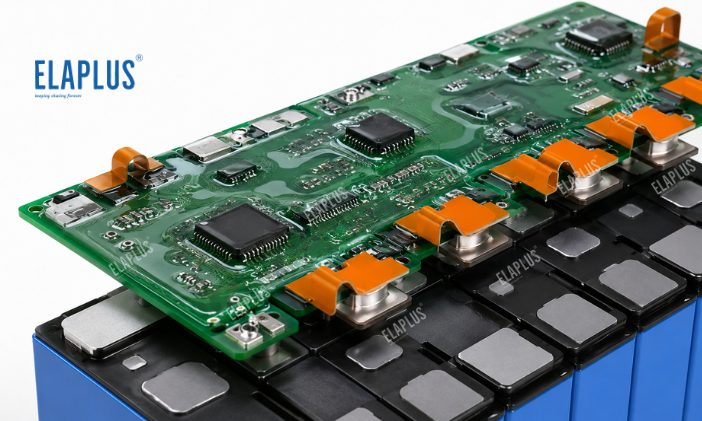
Conformal Coating for BMS
A common misconception in BMS protection:
A transparent protective film on the PCB surface equals full sealing of the entire control board.
In fact, conformal coating delivers thin-film surface protection, while potting provides deep cavity filling, insulation and environmental isolation. They serve different purposes.
1. First Diagnosis: Is the BMS Suffering From Surface Moisture or Boundary Ingress?
When insulation degrades after high-humidity exposure, do not immediately increase coating thickness. Locate where failures cluster:
- If failures mainly occur on exposed solder joints and high-voltage sampling zones: Check coating coverage integrity first.
- If failures concentrate at connector roots: Verify whether the conformal material fully wets around pins.
- If failures appear along board or housing edges: Review the enclosure sealing design.
- If condensation forms throughout the module: The issue exceeds the capability of standalone PCB conformal coating.
The priority is not switching to a better conformal coating. It is to locate the path by which moisture reaches electrically sensitive circuits.
2. Why Moisture Can Still Infiltrate Even With Sprayed Conformal Coating
Conformal coating forms a continuous protective film.
Take SICOAT 9060-L as an example. It is a low-viscosity one-component silicone protective coating with viscosity of 400–600 mPa·s. It cures into a transparent film for protection of PCBs, ICs and electronic components.
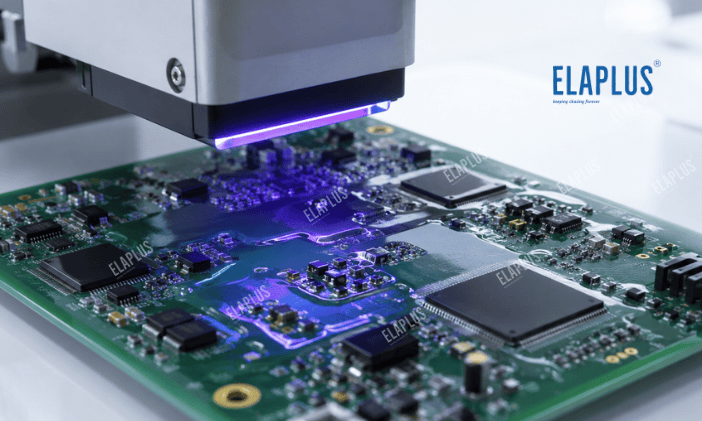
Advantages of this coating type:
- Moisture resistance
- Water repellency
- Electrical insulation
- Weather resistance
- Tolerance to expansion and contraction
However, a PCB is not a flat glass plate. It carries:
- Connectors
- Tall components
- Component undersides
- Solder joints
- Shields
- Board edges
- Pins
Spraying trajectories often fail to cover these 3D geometries and leave weak points. A moisture-resistant material does not guarantee uniform protection across every location on the PCB.
3. Why Connector Roots Are High-Risk Zones for BMS Moisture Protection
Connectors create significant geometric shadowing. Spray mist may cover the outer connector housing but cannot fully reach:
- Rear sides of pins
- Underside of plastic housings
- Junction between connector and PCB
From the top view, the PCB may look fully covered. Yet critical spots may lack a continuous coating layer. This risk is especially prominent near BMS sampling connectors, where metal pins, solder, plastic and PCB substrates meet. Interfaces between dissimilar materials require strict coating continuity checks.
4. How to Tell Whether Inadequate Coating Coverage Needs to Be Upgraded to Local Potting
| Operating Condition | Conformal Coating | Local / Full Potting |
|---|---|---|
| PCB surface moisture prevention | Suitable | Functional but usually heavier |
| Solder joint corrosion resistance | Suitable | Offers deeper protection |
| IC surface protection | Suitable | Depends on structure |
| Deep cavity at connector roots | Hard to achieve full coverage | Worth evaluation |
| Large void filling | Not applicable | Suitable |
| Additional mechanical support required | Limited capability | Preferred |
| Post-assembly rework | Relatively easy | Rework needs special planning |
| Visual inspection through transparent layer | Transparent coating offers benefits | Transparent potting grades available |
The table does not rank one method as superior. The core difference lies in protection depth.
5. Why Full Potting of the Entire BMS Board Is Not Always Appropriate
Full potting improves environmental isolation, yet it introduces new engineering trade-offs:
- Increased weight
- Higher material consumption
- Difficult rework
- Induced stress on components
- Altered thermal paths
The design logic should not jump directly from “conformal coating is insufficient” to “full potting”. A better workflow is risk zoning:
- Low-risk PCB surfaces: conformal coating
- High-risk connector roots: local sealing reinforcement
- Electronic modules requiring deep insulation: evaluate transparent potting This is zone-based protection.
6. Problems Solved by Transparent Polyurethane Potting
Transparent polyurethane systems are suitable for modules requiring visual inspection alongside deeper protection than thin films.
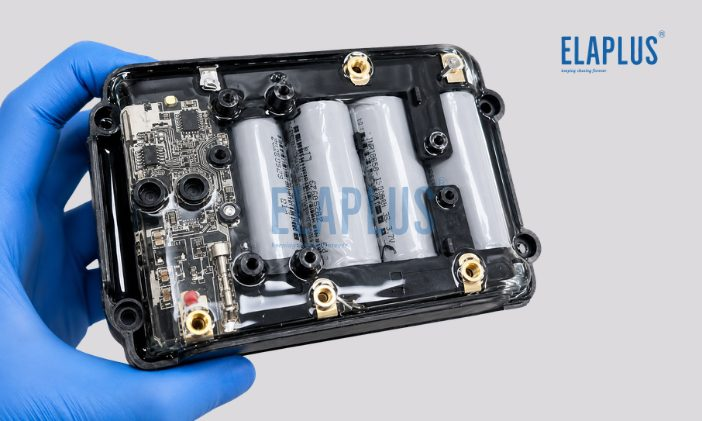
PUR 1661 A/B is a two-component transparent polyurethane potting compound. It cures colourless and transparent, with Shore A hardness of 60±10, water absorption <0.2% and dielectric breakdown strength >18 kV/mm. It is used for potting of BMS and electronic control modules.
One key benefit of transparent potting is retaining visibility of internal components while delivering deep encapsulation. Still, PUR 1661 is not a universal replacement for all BMS conformal coatings.
It upgrades protection from surface coating to volumetric encapsulation.
7. Selection Guide Between Conformal Coating and Transparent Potting
Answer four questions first:
- Where does moisture risk originate? Surface condensation → conformal coating preferred. Deep cavity water ingress → consider deeper sealing.
- Is rework required? Control boards requiring frequent repair should avoid large-area non-dismountable encapsulation.
- Is mechanical fixation needed? Conformal film is not a structural material. Extra support for tall components or connectors requires separate design.
- Is visual inspection of internal parts necessary? Transparent materials are advantageous for visual access.
Material selection sequence: Environmental risk → required protection depth → rework requirement → material system Instead of comparing which material has superior datasheet parameters.
8. Why Units May Fail in Field Even After Passing Humidity Testing
Laboratory damp-heat testing and real-world water exposure are different scenarios. Lab testing mainly controls temperature, humidity and duration. Field exposure additionally involves:
- Condensation from temperature swing
- Housing breathing effect
- Vibration from operation
- Salt spray contamination
- Dust
- Water carried by wire harnesses
Condensation can form on internal surfaces when equipment rapidly shifts from low temperature to hot and humid environments. The protection system must prevent continuous water films and conductive ionic paths on critical electrical areas, rather than only relying on the material’s bulk moisture resistance.
9. Recommended Troubleshooting Sequence for BMS Damp-Heat Failures
- Pinpoint failure zones Locate circuits with abnormal insulation readings
- Inspect coating continuity under UV light Use fluorescent formulations to check shadowed areas and edges
- Examine connectors and board edges Trace moisture bypass routes around coating
- Recheck housing sealing If heavy moisture accumulates inside the module, fixing the PCB alone is insufficient
- Decide whether local deep protection is needed Avoid blindly thickening coating across the whole board
10. Mass Production Inspection Should Go Beyond “Visual Coverage”
Three quality tiers for conformal coating:
Tier 1: Coverage — Is adhesive present?
Tier 2: Continuity — Any bare substrate, shadowing or coating discontinuity?
Tier 3: Functional performance — Does insulation remain stable after damp-heat cycling and thermal cycling?
Tier 3 determines final BMS reliability.
ELAPLUS supplies a full portfolio of conformal coatings, potting compounds, thermal interface materials and structural adhesives for BMS and energy storage, assigning different materials to distinct protection tasks.
FAQ
Q: Why does a BMS still suffer from moisture ingress after conformal coating? A: Conformal coating protects PCB surfaces. Moisture channels at connector roots, component undersides, board edges or housing seals can still expose critical circuits.
Q: Can conformal coating replace potting compound for BMS?
A: Direct replacement is not recommended. Conformal coating provides thin surface film protection; potting is for void filling, deep insulation and environmental isolation.
Q: Is full potting always the safest option for BMS?
A: Not necessarily. Full potting has trade-offs in weight, heat dissipation, component stress and reworkability. Protection depth shall be determined by risk zoning.
Q: What BMS applications fit PUR 1661?
A: It suits BMS and electronic control modules requiring transparent encapsulation, insulation, moisture resistance and medium-depth protection.

Previous post: Does Foam Material Have to Replace All Potting Adhesives for Battery Module Weight Reduction? Differentiate Filling, Thermal and Structural Functions First
Next post: Why Do Solder Joints Still Fail Under Vibration Even Though FPC Solder Looks Good? The Root Cause May Not Be the Solder Joint Itself, But Unrelieved Harness Stress