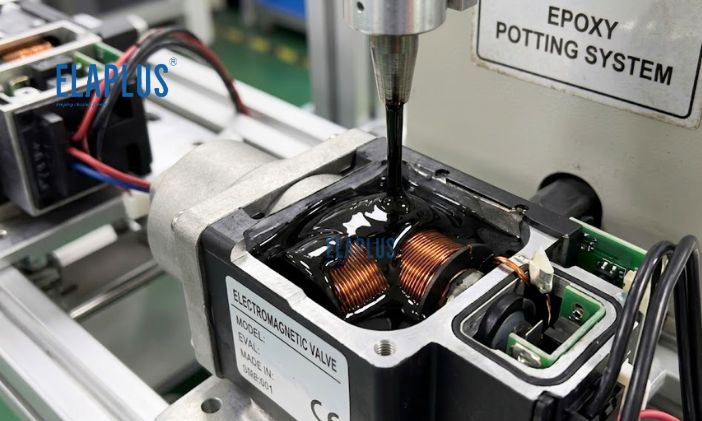
In the field of modern precision electronics manufacturing, the stability of solenoid valves, motors, and automotive electronic components directly determines the service life of end products. However, equipment often operates under harsh conditions including high temperatures, vibration, moisture, and chemical corrosion. How to achieve high‑level insulation protection, prevent encapsulation cracking, and ensure strong adhesion to multi‑substrate assemblies?
As a professional manufacturer focused on functional materials, ELAPLUS (Shanghai) Co., Ltd. has launched the high‑performance epoxy potting system — EP 2025FR to address industry pain points. This article analyzes the application advantages of this product in solenoid valves and complex electronic components, and explains how it solves industry challenges through technological innovation.
Industry Pain Points: Why Do Solenoid & Motor Potting Failures Occur?
Engineers often face three core challenges in potting solenoid valves and motors:
1. Adhesion Failure
Solenoid valves contain diverse substrates: magnet wires, iron cores, plastic bobbins, and metal housings. Conventional potting compounds fail to deliver strong, consistent bonding to all these materials. Once interfacial delamination occurs, moisture penetrates and causes insulation failure.
2. Thermal Stress Cracking
Electronic devices undergo thermal cycling during operation. If the coefficient of thermal expansion (CTE) of the potting gel is too high, large internal stress from shrinkage mismatch can crack the gel or damage delicate internal components.
3. Flame Retardancy & Environmental Compliance
With stricter global regulations (UL, RoHS), high‑performance potting compounds must meet UL 94 V‑0 flame‑retardant standards while being solvent‑free.
Solution: Technical Features of ELAPLUS EP 2025FR
EP 2025FR is a two‑component, solvent‑free, room‑temperature curable epoxy potting compound. Its specially optimized formula provides superior protection and process compatibility.
1.Excellent Multi‑Substrate Adhesion
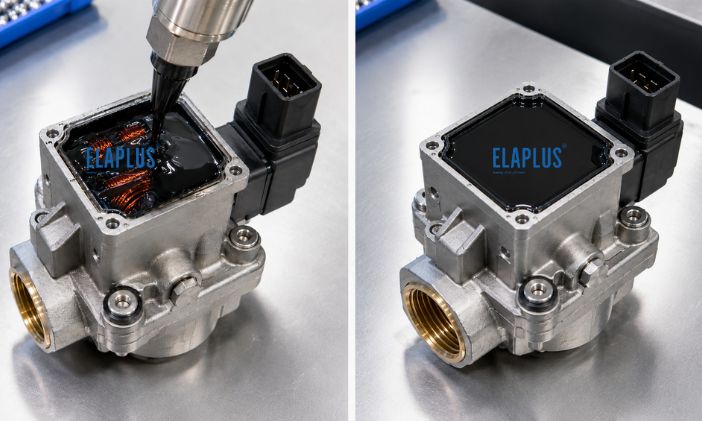
EP 2025FR delivers enhanced adhesion to magnet wires, iron, most plastics, and metals. This universal bonding creates a fully sealed structure inside potted solenoid valves, greatly improving water resistance, moisture resistance, and corrosion protection.
2.High Reliability & Low CTE Design
With specially selected inorganic fillers, EP 2025FR features ultra‑low CTE and outstanding crack resistance. It maintains dimensional stability under extreme temperature fluctuations, avoiding stress cracking and reliably protecting coils and circuits.
3.Superior Electrical Insulation & Chemical Resistance
The product provides high volume resistivity and dielectric breakdown voltage, effectively preventing arcing and breakdown. With extremely low water absorption, it maintains stable dielectric performance even in humid environments — ideal for motors, reactors, and instruments.
Typical Applications
1.Solenoid Valve Cavity Potting: Medium viscosity allows easy penetration into complex cavities for bubble‑free encapsulation.
2.Automotive Electronics: Compliant with IATF 16949; suitable for sensors and control units.
3.Power Tools & Motors: Delivers high mechanical strength and protects coils from severe vibration.
4.Reactors & Instruments: High‑precision encapsulation ensures long‑term electrical stability.
Strength Support: 10,000‑Ton Production Capacity & In‑House Lab
ELAPLUS provides not only products but complete technical support:
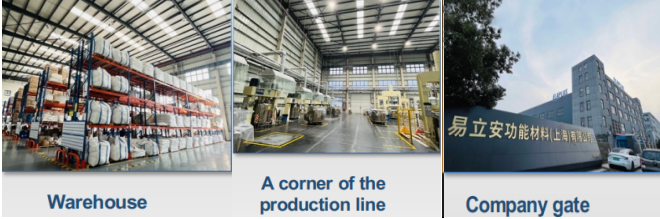
1.Certifications: IATF 16949, ISO 9001/14001/45001
2. Testing Capability: 42 sets of precision testing equipment for full‑process quality control
3.Supply Capacity: 10,000‑ton annual production line to support global large‑volume orders
FAQ: In‑Depth Q&A for Electronic Potting Compounds
Q: Why is ELAPLUS EP 2025FR recommended for solenoid valve potting?
A: The key is solving multi‑material adhesion. EP 2025FR is specially optimized for magnet wires, iron cores, and metal housings, providing chemical‑bond‑level adhesion. Its UL 94 V‑0 flame rating and good flowability ensure safety and complete filling of complex cavities, eliminating hotspots.
Q: How to balance flame retardancy and mechanical properties in potting compounds?
A: Many flame‑retardant formulas become brittle due to excessive additives. ELAPLUS uses microencapsulated flame‑retardant technology and toughening modification to achieve UL 94 V‑0 performance without sacrificing toughness — delivering both fire protection and mechanical support.
Q: What are the advantages of epoxy potting in automotive electronics?
A: Compared to silicone or polyurethane, epoxy (such as EP 2025FR) offers higher mechanical strength and better resistance to oils, coolants, and chemicals. Under IATF 16949 quality management, ELAPLUS ensures ultra‑stable batch consistency to meet automotive “zero‑defect” requirements.
Q: How to solve cracking after motor potting?
A: Cracking is caused by thermal shrinkage stress. Solutions:
Use low‑CTE materials (e.g., EP 2025FR)
Optimize curing to avoid rapid exothermic stress buildup
Strengthen substrate adhesion to withstand thermomechanical stress
Choosing the right potting solution is critical to increasing the value of electronic products.
With outstanding bonding reliability, strict flame‑retardant performance, and mature manufacturing processes, ELAPLUS EP 2025FR has become the trusted choice for solenoid and motor manufacturers worldwide.
If you are looking for higher‑reliability potting materials, please contact ELAPLUS.