When selecting potting and sealing materials for liquid‑level sensors, the primary question shall be:
What medium will the sensor be immersed in long‑term?
Instead of simply asking: “Is this adhesive waterproof?”
Water, engine oil, fuel, coolant, brake fluid and other industrial media exert completely different effects on polymer materials.
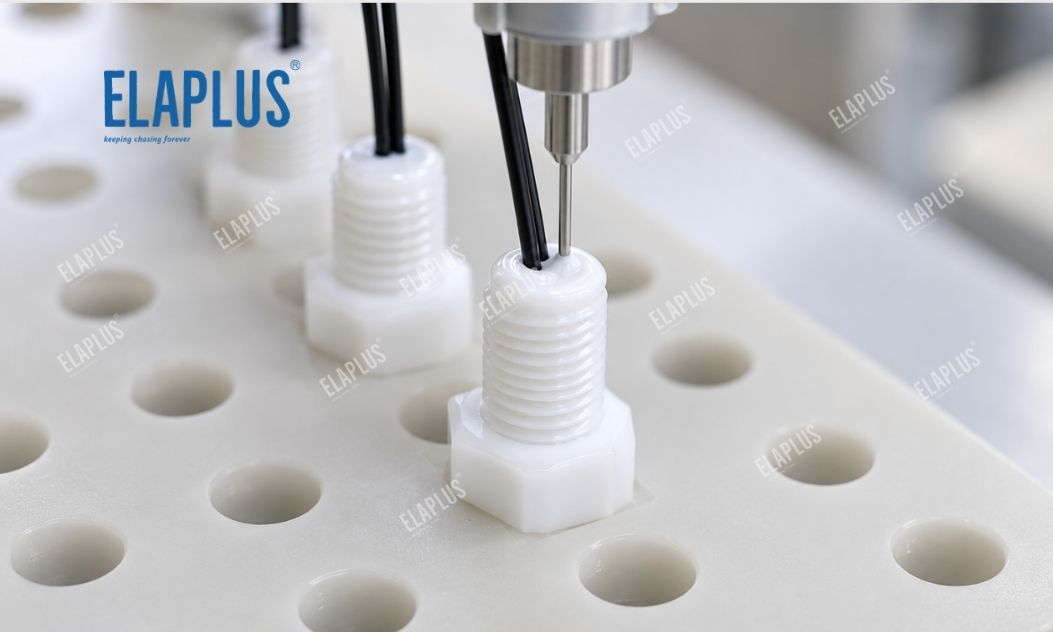
ELAPLUS industrial sensor solutions treat oil‑resistant sealing as an independent application category, separate from bulk potting, pin sealing and substrate fixation.
Six Conditions to Confirm Before Material Selection for Liquid‑level Sensors
| Condition | Rationale |
|---|---|
| Medium name | Determines chemical compatibility of material |
| Medium temperature | High temperature accelerates material aging |
| Immersion duration | Short‑term exposure ≠ long‑term immersion |
| Presence of pressure | Affects medium penetration at interfaces |
| Housing material | Influences bonding performance |
| Chip‑to‑adhesive contact status | Determines stress‑related material requirements |
Why 24‑hour Immersion Test Is Not Sufficient for Final Conclusion
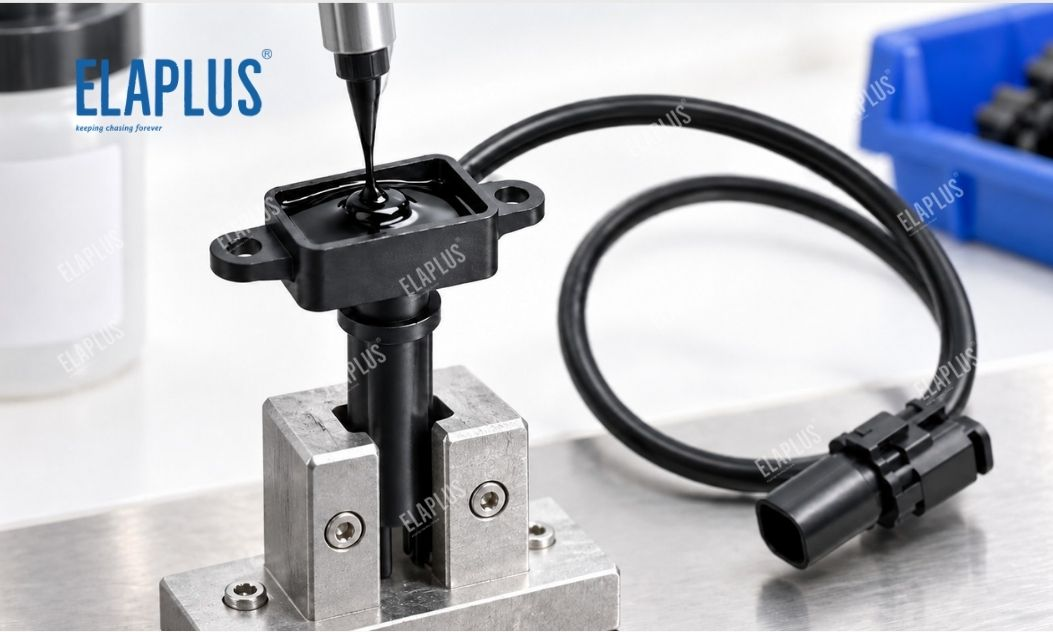
Materials may suffer liquid absorption, swelling, softening, hardening or bond strength degradation in contact with media. Many of these changes do not fully occur within 24 hours.
For long‑service‑life liquid‑level sensors, performance comparison shall cover: before aging → during aging → after aging.
Key Inspection Items for Media‑Resistance Test
| Test Item | Observation Points |
|---|---|
| Appearance | Cracking, blistering |
| Mass | Liquid absorption |
| Volume | Swelling |
| Hardness | Softening / hardening |
| Bonding | Interface degradation |
| Resistance | Insulation property shift |
| Sensor output | Functional variation |
Industry Pitfall
A typical engineering mistake: passing water‑immersion test and then claiming general media resistance. This is insufficient for real‑world applications. Valid evaluation must adopt customer’s actual working medium and operating temperature.
Scenario‑based Adaptation
Fuel‑level, engine‑oil‑level, coolant‑level, water‑tank, urea‑level and industrial chemical liquid‑level sensors shall all be validated against real service media.
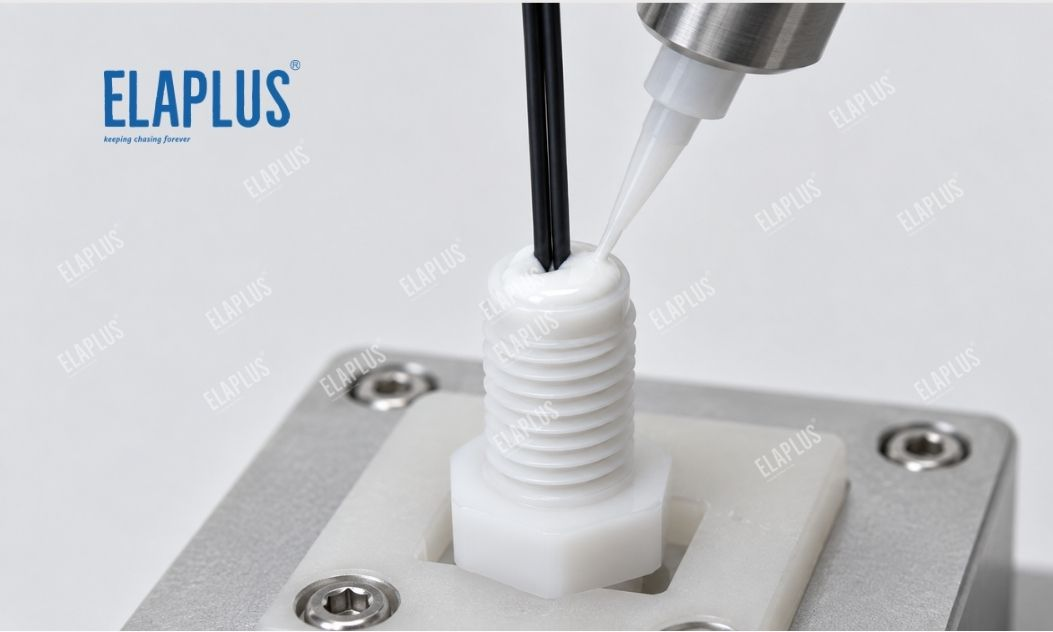
FAQ on Potting Compounds for Liquid‑level Sensors
Q1: Does water‑resistant silicone guarantee engine‑oil resistance? A: No direct inference can be drawn. Validation with target medium is mandatory.
Q2: Are oil‑resistant materials automatically suitable for fuel exposure? A: Not necessarily. Oil and fuel formulations vary significantly.
Q3: Is unchanged appearance after immersion sufficient for qualification? A: Hardness, volume change, bonding integrity, insulation and device functionality shall also be assessed.
Q4: Why does liquid tend to penetrate at sensor pins? Tiny penetration channels may form at the interface between metal pins and resin, requiring dedicated sealing design.
Q5: Why is high‑temperature immersion testing critical? Elevated temperature generally accelerates chemical interaction between material and surrounding media.