Material selection for transformers and control power supply potting should not rely solely on thermal conductivity comparison. When there are numerous narrow gaps between windings, magnetic cores, pins and PCBs, the priority is whether the material can reliably penetrate these zones and form continuous insulation protection. Even an impressively rated thermal conductivity cannot compensate for internal voids.
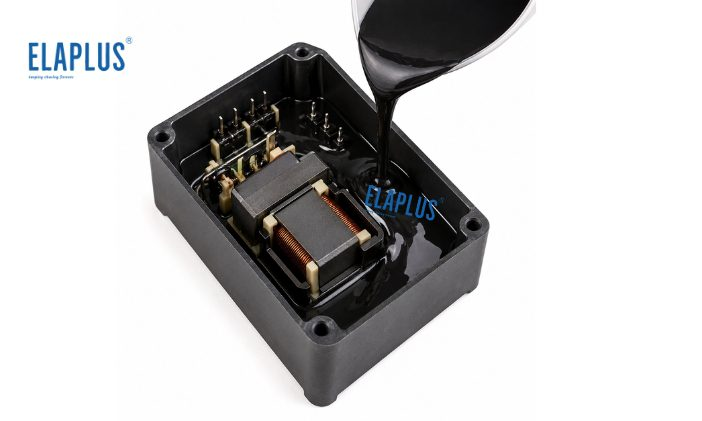
The interior of a transformer or control power supply is not a simple empty cavity. It typically accommodates windings, magnetic cores, bobbins, lead pins, PCBs and electronic components. The potting compound must flow through many narrow slits, corners and coil gaps. The first question to answer is not “What is its thermal conductivity?” It is: Can the adhesive reach the areas requiring protection?
Why Flowability Is Critical for Transformer Potting
Potting resin has to navigate intricate internal structures. Insufficient flowability creates this common defect: the surface appears fully filled, while unfilled voids remain trapped inside. Hotspots such as winding roots, the bottom of bobbins, pin surroundings and areas next to magnetic cores cannot be reliably checked only by observing the liquid level.
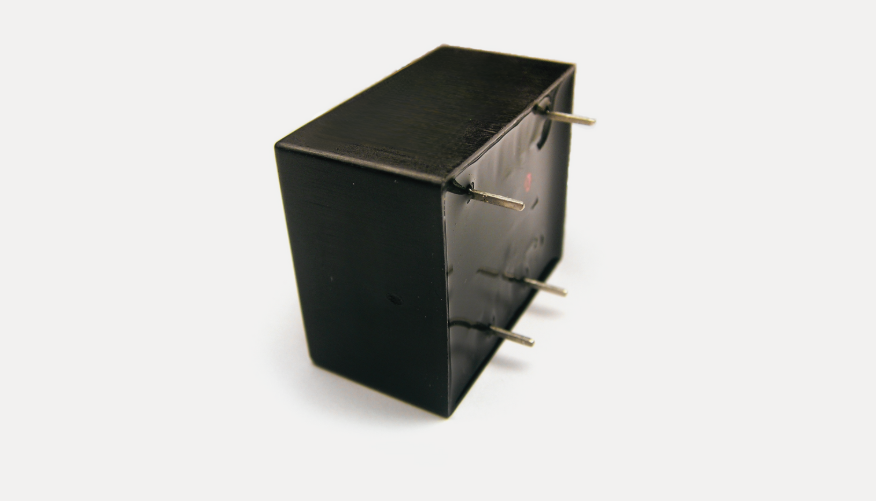
In short: A complete top surface does not guarantee full internal potting.
Why Lower Viscosity Is Not Always Better
Low viscosity helps penetration into tight gaps, yet transformer potting cannot be judged by viscosity alone. Other key parameters include: Working life, settling stability, dispensing speed, curing profile and final mechanical properties. Blindly chasing ultra-low viscosity without considering mass-production processes may lead to uncontrolled resin run-off, uneven filler distribution and mismatched curing tact time.
The proper selection principle: build a viable production process window on the premise of consistent structural filling.
Why PUR 1627 Is Worth Evaluating for Complex Transformer Potting
ELAPLUS PUR 1627 is a two-component solvent-free thermally conductive polyurethane potting compound, curable at ambient temperature or with heat.
Mixed viscosity: 600–1200 mPa·s.
Typical listed applications: Communication equipment, transformers, control power supplies, ignition controllers and electronic sensors.
It features good flowability and deep-section curing. The cured material is flexible, with balanced electrical insulation, water & moisture resistance, flame retardancy and adhesion to a wide range of metals and plastics. This set of properties matches the comprehensive demands of complex power modules: gap filling, insulation, environmental protection and stress buffering.
Why Deep-Section Curing Matters Greatly for Transformers
Transformer potting differs fundamentally from thin-layer bonding. Potting thickness, volume and depth can be substantial, and inner zones have no direct access to air or light. The resin must cure thoroughly deep inside, at the bottom and within confined narrow spaces.
As a two-component system, PUR 1627 achieves deep curing independent of UV light penetration. This is a major process advantage for complex 3D potting structures.
Why Flexibility Is Another Essential Factor
Transformers cycle repeatedly between power-on heating and power-off cooling. Copper wire, magnetic core, plastic bobbin, PCB and potting resin all have different coefficients of thermal expansion. If the rigid potting system locks the assembly completely, relative displacement induced by temperature swings converts into mechanical stress. For control power supplies and transformers subjected to thermal cycling, vibration or low-temperature operation, the material’s stress-buffering performance is essential. Cured PUR 1627 retains flexibility with favourable low-temperature performance and weather resistance.
How to Choose Between Epoxy and Polyurethane
Polyurethane is not universally superior to epoxy, nor vice versa. Their selection criteria differ.
| Selection Criteria | Polyurethane | High-Stiffness Epoxy |
|---|---|---|
| Flexibility & stress relief | Preferred | Generally rigid |
| High structural fixation | Depends on grade | Preferred |
| Complex narrow gaps | Evaluate actual viscosity | Evaluate actual viscosity |
| Thermal cycling stress | Prioritise flexibility | Structural stress control required |
| Deep potting | Achievable for two-component grades | Achievable for two-component grades |
| Low-temperature service | Recommended for evaluation | Grade-dependent |
| Dimensional stability | Trade-off required | Preferred |
Start troubleshooting by identifying the dominant failure risk of the transformer: incomplete filling, overheating, thermal cycling, vibration, or a requirement for high structural strength.
Why Partial Discharge and Insulation Risks Occur Even After Potting
If resin fails to fully infiltrate narrow internal gaps, trapped air pockets remain. For high-voltage designs, these voids cannot be overlooked. Reliable insulating potting requires not only good intrinsic dielectric strength of the material, but also continuous coverage across the entire internal structure. PUR 1627 delivers stable electrical insulation, yet final insulation reliability still depends on full potting integrity. Both material performance and process quality must be validated.
Why Pin Zones Are Key Validation Points
Pin areas feature tiny gaps, complicated geometry and large height variations. When resin is poured from the top, it tends to follow the path of least flow resistance. The liquid level may rise fully on the top while the bottom of pins remains unfilled. During prototype validation, dissect and inspect pin roots, winding bottoms and magnetic core side edges instead of only checking the cured top surface.
What Does 600–1200 mPa·s Mean in Practice?
PUR 1627 has a rated mixed viscosity of 600–1200 mPa·s, which falls within a favourable range for flow potting. This viscosity alone, however, cannot guarantee automatic full filling for every structure. Actual filling performance is also affected by gap dimension, injection location, temperature, flow path length and dispensing rate. Low viscosity is merely one prerequisite for filling capability, not a complete process solution.
How Injection Position Influences Final Results
For the same transformer, injecting from the centre, side or two separate ports creates completely different flow fronts. If advancing resin traps air inside dead corners, permanent voids form. For mass production of complex structures, specifications should cover not only total resin weight per unit, but also injection points, flow rate, staged pouring and target fill height. This reflects the coupling between material properties and structural process design.
Why a Smooth Surface Does Not Equal Successful Potting
The top surface is the easiest region to fill. Critical inspection targets are the hardest-to-reach internal zones. Prototype qualification uses sectioning, dissection, weight consistency checks and electrical testing to confirm internal quality. Repeated voids at the same winding corner, pin row or core bottom point to flow-path issues. Random void distribution indicates issues with mixing, dispensing, resin temperature or equipment stability.
Why Resin Temperature Must Be Controlled in Mass Production
Viscosity is temperature-dependent. Large seasonal shifts between summer and winter alter flow behaviour. Process validation should not be limited to a single ideal lab temperature. Confirm that mixing, dispensing, levelling, filling and curing remain stable across the full production temperature operating window. This carries more practical value than a single 25°C viscosity data point.
Is Flame Retardancy the Only Safety Index for Transformer Potting?
No. PUR 1627 features good flame retardancy alongside electrical insulation, water and moisture resistance. A robust power supply potting solution requires a balanced combination of insulation, temperature rise control, filling integrity, thermal cycling resistance, stress tolerance and environmental protection. Selection cannot be simplified to “only flame retardant grade matters”.
Four Common Pitfalls in Transformer Potting
Pitfall 1: Start comparison by thermal conductivity ranking. For intricate winding assemblies, confirm full filling first.
Pitfall 2: No visible voids on top means no internal voids. Hard-to-fill areas are often at the bottom of windings and pins.
Pitfall 3: Low-viscosity resin automatically fills all gaps. Structural flow channels, injection location and dispensing speed are equally important.
Pitfall 4: One successful prototype run qualifies the process for mass production. Mass production requires validation of temperature variation, continuous feeding, mixing consistency and resin dosage fluctuation.
Application Guidance: Suitable Scenarios for PUR 1627
Recommended for evaluation in transformers, control power supplies, communication equipment, ignition controllers, electronic sensors and other electronic assemblies requiring two-component deep potting. Its mixed viscosity of 600–1200 mPa·s is a candidate for designs with complex winding and pin gaps.
If the primary requirement is ultra-high structural rigidity or long-term exposure to extreme high temperature, do not finalise PUR 1627 solely based on its good flowability; compare alternative material systems. If the design contains fully enclosed narrow dead pockets, reducing viscosity alone is insufficient. Optimise injection ports and venting paths.
ELAPLUS diagnostic selection workflow: Locate the hardest-to-fill zones → evaluate flow paths and process window → confirm complete filling → then compare thermal conductivity, flame retardancy and other properties. This embodies ELAPLUS’s principle: select adhesive according to working conditions, not stack datasheet parameters.
FAQ
Q: Is higher thermal conductivity always better?
A: No. If the resin cannot penetrate winding and pin gaps, high thermal conductivity ratings cannot replace continuous thermal paths and insulating coverage.
Q: Why use low-viscosity resin for transformer potting?
A: Good flowability helps resin enter complex gaps. Final filling also depends on structure, temperature, injection location and process parameters.
Q: Is PUR 1627 suitable for transformer potting?
A: Yes, it can be shortlisted for transformer and control power supply potting. Official applications include communication equipment, transformers, control power supplies, ignition controllers and electronic sensors.
Q: What is the mixed viscosity of PUR 1627?
A: 600–1200 mPa·s.
Q: Does PUR 1627 support deep-section curing?
A: Yes. It is a two-component system curable at room or elevated temperature with deep curing capability.
Q: Why can voids still exist internally even with a good surface finish?
A: Resin tends to flow along low-resistance paths first. A rising liquid level at the top does not guarantee complete filling at winding, core and pin bottoms.
Previous post: Adhesive Selection for Embedded Copper Tubes in Cold Plates: Filling Gaps Is Not Enough. The Core Is to Form a Continuous Thermal Interface Among Copper Tube, Adhesive Layer and Aluminum Plate
Next post: PVC Wire Harness Debonding After Bending and Ageing Despite Strong Initial Bond: Inspect Interface First, Then the Rigid-Flex Transition of Adhesive Layer