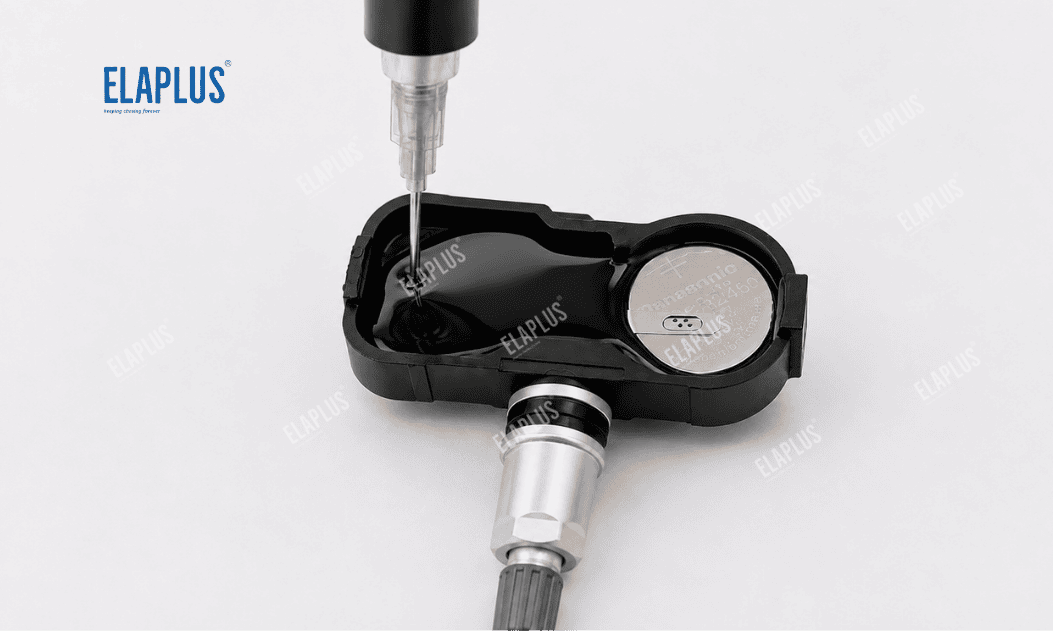
Adhesives for TPMS tire‑pressure sensors must cope with far more than water resistance. They also need to withstand continuous vibration generated by tire rotation, thermal cycling, PCB and chip protection, moisture and long‑term mechanical shock. Therefore, TPMS potting shall prioritize low‑stress performance, electrical insulation, vibration resistance and environmental stability, rather than simply selecting materials with maximum hardness.
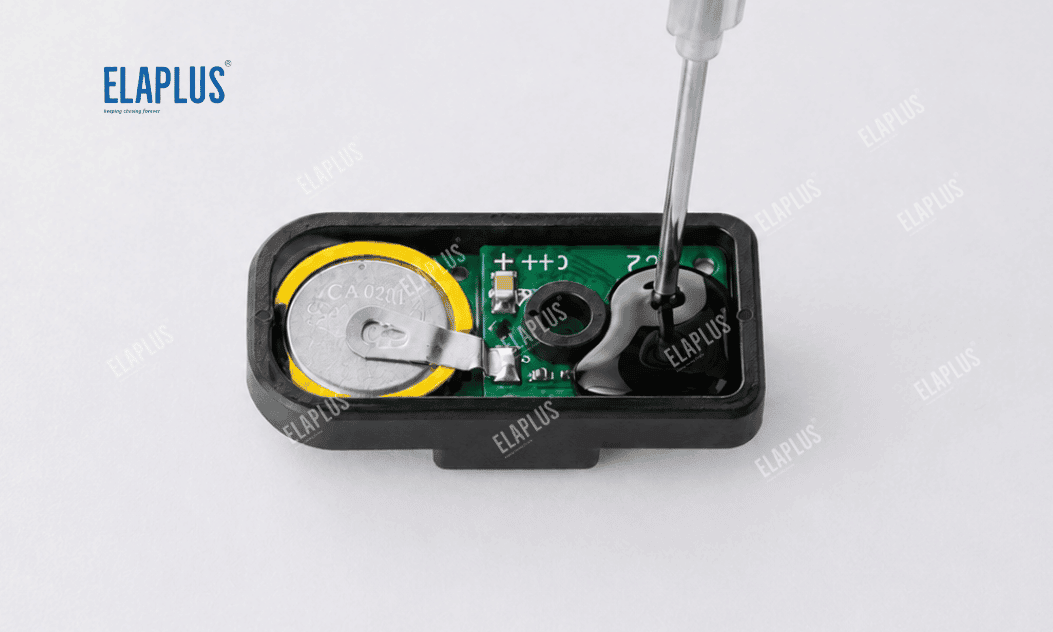
What Components Need Protection Inside TPMS
| Component | Main Risks | Material Requirements |
|---|---|---|
| MEMS chip | Stress, moisture | Low‑stress protection |
| PCB | Vibration, moisture | Potting & moisture‑proofing |
| Solder joints | Cyclic loading | Stress buffering |
| Battery connections | Vibration | Mechanical fixation |
| Housing | Moisture ingress | Sealing |
Why Polyurethane Deserves Consideration
If your TPMS requires moderate mechanical protection while avoiding overly rigid high‑modulus epoxy systems, flexible polyurethane potting materials are worth evaluation.
For instance, published product information for PUR 1680 covers potting for electronic modules and sensors, delivering insulation, moisture resistance, cushioning and structural protection.
PUR 1680 is listed among polyurethane potting options in our sensor solution matrix.
Please note: PUR 1680 can be considered as one candidate for sensor potting, but real‑world structural validation is still required for TPMS applications. It does not mean this single grade fits all tire‑pressure sensor projects.
Why Blind Pursuit of High Hardness Is Not Recommended for TPMS
Sensing chips, PCBs and solder joints do not require the potting material to form a rigid hard shell.
What is truly required:
‑ Cushion vibration loads
‑ Block moisture ingress
‑ Avoid introducing excessive stress onto components during temperature swings
Common Industry Pitfalls
| Common Pitfall | Associated Risk |
|---|---|
| Only comparing room‑temperature hardness | No guarantee of long‑term vibration performance |
| Over‑hard full potting solution | May induce extra stress on solder joints |
| Testing only water‑proof performance | Thermal cycling performance ignored |
| No real‑world tire‑condition validation | Lab test conditions are overly idealized |
Application‑Oriented Material Matching
For in‑tire TPMS, electronic sensor modules near wheel speed assemblies and small electronic assemblies exposed to persistent vibration: Flexible potting systems are highly recommended.
For mechanical assemblies requiring high structural strength with few sensitive electronic components, epoxy solutions may be re‑evaluated.
FAQ for TPMS Sensor Potting
- Why is potting required for TPMS? Primarily for moisture‑proofing, insulation, vibration resistance and environmental protection of PCBs and electronic components.
- Is softer always better for TPMS potting compound? No. Excessively soft materials provide insufficient structural support. A balance between mechanical protection and low stress must be achieved.
- Can epoxy be used for TPMS? It can be evaluated case‑by‑case according to structure. Special validation is mandatory for sensitive chips, large‑area PCBs and thermal‑cycle‑induced stress.
- Is thermal‑conductive potting compound mandatory for TPMS? It depends on internal power consumption and thermal design. High‑thermal‑conductivity materials shall not be adopted by default just because it belongs to automotive electronics.
- What reliability validations should be performed for TPMS adhesives? It is recommended to conduct temperature cycling, damp‑heat, vibration, mechanical shock tests, as well as comparison of sensor output before and after potting, complying with relevant industry standards.
Tags: pur 1680, TPMS potting compound, automotive sensor adhesive, polyurethane potting compound, tire pressure sensor potting compound