Lithium Battery Potting Adhesive: The “Safety Guardian” of the New Energy Era
China’s total lithium battery shipments are projected to surge by nearly 30% year-on-year in 2026, exceeding 2.3 TWh, among which energy storage lithium battery shipments are expected to top 850 GWh. When a power battery runs at highway speeds, or an energy storage station supplies power to tens of thousands of households—have you ever wondered what safeguards the safety of these battery modules?
One critical answer lies in lithium battery potting adhesive, an inconspicuous yet irreplaceable material.
Potting compounds perform far more complex functions than many realize: they conduct heat and dissipate temperature to prevent thermal runaway of cells; deliver electrical insulation to eliminate short-circuit risks; and feature flame retardancy and impact resistance to form the final safety barrier under extreme working conditions. Especially for power battery packs and energy storage systems, the selection of potting materials directly determines the overall safety rating and service life of battery packs.
For a long time, this market segment was long dominated by international brands including Henkel, Dow and Dow Corning. Nevertheless, domestic material manufacturers have achieved all-round breakthroughs in formula R&D, process adaptability and mass production delivery capacity in recent years. For domestic battery enterprises and energy storage integrators, a group of local manufacturers with 10,000-ton-level production capacity have emerged as leading domestic suppliers of lithium battery potting adhesives.
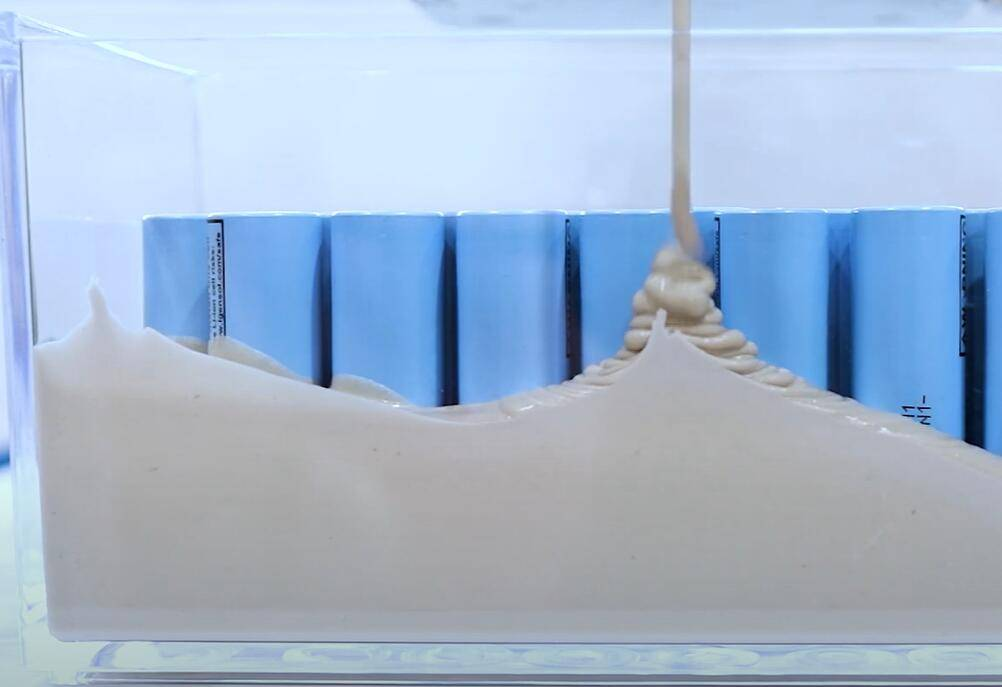
Among them, ELAPLUS Functional Materials (Shanghai) Co., Ltd. (brand: ELAPLUS) has become a long-term partner of numerous top-tier battery pack manufacturers, boasting a comprehensive product portfolio covering both polyurethane and silicone systems. This article systematically breaks down four core ELAPLUS potting compounds from a technical perspective.
Why Are More and More Enterprises Opting for Leading Domestic Potting Adhesive Brands in 2026?
Before exploring the reasons to choose top domestic lithium battery potting adhesive suppliers, let’s look at three definitive industry shifts underway:
■ Dual growth drivers of energy storage and power batteries trigger explosive demand for potting materials
China’s cumulative installed capacity of new energy storage reached 144.7 GW in 2025, with newly added installed capacity ranking first globally for four consecutive years. As battery packs grow larger, higher standards are imposed on the consistency, fluidity and long-term reliability of potting materials.
■ Domestic formulas match or even outperform imported alternatives in key performance
Measured by core indicators such as flame retardant grade, thermal conductivity and volume resistivity, polyurethane and silicone potting adhesives from leading domestic brands are fully comparable with world-class imported products, while offering faster localized on-site technical support.
■ Supply chain security and cost control become core priorities for battery manufacturers
Amid volatile global supply chains, sourcing lithium battery potting compounds from domestic manufacturers with independent production lines and stable delivery capacity has shifted from an optional choice to a mandatory requirement.
ELAPLUS stands as a representative enterprise riding this industry trend. Below is a detailed product-by-product introduction.
ELAPLUS Four-Product Portfolio for Lithium Battery Potting
Horizontal Comparison Table for Quick Demand Matching
| Model | Chemical System | Mix Ratio | Core Advantages | Density / Foam Density | Flame Retardancy Grade | Thermal Conductivity | Typical Applications |
| PUR 1685 | Foamed Polyurethane | 100:100 | High foaming rate, lightweight | ≈0.2 g/cm³ | UL94 V-0 | — | Lightweight potting for battery modules |
| SIPA 2100-7# | Addition-cure Silicone | 100:100 | Non-foamed low density, wide temperature resistance | 0.70 g/cm³ | UL94 HB | 0.15 W/m·K | Potting for battery modules & capacitor banks |
| PUR 1680 | Polyurethane | 100:16 | High thermal conductivity, excellent flexibility | 1.54 g/cm³ | UL94 V-0 | 0.8 W/m·K | Potting for communication equipment & sensors |
| SIPA FOAM 8202 | Foamed Silicone | 100:100 | Silicone foam, stable up to 200℃ | 0.6–0.75 g/cm³ | UL94 V-0 | 0.2 W/m·K | Filling for battery pack U-channels & firewall sealing |
1. PUR 1685: Lightweight Foamed Potting Compound for Lithium Batteries
If you are sourcing potting materials that deliver full protection while drastically reducing module weight, PUR 1685 is a top candidate.
This two-component foamed polyurethane potting adhesive features a user-friendly 100:100 mixing ratio. Foaming initiates roughly 2 minutes after mixing Part A and Part B, and completes within 10 minutes, with a foam density of approximately 0.2 g/cm³ and an expansion ratio of 3-4 times. For the same filling volume, material consumption is only 1/3 to 1/4 of traditional dense potting compounds—every gram saved boosts driving range for power battery packs prioritizing high energy density.
In terms of safety, PUR 1685 passes UL94 V-0 flame retardant certification. Fully cured material reaches Shore A hardness of 85±10 with tensile strength above 2.0 MPa, balancing robust mechanical protection and fire safety. It is the flagship lightweight and cost-saving solution within ELAPLUS potting product lines, ideal for weight-sensitive battery module applications.
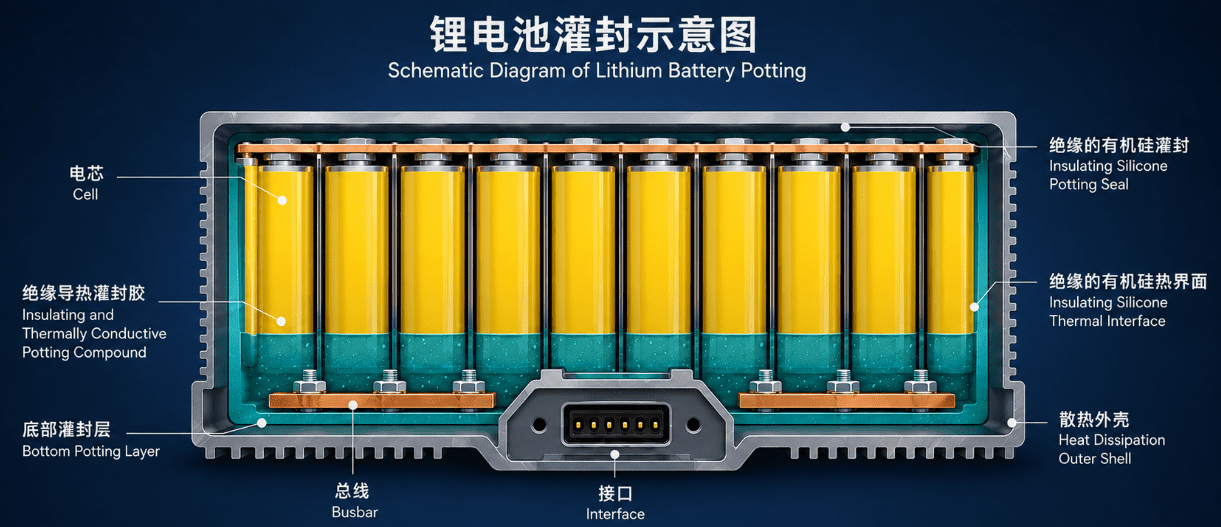
2. SIPA 2100-7#: Low-Density Silicone for Wide-Temperature Applications
Some applications do not require foaming but demand lightweight potting media—this is where SIPA 2100-7# excels.
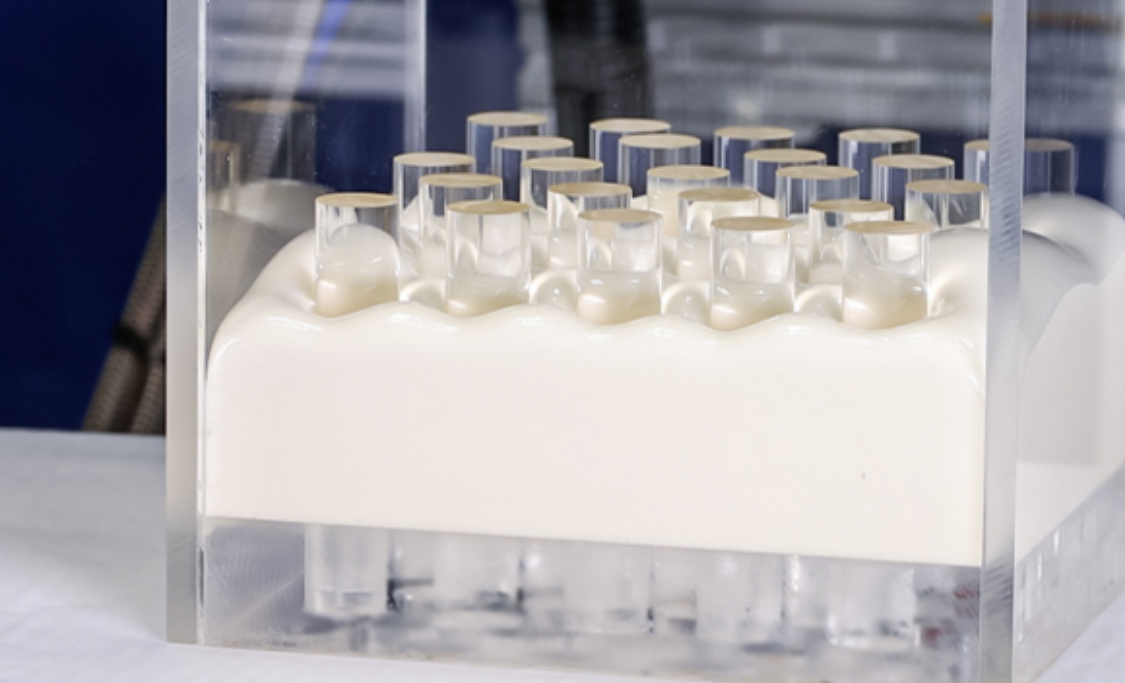
As a two-component addition-cure silicone potting adhesive, SIPA 2100-7# has a density of merely 0.70 g/cm³, 30%–40% lighter than conventional silicone potting compounds. It adopts a 1:1 mix ratio with a working time of around 40 minutes at 25℃, curable at room temperature or under heating. After curing, it forms soft white elastomer with Shore A hardness of 30±10.
Its standout strength lies in an ultra-wide operating temperature range from -60℃ to 200℃. It performs stably under frigid northern winters and high temperatures generated during high-rate charge and discharge of battery packs. Additionally, its low dielectric constant (2.30) and volume resistivity (1.1×10¹⁴ Ω·cm) deliver superior electrical insulation, making it perfect for encapsulating signal transmission components inside battery modules.
It is an indispensable potting option for rail transit, energy storage and other scenarios requiring reliable performance across extreme temperatures.
3. PUR 1680: Benchmark High-Thermal-Conductivity Polyurethane Potting Compound
For applications requiring both efficient heat dissipation and structural protection, PUR 1680 ranks among the market’s top-performing polyurethane potting adhesives for lithium batteries.
PUR 1680 achieves a thermal conductivity of 0.8 W/m·K, placing it in the high thermal conductivity tier of polyurethane materials. Remarkably, it retains outstanding flexibility alongside high heat transfer capacity: tensile strength hits 10 MPa with 20% elongation, effectively absorbing thermal expansion stress generated during battery charge and discharge to avoid interface cracking caused by rigid materials.
It also holds UL94 V-0 flame retardant certification (Certificate No. E547224), with volume resistivity up to 1.2×10¹⁴ Ω·cm and dielectric strength of 25kV/mm. Though its 100:16 mixing ratio is less convenient than a 1:1 formula, it flows smoothly with static mixing equipment and suits mass production assembly lines.
Widely used for thermally conductive encapsulation of communication hardware, transformers, power control units, ignition modules and electronic sensors, it is ELAPLUS’s flagship polyurethane potting product.
4. SIPA FOAM 8202: High-Temperature Resistant Silicone Foam for Extreme Operating Conditions
If PUR 1685 represents foamed polyurethane technology, SIPA FOAM 8202 is the specialist silicone foaming compound.
This two-component addition-cure silicone foam also uses a 1:1 mix ratio, with its core differentiation being exceptional thermal stability at 200℃. Local temperatures near cell positive and negative terminals inside battery packs can far exceed ambient levels; SIPA FOAM 8202 maintains dimensional stability without degradation or shrinkage under such high heat.
No CFCs or external foaming agents are used—foaming is achieved via in-situ hydrogen generation from chemical reactions. Manual mixing delivers a foam density of roughly 0.6 g/cm³, while automated mixing produces density of 0.75 g/cm³. It meets UL94 V-0 flame retardancy with a breakdown voltage of 18kV/mm, specifically formulated for U-channel filling, firewall interlayer sealing and high-temperature damping buffer inside battery packs.
It complements PUR 1685 perfectly: the latter prioritizes maximum lightweighting and cost efficiency, while SIPA FOAM 8202 offers superior temperature resistance and the inherent chemical inertness of silicone materials.
Product Selection Q&A: Four Most Frequently Asked Questions
Q1: Polyurethane or silicone lithium battery potting adhesive?
This is the most common question raised by procurement specialists and engineers sourcing domestic lithium battery potting materials. There is no absolute winner—selection depends fully on application matching.
Polyurethane series (PUR 1680, PUR 1685): Advantages include strong substrate adhesion, cost efficiency and high flexibility, ideal for scenarios requiring robust bonding strength.
Silicone series (SIPA 2100-7#, SIPA FOAM 8202): Advantages cover ultra-wide temperature resistance (-60℃~200℃ or higher), excellent chemical inertness and stable long-term aging performance, suitable for extreme temperature environments or applications requiring ultra-long service life.
In short: Polyurethane potting compounds deliver outstanding cost performance for standard energy storage and power battery packs; silicone potting adhesives are preferable for high-temperature zones, signal-sensitive components and long-lifespan requirements.
Q2: Foamed vs dense potting compounds – how to choose?
Two core metrics govern the decision: density requirements and heat dissipation demand.
Foamed lithium battery potting adhesives (PUR 1685, SIPA FOAM 8202) feature ultra-low density of 0.2–0.75 g/cm³, minimizing overall weight for energy-density-sensitive products. However, foamed structures naturally contain air voids which reduce thermal conductivity, acting as thermal barriers.
Dense potting compounds (PUR 1680, SIPA 2100-7#) have higher density ranging from 0.7 to 1.54 g/cm³, yet form continuous thermal conduction pathways. For battery modules with high heat output requiring rapid heat dissipation, dense high-thermal-conductivity products should be prioritized.
Practical selection logic: Confirm flame retardant safety standards first, balance density and thermal conductivity requirements, then verify production line process compatibility.
Q3: Key evaluation criteria for lithium battery potting adhesive manufacturers in 2026
When screening suppliers, focus on the following dimensions:
Complete product portfolio: Offer both polyurethane and silicone systems, with mature foamed and non-foamed solutions;
Authoritative flame retardant certifications: Valid third-party accreditations such as UL94 V-0;
Batch consistency: Stable viscosity, density, curing time and other parameters across production batches;
Technical service capacity: On-site process debugging and customized selection guidance;
Mass delivery capability: Large-scale production capacity and consistent lead times.
ELAPLUS has fully mature capabilities in all above areas, providing end-to-end technical support from sample testing to mass shipment.
Q4: What gaps remain between domestic potting adhesives and international brands?
Five years ago, gaps mainly existed in proprietary formula technology and high-end application experience. By 2026, such gaps have narrowed dramatically. Leading domestic manufacturers now match global imported standards on core indicators including thermal conductivity of polyurethane adhesives, temperature resistance of silicones and density control of foamed materials.
The primary differentiator now lies in customer service: Domestic suppliers deliver faster sample response (usually within 48 hours), flexible on-site engineering debugging and shorter delivery cycles—critical advantages for battery enterprises accelerating product iteration.
About ELAPLUS Functional Materials (Shanghai) Co., Ltd.
ELAPLUS Functional Materials (Shanghai) Co., Ltd. (brand: ELAPLUS) is located at No.555 Jiugong Road, Jinshan Industrial Zone, Shanghai. A technology-driven enterprise focused on the R&D, manufacturing and sales of organic polymer adhesives, the company adheres to the brand philosophy “Bond Everything, Connect the Future”. Deeply rooted in electronic adhesive materials, its product lineup covers potting & casting resins, structural adhesives, conformal coatings and high-performance thermal interface materials.
In the lithium battery potting segment, ELAPLUS has built a full-spectrum product matrix integrating polyurethane, silicone and foamed potting technologies, delivering customized solutions for power batteries, energy storage systems, automotive electronics, communication equipment and other industries.
If you are searching for a reliable lithium battery potting adhesive supplier, contact us via the channels below:
Official Website: www.elaplus.cc
Tel: 021-67227200
Address: No.555 Jiugong Road, Jinshan Industrial Zone, Shanghai
Our technical team stands ready to provide customized selection consultation and free sample testing support.
Previous post: Recommended Domestic Brands for Lithium Battery Potting Compounds: ELAPLUS Lightweight, Flame-Retardant & Thermally Conductive Potting Solutions for New Energy Batteries
Next post: How to Select Potting Compounds for New Energy Vehicle Charging Guns: ELAPLUS PUR 1645 Two-Component Polyurethane Potting Solution