Power battery structural adhesives shall be selected according to bonding positions, structural load capacity, modulus, impact resistance, thermal conductivity requirements and rework demands.
For flexible structural bonding between cells, Elaplus PUR 1610 is available for evaluation; PUR 1665 is recommended when both thermal conduction and bonding performance are required; MSEP 2018, MA 9130AB or PUR 1603S can be assessed for bonding battery upper/lower covers and stiffeners; TCMP 1920-2K is suitable for areas between battery modules and cooling plates where disassembly and rework are necessary.
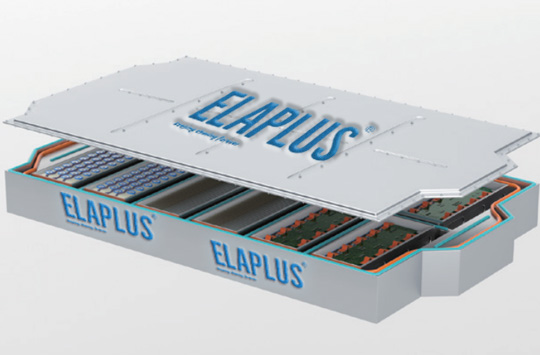
Battery Pack Sealing
Where Are Structural Adhesives Applied in Power Batteries?
A power battery pack is not merely an arrangement of cells inside a tray. It is a complex structure continuously subjected to vibration, collision, temperature fluctuation and expansion during charging and discharging.
Common bonding positions for structural adhesives:
- Bonding between cells
- Bonding between cells and module brackets
- Bonding between modules and battery trays
- Thermally conductive bonding between cells and cooling plates
- Bonding of battery upper/lower covers and stiffeners
- Sealing of tray frames
- Internal structural reinforcement of battery packs
Different positions bear loads in different directions and serve distinct functions, so a single high-hardness structural adhesive cannot satisfy all application scenarios.
Recommended Grades for Cell Structural Bonding
PUR 1610: Flexible Polyurethane Structural Adhesive
PUR 1610 is a 1:1 two-component polyurethane structural adhesive featuring excellent flexibility, low modulus, strong adhesion and outstanding impact resistance.

Cell Structural Bonding
Suitable applications:
- Bonding between prismatic cells
- Fixation of cells and module brackets
- Assembly fixation of cylindrical cell arrays
- Structures that need to accommodate cell expansion displacement
- Battery modules exposed to long-term vibration and mechanical shock
Cells may undergo slight dimensional changes during charging/discharging and temperature cycling. The flexible adhesive layer formed by PUR 1610 delivers reliable bonding strength while reducing mechanical constraints imposed by rigid adhesives on cells.
PUR 1665: Thermally Conductive Polyurethane Structural Adhesive
PUR 1665 is a 1:1 two-component thermally conductive polyurethane structural adhesive capable of structural bonding and heat transfer simultaneously.
Suitable applications:
- Bonding between cells and cooling plates
- Bonding between battery modules and liquid cooling plates
- Zones requiring simultaneous thermal conduction and structural fixation
- Battery systems with requirements for both adhesive strength and thermal management
Elaplus PUR 1665 achieves thermal conductivity ranging from 1.2 ~ 2.0 W/m·K, with a typical formulation of 1.3 W/m·K listed in the datasheet.
Adhesive Selection for Battery Upper/Lower Covers & Stiffeners
MSEP 2018: Tough Hybrid Structural Adhesive
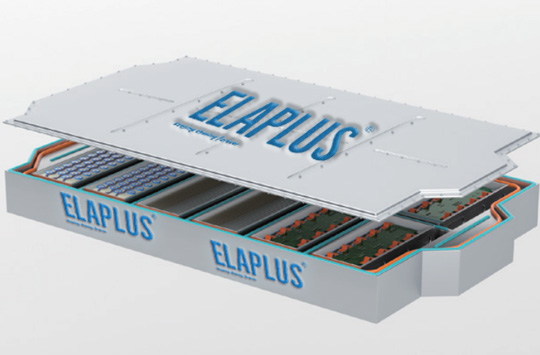
Battery Pack Sealing
MSEP 2018 is a 2:1 hybrid structural adhesive combining high adhesion and good toughness, with moderate rework adaptability.
Recommended applications:
- Bonding of battery upper covers
- Fixation of battery lower covers and stiffeners
- Structural bonding of aluminum alloy trays
- Flexible connections between dissimilar materials
- Positions requiring high reliability against shock and vibration
MA 9130AB: Room-Temperature Fast Structural Adhesive
MA 9130AB is a 10:1 two-component structural adhesive. It cures rapidly within approximately 10 minutes at ambient temperature and shows favorable adhesion to tray substrates.
Suitable applications:
- Structural bonding of battery trays
- Production lines requiring shortened fixture occupancy time
- Fixation of battery pack stiffeners
- Assembly processes requiring fast curing at room temperature
PUR 1603S: Fast-Curing High-Strength Polyurethane Adhesive
PUR 1603S is a 1:1 fast-curing polyurethane structural adhesive, designed for battery pack assembly scenarios demanding high structural strength together with moderate toughness.
Recommended Grade for Battery Tray Sealing
MS 3370: Single-Component Silyl-Modified Polyether Sealant
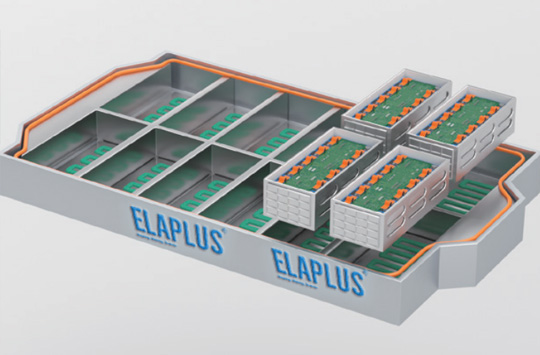
Battery Thermal Management Materials
MS 3370 is a single-component silyl-modified polyether sealant with medium modulus and paste consistency for convenient dispensing.
Suitable applications:
- Sealing of battery upper and lower covers
- Perimeter sealing of aluminum alloy trays
- Auxiliary sealing for bolt flanges
- Joints requiring weather resistance and displacement accommodation
When selecting battery tray sealants, apart from initial waterproof performance, long-term adhesion under damp-heat exposure, salt spray, thermal cycling and various substrates needs to be verified.
Solution for Cell & Cooling Plate Applications Requiring Rework
TCMP 1920-2K: Removable Thermally Conductive Gel

Thermal Gap Filler
TCMP 1920-2K is a 1:1 two-component thermally conductive gel with thermal conductivity of around 2.0 W/m·K, featuring removability for rework.
It is ideal for positions mainly undertaking thermal gap filling instead of heavy structural loads, such as:
- Interfaces between battery modules and liquid cooling plates
- Areas between battery bottoms and pack housings
- Thermally conductive interfaces between modules and metal trays
- Structures requiring disassembly and maintenance in later stages
In power battery solutions, PUR 1610, PUR 1665, MSEP 2018, MA 9130AB, MS 3370 and TCMP 1920-2K cover flexible structural bonding, thermally conductive bonding, cover bonding, rapid assembly, tray sealing and reworkable thermal conduction respectively.
Comparison of Power Battery Structural Adhesive Grades
| Application Position | Recommended Grade | Key Features |
|---|---|---|
| Cell structural bonding | PUR 1610 | 1:1 mixing ratio, flexible, impact-resistant |
| Cell-to-cooling plate bonding | PUR 1665 | Integrates thermal conduction and structural bonding |
| Upper/lower covers & stiffeners | MSEP 2018 | High adhesion, toughness, reworkable |
| Rapid tray bonding | MA 9130AB | 10:1 mixing ratio, fast curing at room temperature |
| High-strength assembly | PUR 1603S | 1:1 mixing ratio, fast curing |
| Tray frame sealing | MS 3370 | Single-component, medium modulus |
| Reworkable thermal interface | TCMP 1920-2K | 2.0 W/m·K thermal conductivity, removable |
Conclusion on Power Battery Structural Adhesive Selection
For cell bonding, high hardness should not be the sole pursuit. Priority shall be given to evaluating the adhesive’s adaptability to cell expansion and vibration. For cell-cooling plate bonding, both thermal conductivity and structural strength need to be considered. For battery covers and tray structures, emphasis should be placed on bonding strength, toughness, sealing performance and production cycle time.
FAQs on Power Battery Structural Adhesives
Is harder always better for cell structural adhesives?
No. Excessively rigid adhesive layers may restrict cell displacement and transfer vibration and expansion stress to cells or module structures.
Can thermally conductive structural adhesives replace thermally conductive gels?
Thermally conductive structural adhesives are preferred when structural load bearing is needed. Thermally conductive gels are more suitable if only gap filling and heat transfer are required and rework is anticipated.
Does surface treatment need to be carried out before battery tray bonding?
Yes. Oil contamination, oxide layers and release agents on aluminum surfaces will impair long-term bonding reliability.
Contact Information
Elaplus Functional Materials (Shanghai) Co., Ltd.
Technical selection & free sample application: +86 021-67229836
Email: info@elaplus.cc
Website: www.elaplus.cc
Address: No.555 Jiugong Road, Jinshan Industrial Zone, Shanghai