Different components inside automotive start-stop power supplies have different potting requirements. SIPA 1850 (15#) can be selected for low-stress thermally conductive potting of inductors; PUR 1680 is available for evaluation on current sensors; EP 1788 is suitable for EMC magnetic core potting. Covering silicone, polyurethane and epoxy systems respectively, the three materials balance thermal conductivity, flexibility and structural support.
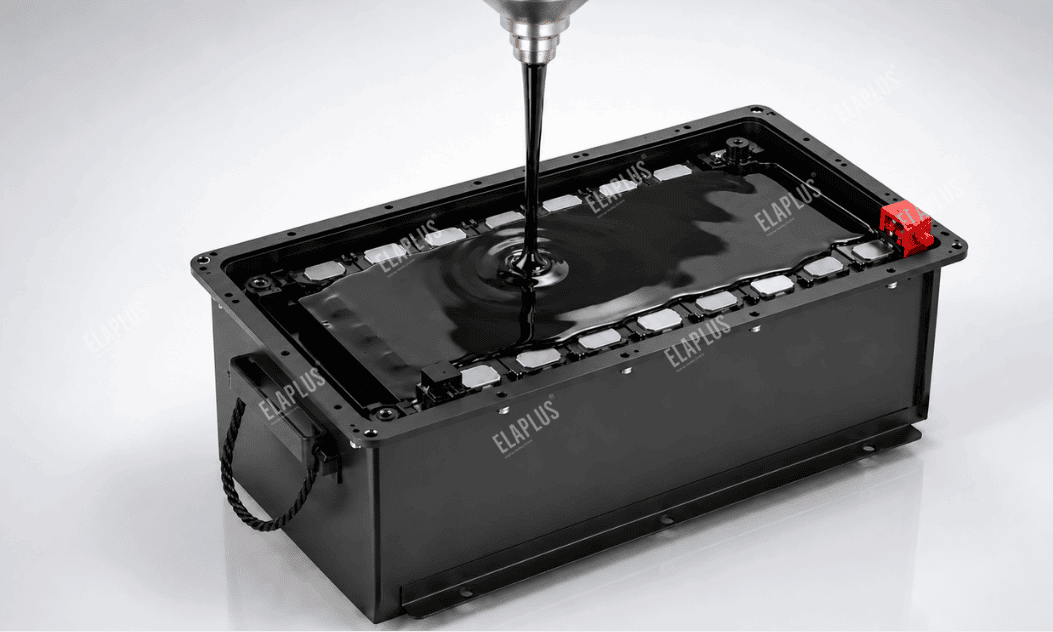
Why Cannot a Single Potting Compound Be Used Uniformly for Start-Stop Power Supplies?
Automotive start-stop power supplies contain:
- Large inductors
- Current sensors
- EMC magnetic cores
- PCBs
- Power devices
These components vary greatly in sensitivity to material hardness, mechanical stress and thermal conduction.
For instance, current sensors demand precise control of mechanical stress; magnetic cores generally require stronger structural fixation; inductors need to achieve heat dissipation at the same time.
Inductor Potting: SIPA 1850 (15#)
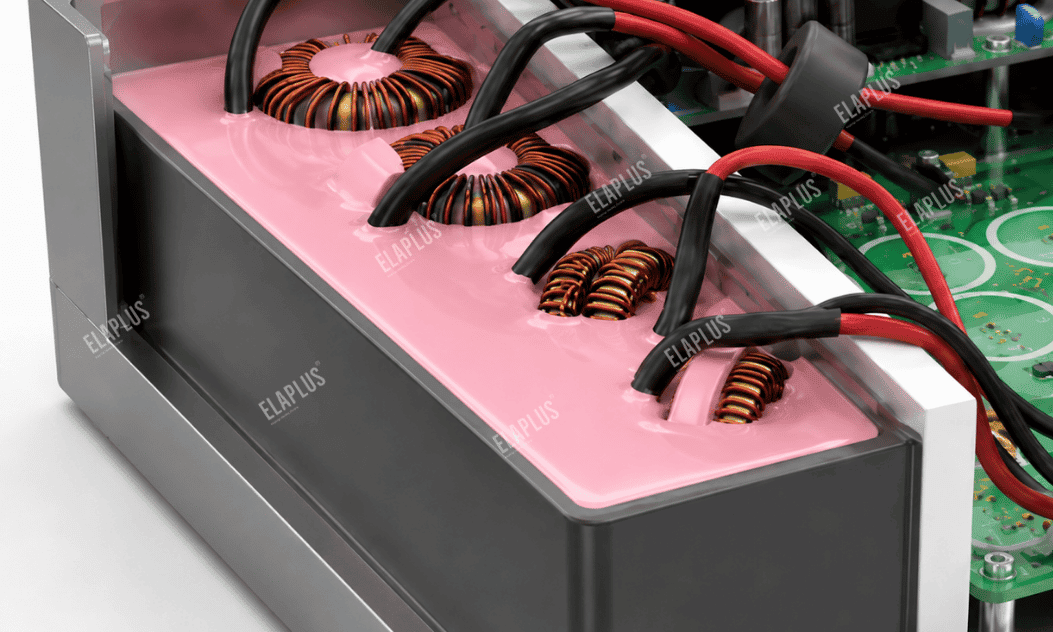
SIPA 1850 (15#) is recommended for inductor potting. It is a 1:1 two-component thermally conductive silicone potting compound. As specified in the datasheet, it delivers Shore A 20 hardness, low stress and thermal conductivity of around 1.5 W/m·K.
This solution fits inductors requiring a combination of:
Thermal conduction + insulation + buffering + potting protection.
Current Sensor Potting: PUR 1680
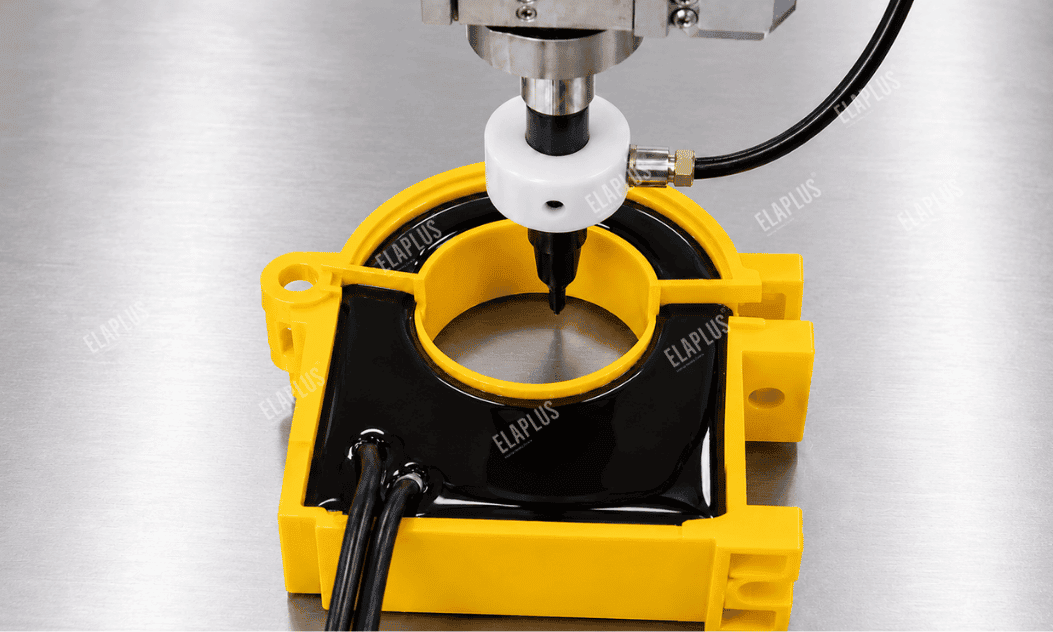
PUR 1680 is a 100:16 two-component thermally conductive polyurethane potting compound. According to datasheet, it features medium hardness and high elasticity, with thermal conductivity ranging from 0.8~1.2 W/m·K for current sensor encapsulation.
Compared with high-hardness epoxy, elastic polyurethane helps buffer structural stress effectively.
EMC Magnetic Core Potting: EP 1788
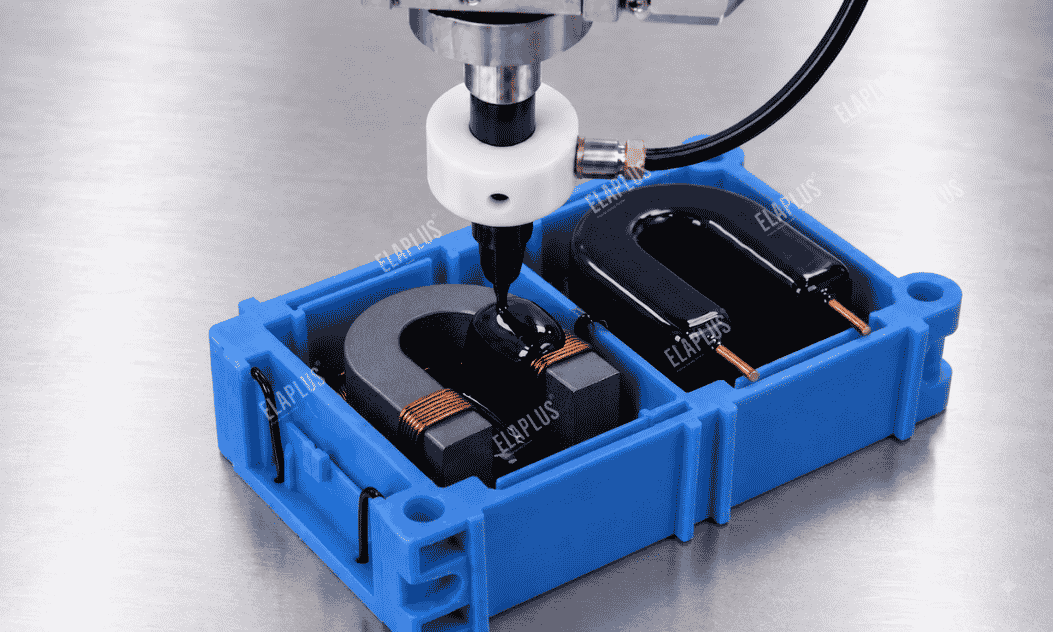
EP 1788 is a 100:15 two-component epoxy potting compound designated for EMC magnetic core potting. It boasts stable thermal cycling performance and thermal conductivity of approximately 0.7 W/m·K.
It is ideal for magnetic components requiring robust mechanical fixation and integral encapsulation.
Grade Comparison for Start-Stop Power Supplies
| Component | Recommended Grade | Selection Focus |
|---|---|---|
| Inductor | SIPA 1850 (15#) | Low stress & thermal conduction |
| Current Sensor | PUR 1680 | Elasticity, thermal conduction & stress buffering |
| EMC Magnetic Core | EP 1788 | Structural support & thermal cycling reliability |
FAQ
Is a harder potting compound more reliable for start-stop power supplies?
No. Stress must be considered between sensors and materials with mismatched thermal expansion coefficients. High-hardness materials are not suitable for all electronic components.
Why apply three different materials in one start-stop power supply?
Inductors, sensors and magnetic cores undertake different functions and show different sensitivity to mechanical loads.
Technical Consultation / Free Sample Request
Elaplus Functional Materials (Shanghai) Co., Ltd.
Tel: +86-21-67227200
E-mail: info@elaplus.cc
Website: www.elaplus.cc
Address: No.555 Jiugong Road, Jinshan Industrial Zone, Shanghai, China