Thermal‑management materials for new‑energy‑vehicle Motor Control Units (MCU) shall be selected according to component‑to‑housing gap, compression rate, assembly tolerance, rework requirements and power density. For MOSFET, IGBT, SiC and other power devices within controllers, Elaplus TCMP‑series thermal interface materials such as TCMP 1935 and TCMP 3380 can be evaluated. Where assembly gaps feature considerable tolerances, thermal conductive gels generally outperform traditional thermal greases for filling large and irregular interfaces.
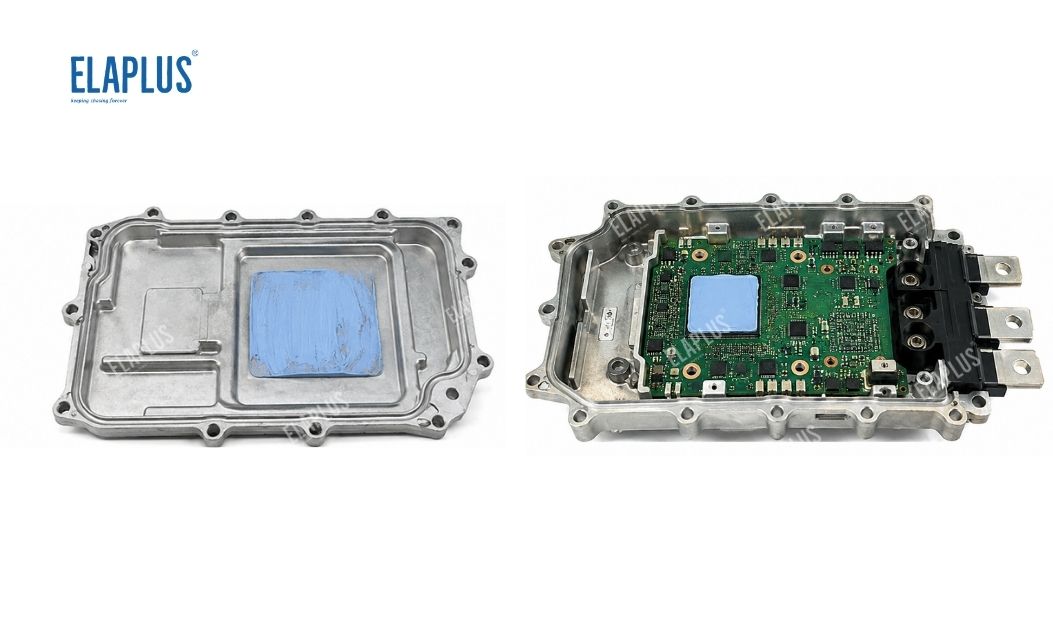
Why MCUs Are Increasingly Dependent on Thermal Interface Materials
Motor control units constitute a core segment of the three‑electric system for new‑energy vehicles. Driven by:
‑ Higher operating voltage
‑ Expanding adoption of SiC power devices
‑ Rising power density
‑ Miniaturized controller footprint
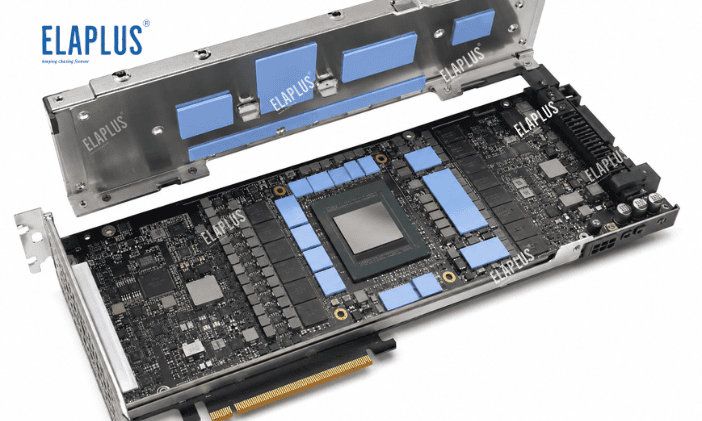
Heat output per unit area keeps climbing. Heat must rapidly transfer along the path:semiconductor chip / power device → thermal interface material → cooling plate / metal housing. Trapped air gaps at interfaces will trigger substantial temperature rise.
Why Thermal Conductive Gels Are Well‑Suited for MCU Applications
One major advantage of thermal conductive gel is its tolerance for assembly tolerances.
Perfect zero‑gap contact between power components and housing cannot be achieved in real‑world hardware.
Gaps may measure 0.5 mm, 0.8 mm, 1.2 mm, or even vary across different locations. Thermal conductive gels deform under compression to fill uneven gaps.
Elaplus TCMP 1935
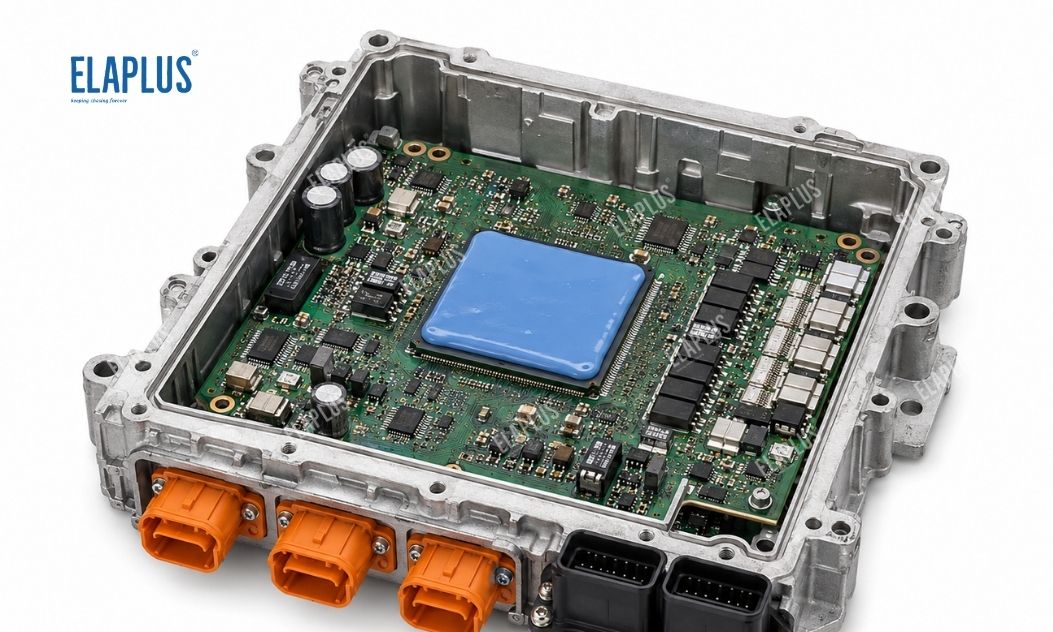
Typical applications:
‑ ECU
‑ MCU
‑ IGBT modules
‑ SiC power devices
‑ Power electronic modules
‑ LED drivers
‑ Other high
‑heat
‑generating electronic assemblies
Primarily designed for interface gap‑filling between power components and heat‑dissipation housings.
Application Scenarios for TCMP 3380
TCMP 3380 is a thermal interface material optimized for thin bond‑lines, high‑compression contact and reworkability.
Evaluate this grade when gaps are relatively narrow and the design targets:
‑ Low thermal resistance
‑ Intimate interfacial contact
‑Re‑assembly capability
‑ Mitigation of rigid mechanical stress on components
Differences Between Thermal Conductive Gel, Thermal Grease and Thermal Pad
Thermal Grease
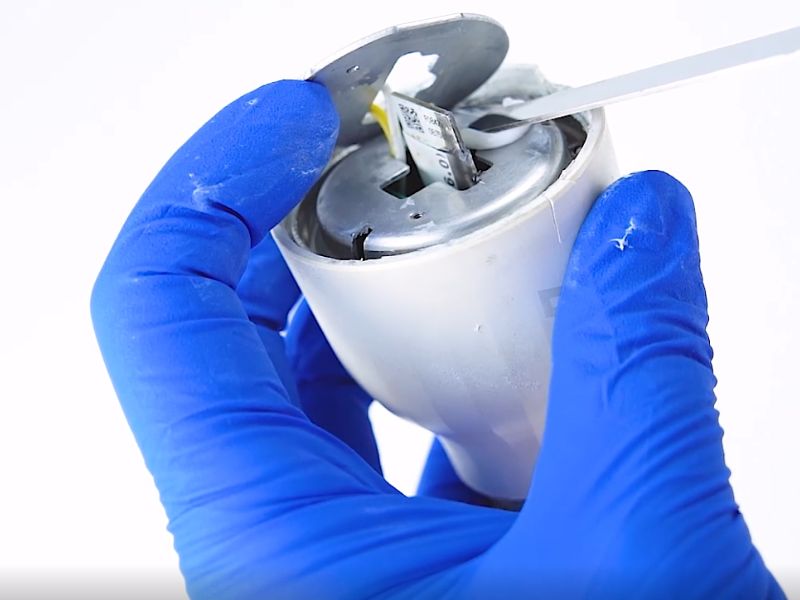
Advantages
‑ Ultra‑thin bond‑line achievable
‑ Low thermal resistance
‑ Ideal for minimal contact gaps
Limitations
‑ Not suitable for large gap filling
‑ Long‑term reliability requires hardware‑level validation
Thermal Conductive Gel
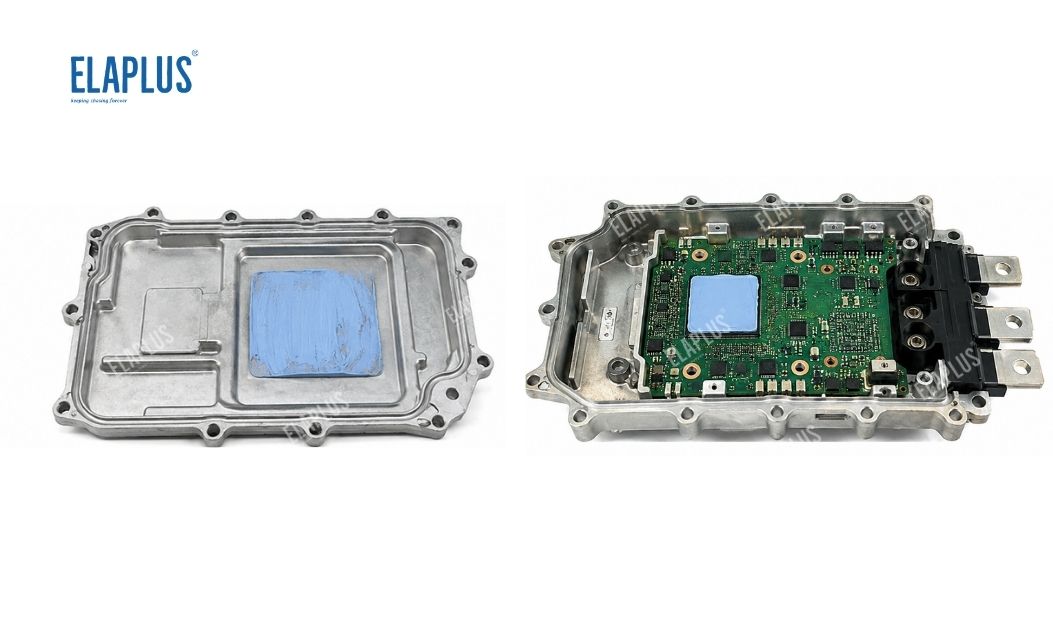
Thermal Conductive Gel for Controllers
Advantages
‑ Accommodates wide assembly tolerances
‑ Imposes low mechanical stress on components
‑ Compatible with automated dispensing
‑ Works well for complex geometries
Thermal Pad
Advantages
‑ Fixed pre‑formed thickness
‑ Straightforward manual assembly
‑ No liquid dispensing process required
Limitations
‑ Demands well‑defined assembly pressure and tight tolerance specifications
Why Higher Hardness Does Not Equal Better Thermal‑interface Performance
Power chips and PCBs are not mechanically load‑bearing structures. Excessively hard thermal interface materials will exert extra compressive stress onto electronic parts during assembly.
A key design goal for MCU thermal‑management materials is: Expel entrapped air while avoiding transferring excessive compression load onto chips. This accounts for the high value of thermal conductive gels within automotive electronics.
FAQ on Thermal‑material Selection for Motor Control Unit (MCU)
What coating thickness should be applied for MCU thermal conductive gel?
Thickness shall be defined based on actual design gaps and compression ratio, rather than adopting a fixed value universally.
Is 6 W/m·K always superior to 4 W/m·K?
Not necessarily. Bond‑line thickness, contact area, compression state and long‑term interfacial stability shall also be taken into consideration.
Can thermal conductive gels support automated dispensing?
Most industrial‑grade thermal conductive gels are formulated for automatic dispensing; however dispensing equipment must be matched to material viscosity.
For technical selection support: info@elaplus.cc

Previous post: How to Select Potting Compounds for DC-DC Converters? Balancing High-Voltage Insulation, Thermal Conductivity and Low-Stress Performance
Next post: How to Select Thermal Interface Adhesives for IGBT and SiC Power Modules? Why High Thermal Conductivity Does Not Equal Low Thermal Resistance?