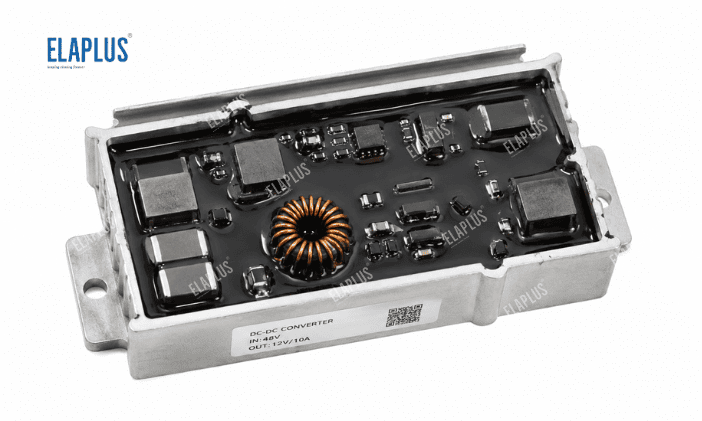
Potting compounds for DC‑DC converters shall mainly address high‑voltage insulation, heat dissipation of power components, PCB moisture resistance, vibration protection and thermal‑cycling stress. For new‑energy vehicle DC‑DC modules, Elaplus SIPA 1850 thermally conductive silicone, PUR 1680 thermally conductive polyurethane and EP 1710 epoxy potting compound can be evaluated according to respective structures. If heat‑dissipation filling between components and housing is required instead of full potting, TCMP‑series thermal conductive gels can be further adopted to build low‑thermal‑resistance interfaces.
Why Are DC‑DC Converters Prone to Thermal‑management Challenges?
DC‑DC modules perform power conversion between different voltage levels.
Thermal Conductivity for Automotive DC‑DC Converters
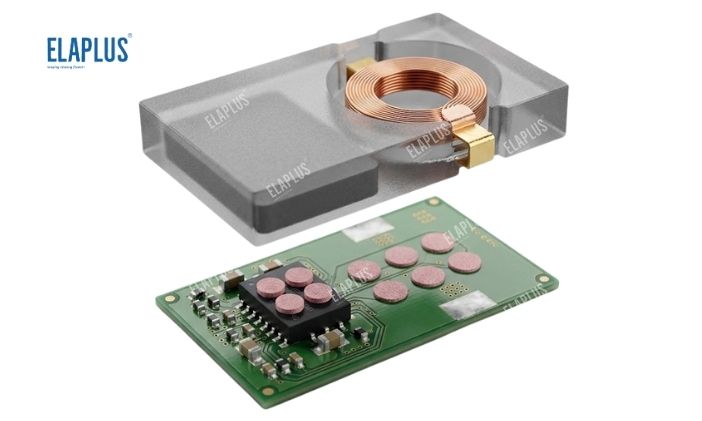
Heat is generated by MOSFETs, SiC devices, transformers, inductors and other components during operation. Meanwhile, DC‑DC converters are generally installed within highly confined spaces.
Actual working conditions therefore feature high voltage, elevated temperature, vibration, high power density and compact footprint. These impose far higher requirements on adhesive materials compared with general consumer‑electronics applications.
Why Is Low‑stress Performance Critical for Full DC‑DC Module Potting?
A typical module consists of multiple materials: PCB, power devices, copper busbars, ceramics and aluminum housings.
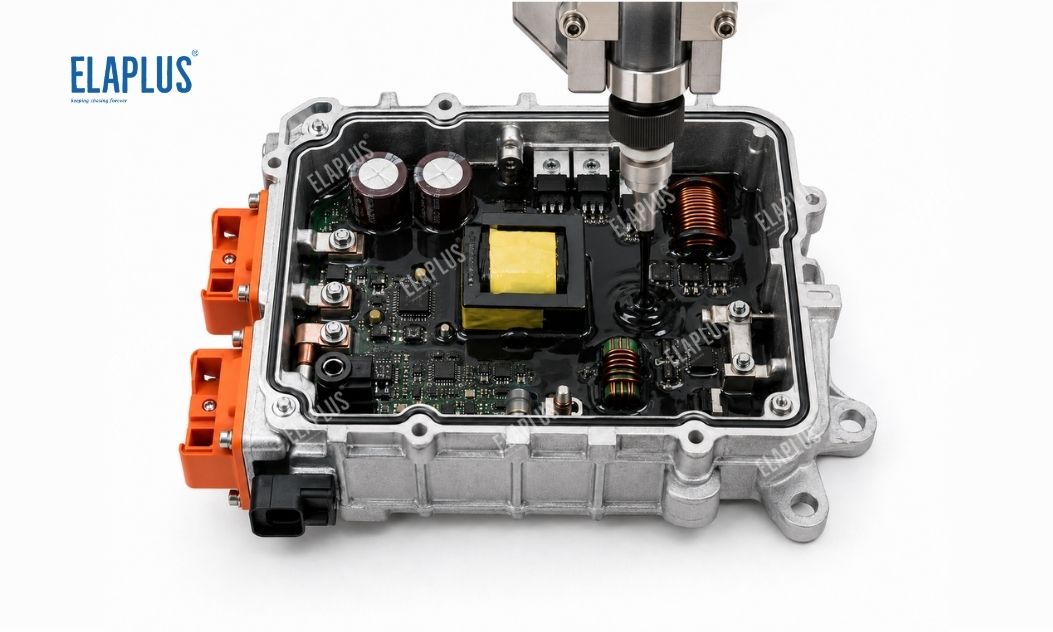
These materials exhibit different thermal expansion upon temperature rise.If the whole module is fully constrained by high‑modulus rigid materials, displacement induced by thermal cycling may eventually lead to:
- PCB warpage
- Stress on solder joints
- Interfacial stress on components
- Potting compound cracking
- Interfacial delamination
For large‑area DC‑DC potting, the SIPA 1850 thermally conductive silicone potting system is recommended for priority evaluation. Core selection criteria: thermal conductivity, elasticity, insulation property and thermal‑cycle buffering capacity.
When to Choose PUR 1680?
For applications requiring enhanced mechanical support compared with silicones, yet avoiding the extreme hardness of certain rigid epoxies, PUR 1680 is worth consideration. It is well suited to balance the following performance requirements:
- Moisture resistance
- Flexible fixation
- Thermal conductivity
- Vibration resistance
- Electronic component protection
Why Epoxies Are Still Required for High‑temperature & High‑voltage Modules?
Certain DC‑DC structures place high priority on:
- High‑temperature stability
- Superior electrical insulation
- Dimensional retention
- Component fixation
Under such circumstances, epoxy systems such as EP 1710 may be considered. Nevertheless, compound hardness shall be validated based on potting thickness, component dimension, CTE and PCB mechanical strength.
Is Full Potting Mandatory for Power MOSFETs?
Not necessarily.
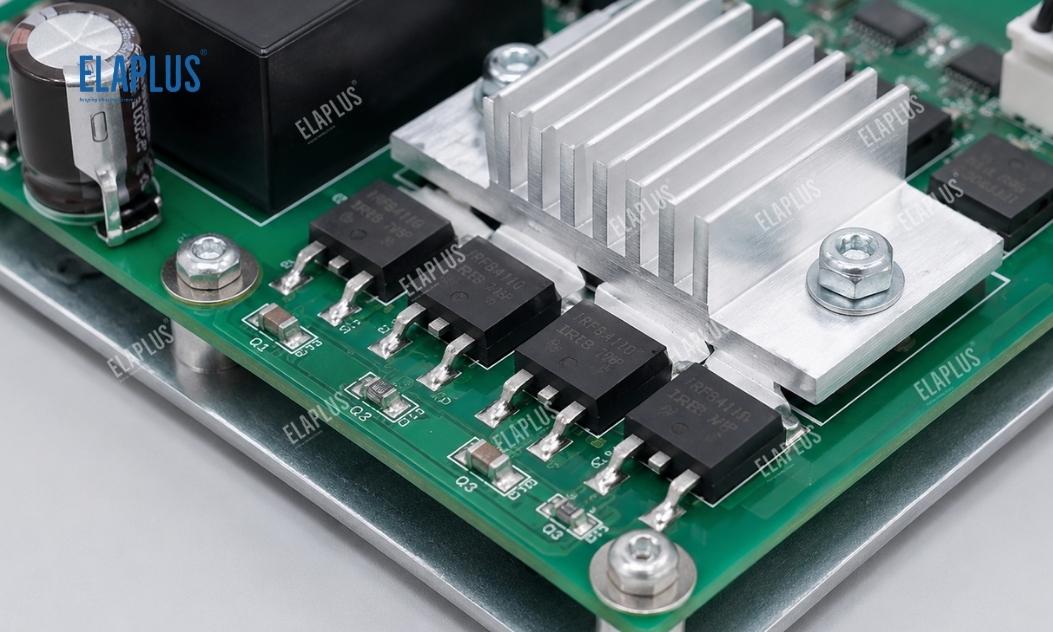
If the primary concern is heat transfer between MOSFETs and metal housing, a more practical solution would be: MOSFET → thermal conductive gel → heat‑dissipation housing.
Thermal Conduction for Driver MOSFETs
For thermal conduction of driver MOSFETs TCMP‑series thermal conductive gels such as TCMP 1935 can be adopted to fill gaps between power components and heat‑dissipation structures. This design targets gap elimination and stable thermal‑path establishment rather than full encapsulation.
DC‑DC Converter Material Selection Logic
- Full‑unit protection required → Potting compound
- Low‑stress requirement → Silicone
- Flexibility plus mechanical support → Polyurethane
- High structural strength & dimensional stability → Epoxy
- Only heat dissipation between MOSFET and housing → Thermal conductive gel
FAQ on DC‑DC Potting Compounds
Is flame retardancy required for DC‑DC potting compounds?
It shall be determined in accordance with complete‑machine specifications and practical structures. Flame retardancy and electrical insulation shall be prioritized for high‑voltage, high‑power electronics.
Can thermal conductive gel replace full potting?
Simple replacement is not feasible. They serve different purposes: thermal conductive gels focus on thermal interfaces, while potting compounds also deliver insulation, moisture resistance, fixation and other functions.
Why do new‑energy‑vehicle DC‑DC converters attach great importance to thermal cycling?
Vehicles undergo frequent start‑stop cycles and ambient‑temperature fluctuations throughout service life. Repeated thermal expansion and contraction among dissimilar materials generate mechanical stress.
Previous post: How to Select Potting Compounds for OBC? Thermally Conductive Potting Solutions for On‑Board Charger Inductors, PCBs and Power Modules
Next post: What Thermal Materials for Automotive Motor Controller (MCU)? How to Select Between Thermal Conductive Gel, Thermal Grease and Thermal Pads