When selecting adhesives for automotive pressure sensors, simply searching for “high‑temperature waterproof potting compound” is not sufficient. You need to break down the structure into sensing core element, PCB/leads, housing, pin terminals and media‑contact zones. For the core element, low‑stress performance and long‑term stability are prioritized. For housing sections, adhesion and sealing stand as key requirements. For full‑cavity potting, flowability, insulation and thermal‑cycle resistance must also be taken into account.
ELAPLUS sensor‑oriented solutions separate oil‑resistant sealing, pin‑terminal sealing, FPC fixation, ceramic‑substrate bonding and overall potting, instead of adopting one single material for all positions.
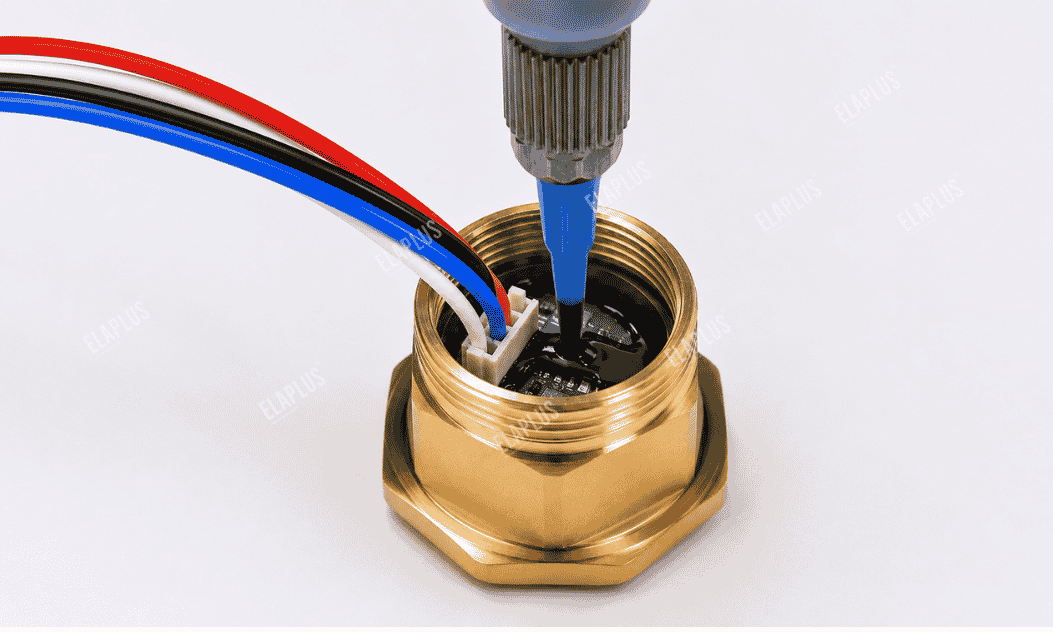
Pressure Transmitter
Table: Adhesive Selection for Different Zones of Pressure Sensors
| Application Position | Primary Task | Key Considerations | Selection Direction |
|---|---|---|---|
| Pressure‑sensing core | Sensitive‑component protection | Low stress, electrical insulation | Flexible silicone / gel |
| Ceramic substrate | Component fixation | Adhesion, low shrinkage | Silicone / epoxy resin |
| Pin terminals | Waterproof sealing | Flow property, adhesion | Sealant |
| PCB assembly | Moisture‑proof protection | Insulation, stress relief | Potting compound / Conformal coating |
| Aluminum‑plastic hybrid housing | Housing sealing | Dissimilar‑substrate bonding | Sealing silicone |
| Full cavity potting | Overall encapsulation | Flowability, insulation, temperature resistance | Epoxy / Polyurethane / Silicone |
Temperature‑Pressure Sensor Core: SIPC 1835
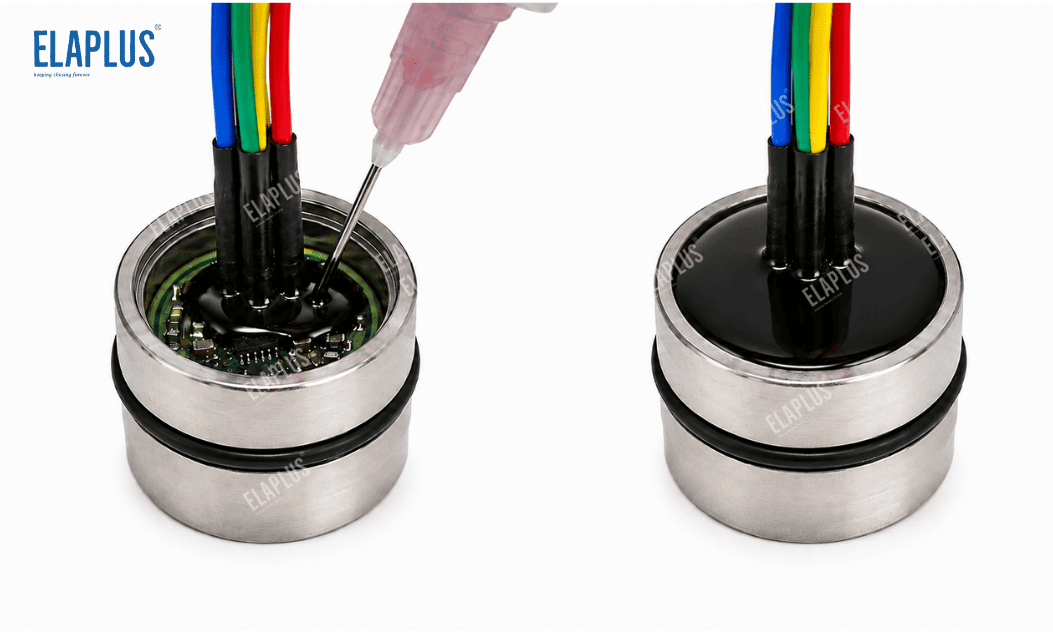
SIPC 1835 is specified for temperature‑pressure sensor cores with a mixing ratio of 10:1 and a cure time of approx. 1‑2 hours. The priority here is not excessive potting thickness, but to protect the core element while introducing minimal mechanical constraints to it.
Housing Sealing: SIPC 1810 LV
SIPC 1810 LV can be evaluated for sensor housing sections, engineered for sealing and bonding between aluminum housings and plastic parts.
It clearly illustrates a typical rule for pressure sensors: core‑protection adhesive ≠ housing‑sealing adhesive.
Why Are Pressure Sensors Vulnerable to High‑Stress Loads?
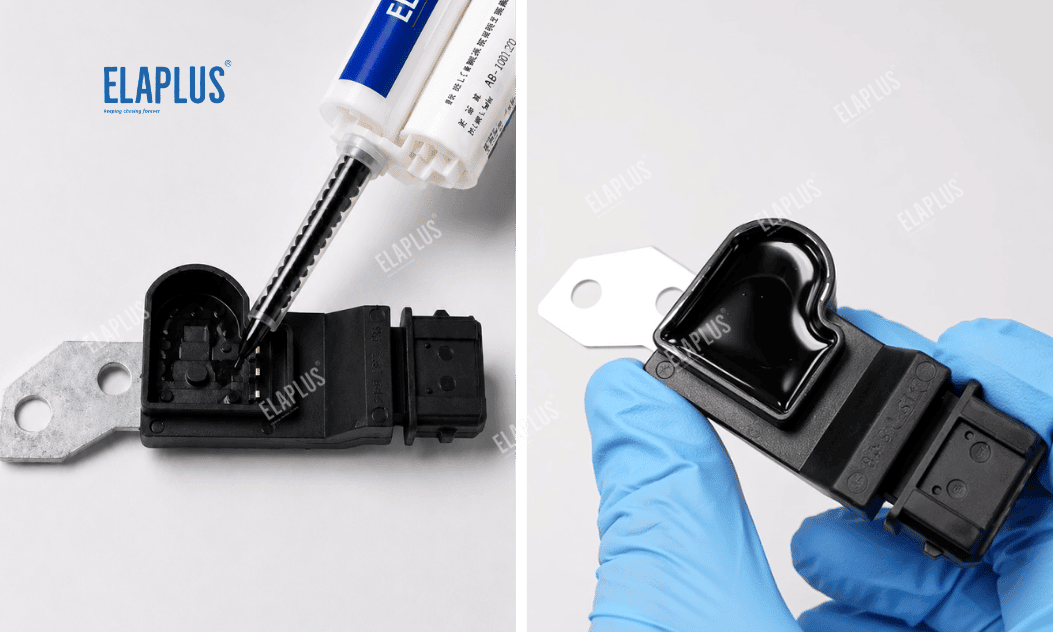
Differential‑pressure sensor
Pressure sensors measure extremely tiny deformation or pressure variations. Large curing shrinkage or excessive hardness from potting materials may introduce extra mechanical load onto sensing cores.
Therefore, during material selection, do not merely ask “what is the hardness?”; you should also evaluate “whether this hardness will interfere with sensor output performance”.
Industry Pitfalls: Three Most Common Issues for Pressure Sensors
| Common Misconception | Potential Risk |
|---|---|
| Potting the entire sensor with one rigid hard compound | Rising stress applied to the sensing core |
| Validating only IP waterproof performance without checking accuracy shift | Measurement deviation occurs after sealing |
| Mass production qualification based solely on room‑temperature bonding performance | Ignoring thermal‑cycle and chemical‑media resistance |
For applications exposed to oil and coolant media, validation with real working media is mandatory.
Suitable Application Scenarios for This Solution
Recommended for: Automotive oil‑pressure sensors, integrated temperature‑pressure sensors, pressure‑core modules, industrial pressure‑detection modules, and assemblies combining metallic housings with plastic components.
For simple mechanical‑housing bonding without sensitive chips, this low‑stress sensor‑packaging logic is not required.
FAQ on Adhesives for Pressure Sensors
Q: Can pressure sensors be fully potted directly with epoxy resin? A: It depends on whether the core element is stress‑sensitive. Rigid full potting shall not be determined merely by waterproof requirements.
Q: Can sealing adhesives and core‑protection adhesives be interchangeable? A: Not necessarily. These two positions undertake distinct functional requirements.
Q: Why do zero‑point calibration tests remain necessary even after passing waterproof tests? A: Reliable sealing and measurement accuracy are two independent performance indicators.