The biggest difference between adhesives for temperature sensors and general‑purpose electronic potting materials lies in that the material not only protects components, but also forms part of the heat transfer path from the measured environment to the sensing element. Therefore, potting compounds for temperature sensors shall balance thermal conductivity, electrical insulation, filling performance, temperature resistance and stress‑relief properties, rather than simply pursuing maximum sealing tightness.
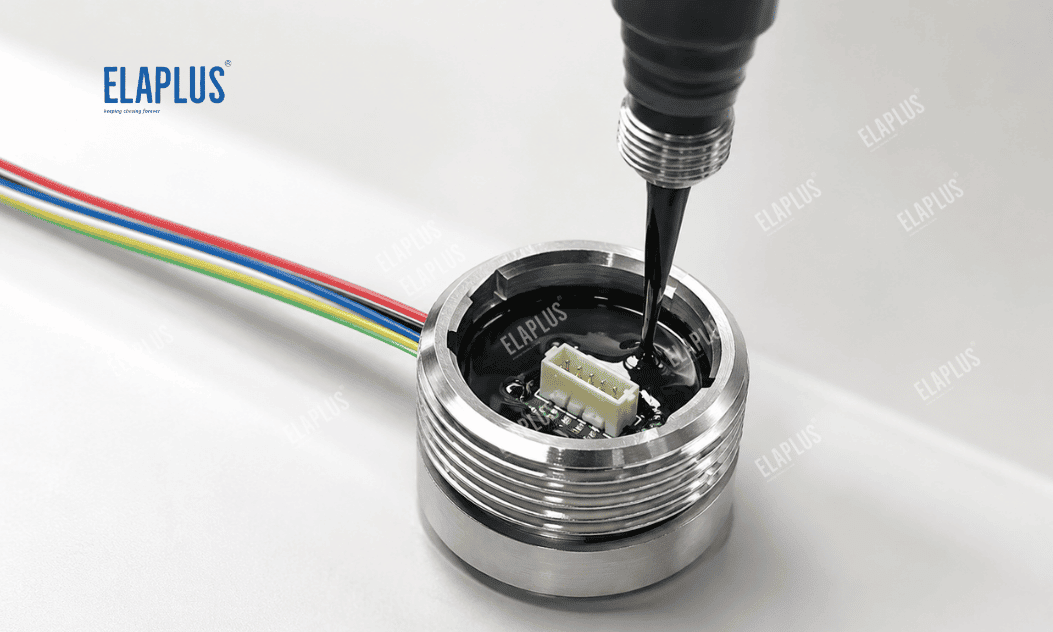
Within ELAPLUS existing sensor solutions, thermal greases, potting silicones or thermally conductive silicones can be adopted inside temperature sensors to achieve favorable thermal conductivity and fast response.
Quick‑Selection Guide for Temperature‑Sensor Adhesives

Epoxy encapsulation for NTC components
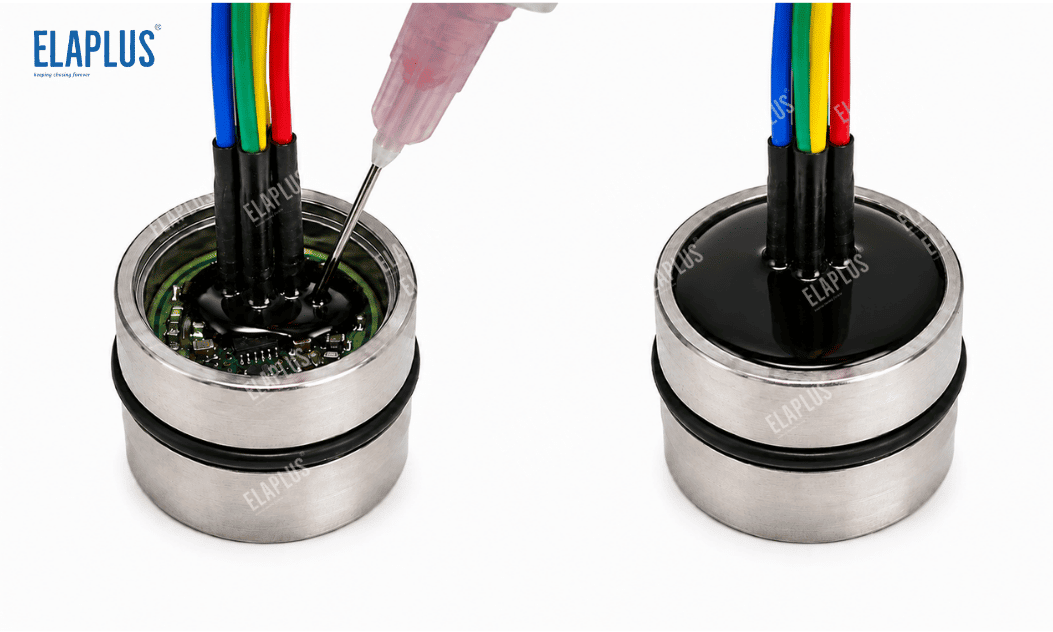
potting for temperature‑pressure sensors

potting for temperature‑sensor wire harnesses
| Structure | Main Challenge | Material Key Considerations |
|---|---|---|
| NTC components & metal probe | Thermal response | Thermal conductivity, thin bond‑line thickness |
| PCB temperature module | Environmental protection | Moisture resistance, insulation |
| Filling inside metal housing | Air thermal resistance | Flowability, thermal conductivity |
| High‑temperature automotive zones | Long‑term thermal exposure | Thermal aging resistance |
| Vibration‑prone locations | Lead‑wire protection | Flexibility, vibration resistance |
Why Excessively Thick Potting Layers Degrade Response Speed
Heat transfer path:
Measured medium → Metal probe → Potting material → Temperature‑sensing element
If the intermediate material delivers excessive thermal resistance, the actual ambient temperature changes, yet heat cannot be rapidly conducted to the sensing element. As a result, the sensor output lags behind real‑world temperature variation.
This explains why thicker adhesive layers do not equal higher reliability for temperature sensors.
Does Higher Thermal Conductivity Definitely Mean Faster Response?
Not necessarily. Other critical factors include: bond‑line thickness, actual interfacial contact, internal air voids, and placement of sensing elements. Noticeable internal air cavities will undermine the performance even of high‑thermal‑conductivity materials.
Common Industry Pitfalls
| Wrong Mindset | More Reasonable Evaluation Logic |
|---|---|
| Applying excessive thermally conductive adhesive | Minimize the effective heat transfer path |
| Only testing steady‑state final temperature | Test response time simultaneously |
| Only reviewing material temperature rating | Perform long‑term thermal‑aging validation |
| Overlooking lead‑wire roots | Implement stress protection for lead wires |
Target Application Scenarios
Suitable for: Automotive coolant temperature sensing, oil temperature sensing, air‑conditioner temperature sensing, industrial equipment temperature probes, motor temperature monitoring and battery temperature detection.
Extra caution shall be exercised on adhesive‑layer design for sensors with bare exposed sensing chips.

Previous post: How to Select Potting Compounds for Automotive Pressure Sensors: Different Design Philosophies for Core‑Element Protection vs Housing Sealing
Next post: How to Select Potting Compound for TPMS Tire‑Pressure Sensors: Harsh Operating Conditions Inside Tires Are More Complex Than Expected