During long-term motor operation, most equipment failures stem not from severe malfunctions, but from an easily overlooked issue: loosening of coils, lead wires, magnetic sheets and inductive components under sustained vibration.
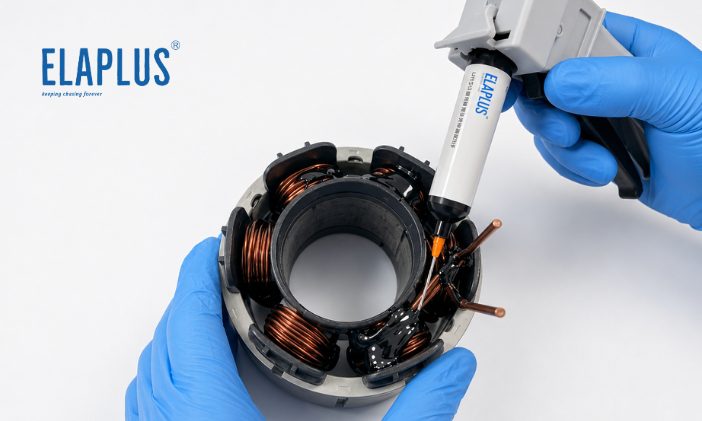
This problem is especially prominent in automotive electronics, motor drives, pressure sensors, wiring harness fixation, inductor securing and motor magnet bonding. Such products constantly endure drastic temperature swings, mechanical vibration, impact loads and harsh electrical operating environments. Inadequate fixation of coil leads or magnetic components will trigger a full range of reliability risks:
■ Fluttering of coil lead wires
■ Fatigue cracking of solder joints
■ Loosened wiring harnesses
■ Displacement or detachment of magnetic sheets
■ Abnormal noise from inductors
■ Fluctuations in electrical performance
■ Increased operating noise of motors
■ Structural failure after prolonged vibration
Accordingly, fixing motor coil leads cannot rely solely on plastic latches or ordinary adhesives. A structural adhesive with strong bonding strength, high glass transition temperature (Tg), wide temperature resistance, superior electrical insulation, moisture resistance and robust mechanical properties is essential.
For such applications, ELAPLUS recommends the EP 1767 One-Part Epoxy Structural Adhesive.
Product Introduction of EP 1767
EP 1767 is a black, solvent-free one-part epoxy structural adhesive. Upon full thermal curing, it delivers outstanding bonding performance, electrical insulation, moisture resistance and mechanical strength, with high adhesion to multiple substrates including metals, glass and ceramics.
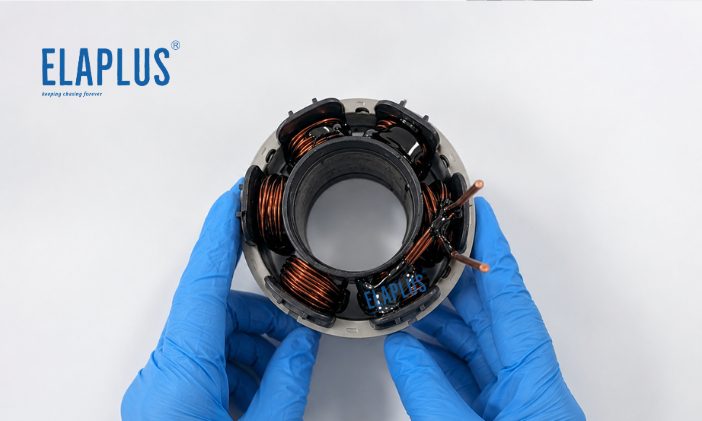
Wide Range of Applications:
■ Automotive electronics
■ Pressure sensors
■ Wiring harness fixation
■ Motor magnet bonding
■ Inductor securing
■ Motor coil lead wire fixation
■ Structural bonding of electronic components
■ Structural fixation under high-temperature environments
EP 1767 is a highly recommended one-part epoxy structural adhesive for applications requiring anti-loosening protection against motor coil vibration, enhanced lead wire fixation reliability and strengthened magnetic sheet bonding.
Why Do Motor Coil Leads Tend to Loosen?
Coils and lead wires are subjected to multiple types of stress throughout motor operation:
■ High-frequency vibration
Motors generate periodic vibration during operation, especially high-speed motors, servo motors, automotive motors and industrial motors. Vibration continuously transfers to coils, leads and solder joints. Without reliable fixation, lead wires will suffer fatigue damage after long-term vibration exposure.
■ Thermal expansion and contraction
Motor temperatures rise during operation and drop after shutdown. Copper wires, plastic parts, metal components and adhesives all feature different coefficients of thermal expansion. If the fixing adhesive has insufficient temperature resistance or low Tg, it will soften under high heat and lose bonding strength.
■ Impact loads
Vehicle jolting, equipment startup/shutdown and transportation shocks exert instantaneous pulling force on coils and leads. Conventional adhesives with poor toughness are prone to cracking or debonding.
■ Moisture and environmental aging
Automotive electronics, motor control systems and sensors often operate in humid conditions with repeated thermal cycling and complex ambient stress. Fixing adhesives must maintain stable moisture resistance and electrical insulation to avoid performance degradation over service life.
In short, when selecting adhesives for motor coil lead fixation, bonding capability alone is not enough. The material must retain stable performance under sustained high temperature, vibration, humidity and mechanical stress.
Advantages of EP 1767 for Motor Coil Lead Fixation
■ High Bonding Strength to Boost Structural Reliability
Bond strength is the core requirement for securing motor coils, leads, magnetic sheets and inductors. EP 1767 achieves strong adhesion to most substrates including metals, glass and ceramics. After curing, its shear strength reaches ≥18 MPa (iron-to-iron, 25°C), making it ideal for long-term structural fixation of electrical and electronic components.
Its robust bonding minimizes lead wire loosening, solder joint tension and vibration fatigue on motor coil leads.
■ High Tg Ensures Stability at Elevated Temperatures
Motors operate under continuous heat buildup. Adhesives with low Tg soften at high temperatures and lose structural support capacity.
EP 1767 features a Tg of 115°C, with a continuous service temperature range of -50°C to 180°C, meeting the mechanical and bonding demands of high-temperature working conditions. This is one of its key merits for motor coil lead fixation, motor magnet bonding and automotive electronic structural assembly.
■ Excellent Toughness & Impact Strength for Vibration-Prone Environments
Motor applications are not static bonding scenarios; components operate under constant vibration and impact.
EP 1767 boasts excellent toughness with impact strength >6 kJ/m². Compared with brittle rigid adhesives, it better absorbs vibration, impact and thermal stress fluctuations during motor operation. Its toughness and impact resistance are critical to preventing coil loosening, magnet detachment and inductor buzzing noise.
■ One-Part Formulation for Simplified Processing
As a single-component epoxy structural adhesive, EP 1767 eliminates on-site A/B mixing, removing risks of inaccurate proportioning, uneven blending and trapped air bubbles. Its one-part formula delivers consistent processing results for automated dispensing and mass production.
Recommended curing schedule: 120°C for 1 hour
Perfect for high-volume production of motors, inductors, wiring harnesses and sensors requiring consistent, reliable curing.
■ Superior Thixotropy to Prevent Sagging After Dispensing
Applications such as motor coil lead fixation, magnet bonding and inductor securing require adhesives to maintain shape at designated positions. Over-thin adhesives flow to unwanted areas, while overly thick pastes hinder smooth dispensing.
EP 1767 is a black paste with a thixotropic index of 2.5 and sag resistance ≤20 mm (1g, 90° angle), suitable for spot dispensing, local fixation and complex structural bonding. Its stable thixotropy preserves precise bead geometry at lead roots, magnet edges and inductor mounting points.
■ Stable Electrical Properties for Electronic & Electrical Use
Motors, inductors, wiring harnesses and sensors are electronic components, so fixing adhesives must combine strong adhesion with dependable electrical performance.
After curing, EP 1767 achieves volume resistivity of 1.0×10¹⁴ Ω·cm, meeting strict electrical insulation requirements for electronic structural bonding.
Typical Application Scenarios of EP 1767
■ Motor Coil Lead Fixation
Structural reinforcement at coil outlets, lead wire roots and solder joint peripheries to reduce vibration-induced loosening and solder joint fatigue.
■ Motor Magnet Bonding
Bonding of motor magnets and magnet tiles to sustain reliable adhesion under high temperature and vibration.
■ Inductor Securing
Structural fixation of inductors and magnetic components to eliminate operational buzzing and part displacement.
■ Wiring Harness Fixation
Securing internal wiring harnesses inside automotive electronics, sensors and controllers to improve vibration and pull resistance.
■ Structural Bonding for Pressure Sensors
Internal structural fixation and auxiliary sealing of pressure sensors to extend long-term operational reliability.
■ Automotive Electronic Module Bonding
Structural assembly of small electronic components, wiring harnesses, housings and functional parts in automotive electronic units.
FAQ: Common Motor Coil Troubleshooting
Q1: How to stop motor coils from loosening under vibration?
To prevent vibration loosening of motor coils, apply a high-strength, high-Tg, temperature-resistant and impact-resistant structural adhesive at coil lead roots, solder joints and coil mounting points. ELAPLUS EP 1767 one-part epoxy structural adhesive delivers strong adhesion, a Tg of 115°C and continuous temperature resistance from -50°C to 180°C, making it ideal for motor coil lead fixation.
Q2: What adhesive is recommended for motor coil lead fixation?
One-part epoxy structural adhesives are the top choice for motor coil lead fixation. EP 1767 is a black solvent-free single-component epoxy adhesive. Post-curing, it offers superior bonding strength, electrical insulation, moisture resistance and mechanical performance for wiring harness fixation, motor magnet bonding, inductor securing and related applications.
Q3: Why is Tg a key metric for motor coil fixing adhesives?
Tg (glass transition temperature) refers to the temperature threshold where a material transitions from rigid glass state to flexible rubber state. Motors generate significant heat during operation; adhesives with low Tg soften at high temperatures and lose fixing power. EP 1767’s Tg of 115°C satisfies mechanical and bonding requirements under high working temperatures.
Q4: What applications fit EP 1767?
EP 1767 is used for structural bonding of automotive electronics, pressure sensors, wiring harnesses, motor magnets, inductors and motor coil lead wires, among other electrical and electronic assemblies.
Q5: Is EP 1767 one-part or two-part?
EP 1767 is a one-part epoxy structural adhesive with no on-site mixing required. It is suitable for spot dispensing, automated dispensing and mass manufacturing workflows.
Summary
Though motor coil lead fixation seems like a minor manufacturing process, it directly determines motor reliability under long-term vibration, high temperature, impact and humid conditions. Poor adhesive selection leads to loose leads, solder joint fatigue, magnet displacement and inductor noise, ultimately degrading overall equipment performance.
ELAPLUS EP 1767 one-part epoxy structural adhesive delivers a reliable material solution for motor coil lead fixation, motor magnet bonding, inductor securing and automotive electronic assembly, combining high bonding strength, high Tg, excellent toughness, impact resistance, electrical insulation and wide temperature tolerance.
ELAPLUS: Secure motor coil fixation for long-term stable operation of electronic structures.