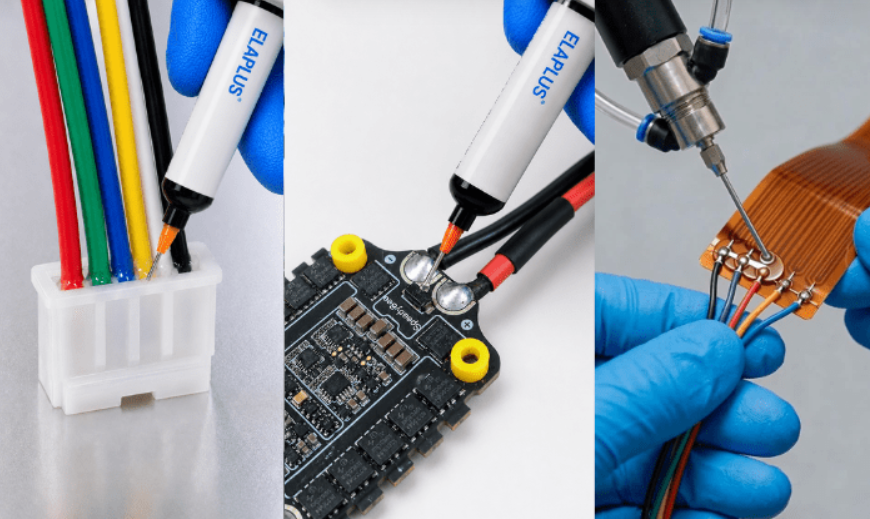
In automotive electronics, consumer electronics, sensor modules, flexible printed circuits (FPCs), connectors, battery management systems and precision electronic components, local fixing and protection are often required for wire harness terminals, solder joints, FPC connection areas, chip NTC thermistors and miniature electronic parts.
Small as these areas are, they pose the highest risks to electronic product reliability. Solder joints may crack under vibration and impact; wire harness terminals can come loose after prolonged shaking; bending sections of FPCs may fail due to concentrated stress; and miniature components such as chip NTC thermistors tend to lose stability when exposed to moisture, contaminants or mechanical shock.
Therefore, adhesives for wire harness fixing, solder joint protection, FPC protection and component fixation play a vital role in electronic manufacturing.
ELAPLUS (Shanghai) Functional Materials recommends three product lines — UV MA 1013, SIPC 2101 and UV 1018 — for wire harness fixation, solder joint protection, FPC coating and local component protection, to help customers improve assembly efficiency and long-term reliability of electronic assemblies.
I. Why Dedicated Adhesives Are Required for Wire Harness Fixing & Solder Joint Protection
For wire harnesses, solder joints and FPCs, adhesives must not only deliver reliable fixation, but also satisfy requirements for process efficiency, flexibility, electrical insulation, resistance to humidity and thermal cycling, as well as good material compatibility.
Conventional adhesives have obvious drawbacks: slow curing slows down production; excessive hardness leads to stress concentration; improper fluidity fails to fully cover solder joints; poor adhesion to FPC, PI, FR4, PC and other substrates; and risks of peeling, cracking or yellowing after long-term environmental aging.
Key criteria for selecting adhesives for wire harness and solder joint applications:
■ Compatibility with dispensing and precision coating processes
■ Complete coverage of solder joints to form a stable protective layer
■ Excellent electrical insulation performance
■ Good adhesion to FPC, PI, FR4, PC and other common electronic substrates
■ Appropriate softness and elasticity for vibration damping
■ Suitability for fast UV curing or room-temperature curing
■ Stable performance for mass production
II. UV MA 1013: Ideal for FPC Bonding & Solder Joint Coating
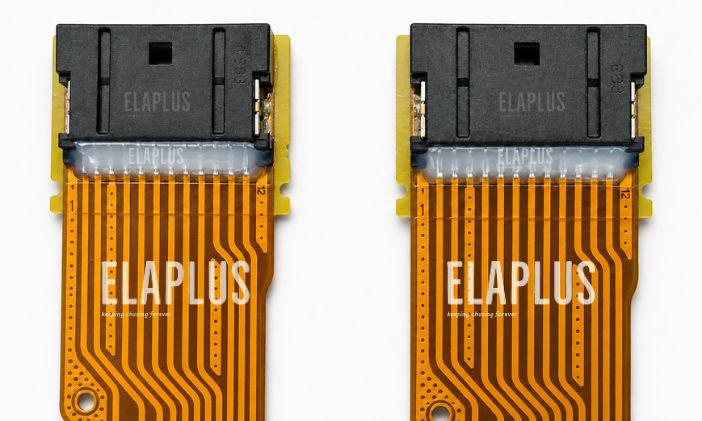
UV MA 1013 is a UV-curable electronic protective adhesive developed by ELAPLUS, designed for FPC bonding, connector fixation and insulation protection.
Key Features for Small-area Electronic Protection:
■ Fast UV curing to match high-speed production lines
■ Colorless and semi-thixotropic formula, preventing excessive flow after dispensing
■ Excellent coverage over solder joints
■ Strong adhesion to FPC materials
■ Suitable for protecting FPCs, connectors and partial electronic components
■ Delivers insulation and enhances reliability in humid environments
It forms a durable protective layer on FPC solder joints, connector solders, encapsulated miniature components and reinforced FPC sections, effectively reducing risks of moisture ingress, loosening and mechanical damage.
Typical Applications:
FPC solder joint protection, connector fixation, FPC bonding, general electronic protection, UV solder joint protection, partial fixation on printed circuit boards.
III. SIPC 2101: Self-leveling Silicone Sealant for Isolation & Surface Protection
In certain electronic assemblies, surface flexible protection, isolation and sealing are required in addition to solder joint fixation. Especially for addition-cure silicone systems, some materials may cause curing inhibition; an isolation agent is needed to mitigate such adverse effects.
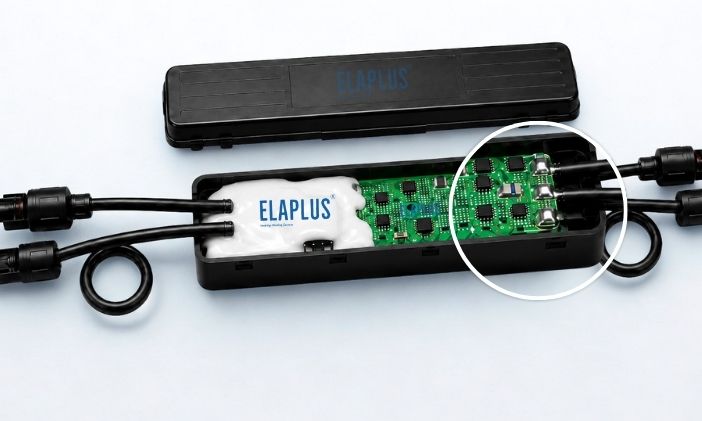
SIPC 2101 is a room-temperature moisture-cure silicone adhesive & sealant. Heated curing is not recommended. Featuring self-leveling property, it is used for component surface protection and acts as a barrier between addition-cure silicones and curing-inhibitive substances.
Core Advantages:
■ Self-leveling property for uniform surface protection
■ Flexible silicone formulation
■ Cures at room temperature (heating not allowed)
■ Widely used for component protection in electrical appliances, automotive, photovoltaic and general electronics industries
■ Serves as an isolation agent for addition-cure silicones against inhibitors
■ Ideal for applications requiring flexibility, heat resistance and electrical insulation
It is widely applied to sensors, connectors, automotive electronic modules, photovoltaic devices and processes involving special silicones for surface coating, isolation and sealing.
Typical Applications:
Electronic component surface protection, isolation against silicone curing inhibitors, connector protection, automotive electronic sealing, photovoltaic component protection, flexible sealing.
IV. UV 1018: Flexible UV Adhesive for Wire Harness & Chip NTC Protection
UV 1018 is a UV-curable adhesive developed for wire harness fixation, solder joint protection and gap sealing. It is colorless, transparent and highly flexible, enabling fast fixation and cushioning protection for small electronic parts.
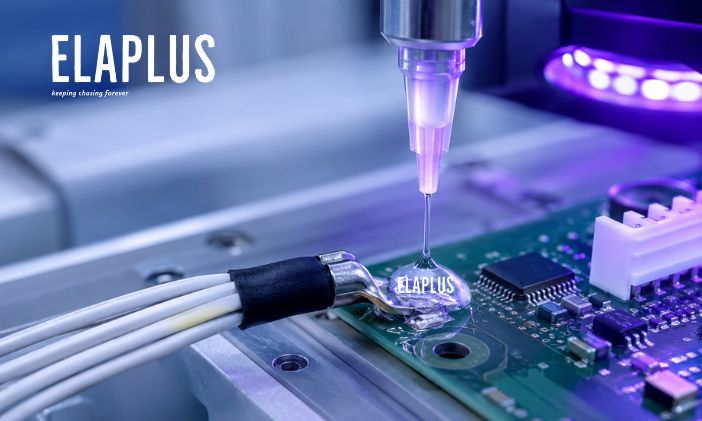
Main Applications
■ Wire harness fixing
■ Solder joint protection
■ FPC protection
■ Chip NTC thermistor protection
■ Local fixation of miniature components
■ Gap sealing and flexible protection
Compared with rigid fixing adhesives, UV 1018 features superior flexibility. It provides effective cushioning under vibration, bending and stress changes, and lowers the risk of cracking at solder joints and wire harness ends.
Typical Applications:
Wire harness fixing adhesive, solder joint fixing adhesive, UV solder joint protection adhesive, FPC protective adhesive, chip NTC protective adhesive, flexible electronic assembly adhesive.
V. Product Selection Guide
Adhesives shall be selected according to curing mode, fluidity, flexibility and process requirements of different protection areas.
■ Solder joint coating, FPC bonding, connector fixation
Recommend: UV MA 1013
Best for applications requiring fast UV curing, full solder coverage, FPC adhesion and local insulation.
■ Component surface protection, isolation against silicone inhibitors
Recommend: SIPC 2101
Ideal for self-leveling coating, flexible sealing, room-temperature curing and isolation for addition-cure silicone systems.
■ Wire harness fixing, solder joint protection, FPC & chip NTC protection
Recommend: UV 1018
Suitable for scenarios demanding high flexibility, fast UV curing and fixation of small electronic parts.
VI. Why Choose ELAPLUS?
Though wire harness fixing and solder joint protection are auxiliary processes, they are critical to overall product reliability. Customers have diverse designs for PCB layout, wire harness structure, solder profile, FPC material, curing equipment and reliability standards. Material selection must be verified with actual production processes.
ELAPLUS (Shanghai) Functional Materials provides a full range of adhesive solutions including wire harness adhesives, solder joint protectants, UV electronic adhesives, silicone sealants and FPC bonding adhesives tailored to your electronic protection needs.
Our technical support covers:
■ Adhesive selection for solder joint protection
■ Performance testing for wire harness adhesives
■ Solutions for FPC bonding and protection
■ Protection plans for chip NTC thermistors
■ UV curing process optimization
■ Recommendations on dispensing equipment and glue pattern
■ Sample testing and reliability verification
VII. Frequently Asked Questions
Q1: Which is better for solder joint protection — UV adhesive or silicone?
A1: It depends on product structure and production process. Choose UV MA 1013 or UV 1018 for fast curing, spot coating and high productivity. Choose SIPC 2101 for self-leveling coating, flexible sealing and isolation purposes.
Q2: Which product is suitable for FPC solder joint protection?
A2: UV MA 1013 is preferred for FPC solder coating and bonding. Test UV 1018 if higher flexibility is required.
Q3: Can UV 1018 be used for wire harness fixing?
A3: Yes. UV 1018 is specially developed for wire harness fixation, solder joint protection and gap sealing. It delivers flexible fixation and protection for wire harness roots, solder joints and small components.
Q4: Can SIPC 2101 be cured under heat?
A4: Heating curing is not recommended. SIPC 2101 is a room-temperature moisture-cure silicone sealant, mainly used for electronic component surface protection and isolation for addition-cure silicones.
Q5: Do you provide samples and process guidance?
A5: Yes. Based on your PCB design, wire harness layout, solder size, FPC material and curing equipment, we offer material selection, sample testing and dispensing process suggestions.
Wire harness fixing and solder joint protection are key details in electronic reliability design. Proper adhesives help solder joints resist vibration, moisture and stress, and improve the long-term stability of FPCs, connectors, wire harness terminals and chip NTC thermistors.
ELAPLUS offers a complete portfolio including UV MA 1013, SIPC 2101 and UV 1018, covering solder protection, wire harness fixation, FPC bonding, connector securing, component surface protection and silicone isolation.
Feel free to contact us for samples and technical support:
Tel: +86 21-67227200
Website: www.elaplus.cc
Email: info@elaplus.cc
Address: No. 555, Jiugong Road, Jinshan Industrial Zone, Shanghai, China