Potting compounds for PCBA shall be selected according to component stress sensitivity, operating temperature, thermal conductivity requirements, structural strength, potting clearance and rework demands.
Silicone potting compound SIPA 1850 is suitable for modules with wide temperature range, low stress and frequent thermal cycling;
PUR 1650 and PUR 1680 are recommended for control boards requiring flexibility, vibration resistance and gap filling;
EP 1715 and EP 1780 apply to electronic modules demanding robust structural support, temperature resistance and dimensional stability.
Why is PCBA Potting Required?
PCBA potting refers to filling liquid compound between the PCB and housing, which cures to encapsulate printed circuit boards, solder joints and electronic components.
Its core functions include:
- Waterproofing and moisture resistance
- Electrical insulation
- Component fixation
- Vibration and shock mitigation
- Protection against salt spray and contaminants
- Improved local thermal conduction
- Reduced risks of high-voltage creepage and discharge
Compared with conformal coating, potting compounds form much thicker layers and deliver more comprehensive protection, yet they bring higher weight, greater exotherm during curing and increased difficulty for rework.
Recommended Silicone Potting Compounds for PCBA
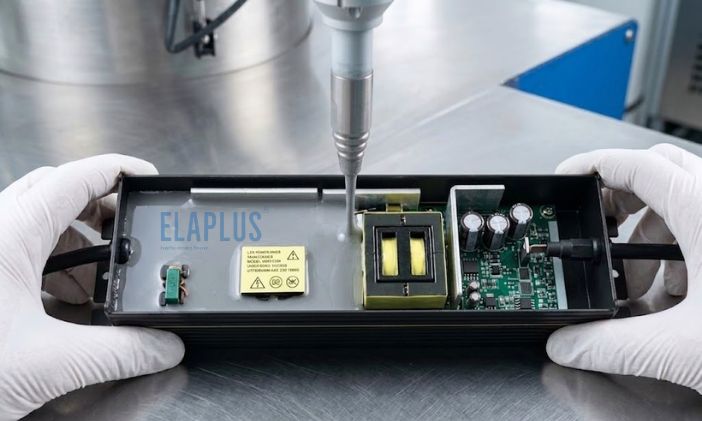
SIPA 1850AB: Thermally Conductive Silicone Potting Compound
SIPA 1850 is a 1:1 two-part thermally conductive silicone potting material. Its mixed viscosity is approximately 3000 cps. Multiple thermal conductivity grades ranging from 0.8 to 4.0 W/m·K are available, with cured hardness of Shore A 55.
Typical Applications:
1、Automotive electronic controllers;
2、OBC, power supply and inductor modules;
3、Photovoltaic inverters;
4、Energy storage electronic modules;
5、PCBAs exposed to frequent thermal cycling;
6、Components sensitive to mechanical stress.
Cured silicone remains elastic, capable of absorbing thermal displacement between PCBs, copper busbars, plastics and metal housings.
Recommended Polyurethane Potting Compounds for PCBA
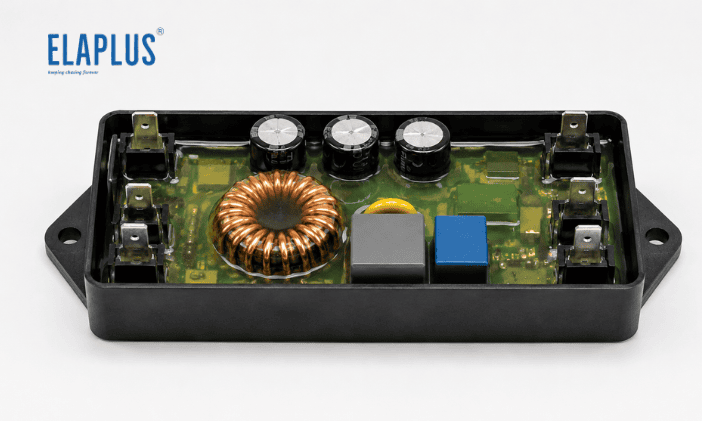
PUR 1650AB: Low-Hardness Thermally Conductive Polyurethane
PUR 1650 is a 5:1 low-hardness thermally conductive polyurethane potting material. Its mixed viscosity is roughly 600 cps with thermal conductivity of approx. 1 W/m·K.
Typical Applications:
1、PCBAs with complex structures and narrow gaps;
2、Control boards requiring low-stress protection;
3、Sensors and compact electronic modules;
4、Equipment demanding low-temperature flexibility.
PUR 1680AB: Balanced Flexibility & Mechanical Support
PUR 1680 is a 100:16 thermally conductive polyurethane potting compound. Its mixed viscosity is about 4000 cps and thermal conductivity reaches approx. 0.8 W/m·K.
Typical Applications:
1、Automotive controllers;
2、Current sensors;
3、Industrial power boards;
4、Terminal and connector protection;
5、PCBAs requiring flame retardancy, insulation and vibration resistance.
Recommended Epoxy Potting Compounds for PCBA
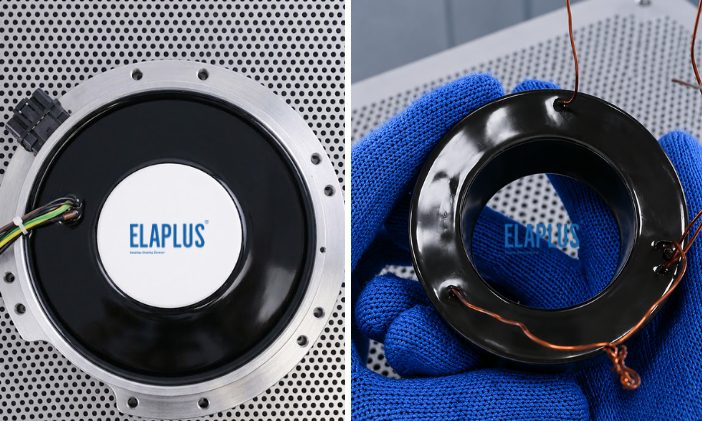
EP 1715AB: Thermally Conductive & Flame-Retardant Epoxy Potting Compound
EP 1715 is a 100:15 two-part thermally conductive, flame-retardant epoxy potting material featuring low halogen content. Mixed viscosity is approximately 2500 cps, with thermal conductivity of around 0.7 W/m·K.
Typical Applications:
1、Inductors and magnetic components;
2、Industrial power supplies;
3、Control boards requiring reliable structural support;
4、Modules with strict requirements on insulation and dimensional stability.
EP 1780AB: High-Temperature Resistant Epoxy Potting Compound
EP 1780 is a 100:7 two-part epoxy potting compound characterized by outstanding heat resistance and thermal shock resistance. Its mixed viscosity is roughly 23000 cps and cured hardness is Shore D 85.
Typical Applications:
1、High-temperature electronic modules;
2、Magnetic cores, copper busbars and high-power devices;
3、Structures requiring strong mechanical fixation;
4、Industrial equipment subjected to severe thermal shock.
Elaplus PCBA Potting Compound Selection Chart
| Grade | Material System | Suitable Scenarios | Key Selection Criteria |
|---|---|---|---|
| SIPA 1850 | Silicone | Automotive electronics, power supplies, energy storage, thermal cycling modules | Wide temperature range, low stress, thermal conductivity |
| PUR 1650 | Polyurethane | Sensitive components, narrow gaps, low-temperature applications | Low viscosity, low hardness |
| PUR 1680 | Polyurethane | Controllers, sensors, terminals | Flexibility, vibration resistance, thermal conductivity |
| EP 1715 | Epoxy | Inductors, power supplies, structural support | Thermally conductive, flame retardant, low halogen |
| EP 1780 | Epoxy | High-temperature & thermal shock modules | High hardness, high temperature resistance |
Is Softer Potting Compound Always Better for PCBA?
No.
Soft compounds impose lower stress on components and perform well against vibration and thermal cycling, yet they may lack sufficient structural fixation for large-size components.
Rigid epoxy provides strong support and excellent dimensional stability. Nevertheless, overly thick compound layers or mismatched thermal expansion between different components may raise risks of cracking and interfacial delamination.
Selection shall be determined by internal module structure:
- Prioritize low-stress materials for assemblies abundant with chips, sensors and fine bonding wires;
- Higher structural strength can be adopted for modules with many inductors, copper busbars and magnetic cores;
- Increase thermal conductivity requirements for high-heat-generating units;
- Avoid fully non-detachable high-hardness potting if future rework is needed.
How to Eliminate Bubbles during PCBA Potting?
Possible bubble causes:
- Air entrapment during mixing of Part A and Part B
- Excessively high viscosity hindering natural bubble escape
- Closed cavities under PCBs and components
- Excessively fast potting speed
- Moisture contained on substrates
- Too rapid temperature rise during curing
Solutions include optimizing mixing process, vacuum degassing, preheating workpieces, segmented potting and adjusting dispensing paths.
Conclusion on PCBA Potting Compound Selection
For PCBAs sensitive to thermal cycling and mechanical stress, SIPA 1850 is recommended for evaluation.
Choose PUR 1650 if low viscosity and flexible gap filling are required.
Select PUR 1680 for balanced flexibility and mechanical support.
EP 1715 or EP 1780 can be assessed when high structural strength, flame retardancy and dimensional stability are required.
FAQ for PCBA Potting Compounds
What is the difference between PCBA potting compound and PCB conformal coating?
Conformal coating forms a thin protective film, while potting compound fills internal space within modules. Potting compounds deliver superior waterproofing, insulation and mechanical protection.
Can silicone potting compound be reworked?
Generally easier to remove than high-hardness epoxy, but actual reworkability depends on hardness, adhesion and product structure.
Is vacuum treatment required for PCBA potting?
Vacuum degassing or vacuum potting helps reduce internal bubbles for assemblies with coils, narrow gaps and high-density components.
Does higher thermal conductivity always mean better thermally conductive potting compound?
Not exactly. Viscosity, density, filling ability, hardness and coating thickness should also be comprehensively considered.