How to Select Potting Compounds for PCBA: Comparison of Epoxy, Polyurethane & Silicone Grades
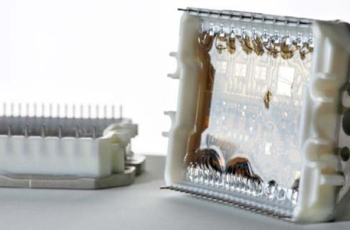
Potting compounds for PCBA shall be selected according to component stress sensitivity, operating temperature, thermal conductivity requirements, structural strength, potting clearance and rework demands. Silicone potting compound SIPA 1850 is suitable for modules with wide temperature range, low stress and frequent thermal cycling; PUR 1650 and PUR 1680 are recommended for control boards requiring flexibility, vibration resistance and gap filling; EP 1715 and EP 1780 apply to electronic modules demanding robust structural support, temperature resistance and dimensional stability. Why is PCBA Potting Required? PCBA potting refers to filling liquid compound between the PCB and housing, which cures to encapsulate printed circuit boards, solder joints and electronic components. Its core functions include: Compared with conformal coating, potting compounds form much thicker layers and deliver more comprehensive protection, yet they bring higher weight, greater exotherm during curing and increased difficulty for rework. Recommended Silicone Potting Compounds for PCBA SIPA 1850AB: Thermally Conductive Silicone Potting Compound SIPA 1850 is a 1:1 two-part thermally conductive silicone potting material. Its mixed viscosity is approximately 3000 cps. Multiple thermal conductivity grades ranging from 0.8 to 4.0 W/m·K are available, with cured hardness of Shore A 55. Typical Applications: 1、Automotive electronic controllers; 2、OBC, power supply and inductor modules; 3、Photovoltaic inverters; 4、Energy storage electronic modules; 5、PCBAs exposed to frequent thermal cycling; 6、Components sensitive to mechanical stress. Cured silicone remains elastic, capable of absorbing thermal displacement between PCBs, copper busbars, plastics and metal housings. Recommended Polyurethane Potting Compounds for PCBA PUR 1650AB: Low-Hardness Thermally Conductive Polyurethane PUR 1650 is a 5:1 low-hardness thermally conductive polyurethane potting material. Its mixed viscosity is roughly 600 cps with thermal conductivity of approx. 1 W/m·K. Typical Applications: 1、PCBAs with complex structures and narrow gaps; 2、Control boards requiring low-stress protection; 3、Sensors and compact electronic modules; 4、Equipment demanding low-temperature flexibility. PUR 1680AB: Balanced Flexibility &…