High‑voltage insulators face elevated pollution flashover risk under rainy and foggy conditions. Priority shall be given to examining accumulated surface contamination, conductive behaviour upon wetting, hydrophobicity variation and local electric field distribution, rather than simply thickening the insulating coating. For substation post insulators, external insulation of transmission lines and other eligible power equipment, ELAPLUS SICOAT 9099R anti‑pollution‑flashover insulating coating may be evaluated, with focus on coating hydrophobicity, substrate adhesion, erosion resistance and adaptability for long‑term outdoor service.
High‑voltage insulators achieve electrical isolation via solid insulation and creepage distance. During prolonged operation, they are subject to deposition of dust, salt and industrial contaminants. Under dry conditions, surface fouling may not trigger obvious abnormalities immediately; yet when rain, fog or condensation wets the contaminated layer, the electrical condition along the surface may alter.
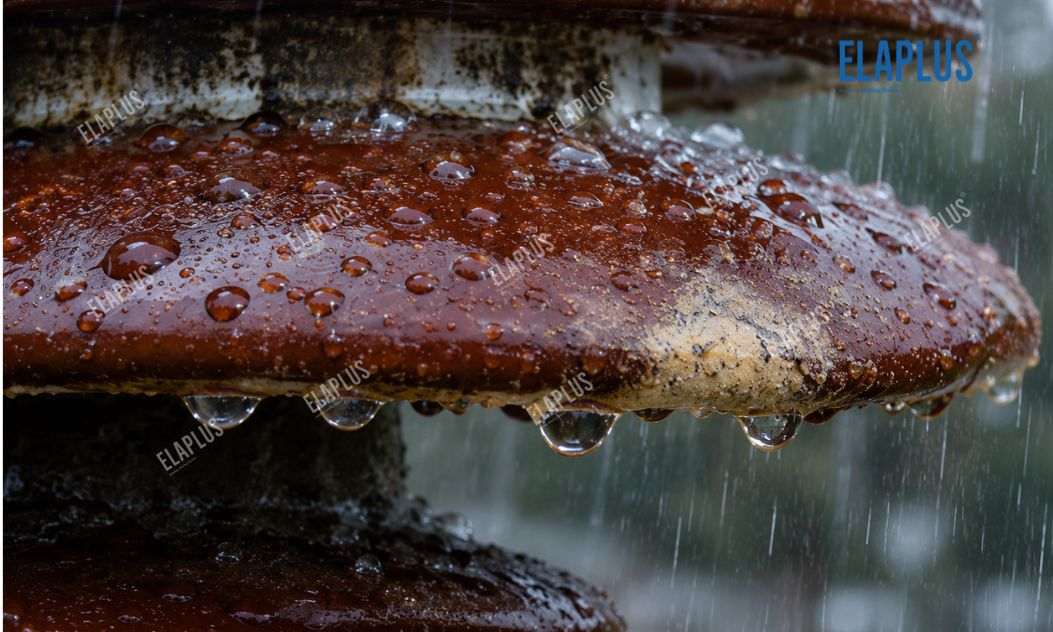
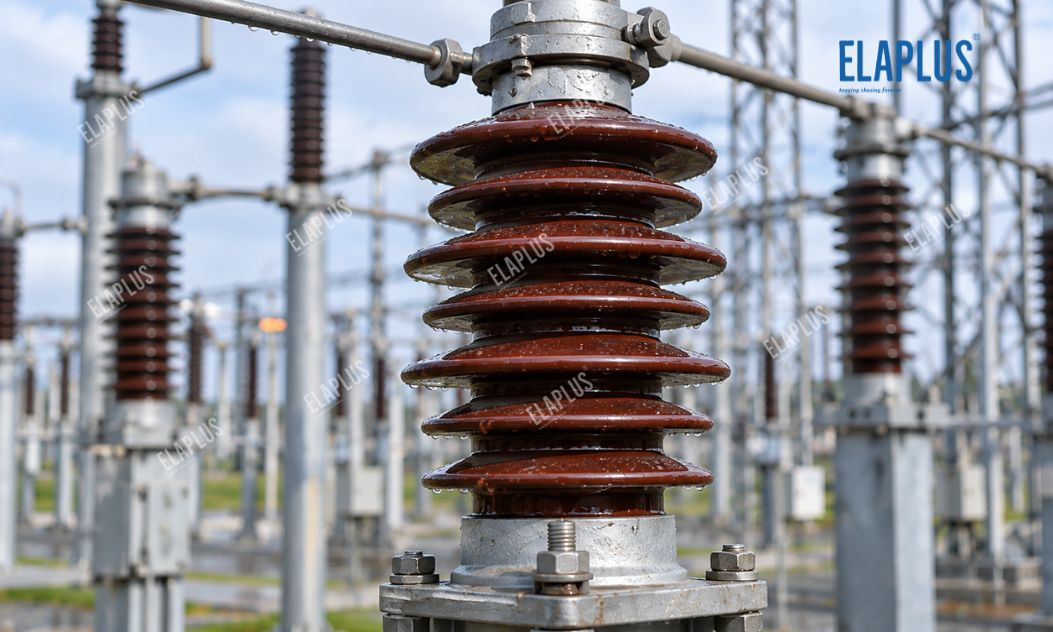
Accordingly, anti‑flashover design shall take into account the geometric configuration of external insulation, on‑site pollution environment and surface material performance. Insulating coating serves as one protective measure for external insulation, but it cannot substitute for structural design, operational maintenance and electrical safety assessment of the insulator itself.
1. Why Are Insulators More Vulnerable to Pollution Flashover in Rain and Fog?
Salts, industrial dust and other pollutants accumulated over time on insulator surfaces may form a conductive wet layer once moistened. Under applied voltage, surface leakage current rises; heat generated by local current redistributes the water film and creates uneven dry and wet zones.
Under certain conditions, local dry bands withstand high voltage and initiate dry‑band discharges. When discharges propagate along the insulating surface and meet relevant criteria, flashover occurs.
Pollution flashover is governed by multiple factors, including contaminant type, deposition density, wetting severity, insulator profile, creepage distance and operating voltage.
For silicone‑rubber‑based anti‑pollution‑flashover coatings, hydrophobicity restricts the formation of continuous water films. Nevertheless, satisfactory hydrophobicity does not eliminate flashover risk under all fouling conditions; assessment must incorporate field environment and the complete insulation structure.
2. How to Distinguish Fouling, Coating Ageing and Structural Defects
On‑site insulation anomalies shall be diagnosed comprehensively from weather conditions, location, surface appearance and operational records. Recurring discharge faults at the same spot call for inspection of local geometry and heavily contaminated areas; random anomalies across different units require further evaluation of construction and maintenance consistency.
| Anomaly Manifestation | Probable Causes | Priority Inspection Items | Improvement Direction |
|---|---|---|---|
| Increased discharge activity in rain and fog | Wetted contamination, elevated surface leakage current | Contamination distribution, surface wetting status | Evaluate cleaning and anti‑fouling measures |
| Continuous water film on partial coating | Degraded hydrophobicity, contaminant interference | Bead morphology, fouling layer condition | Assess coating service performance |
| Repeated faults at the same shed | Geometric concentration, electric field crowding, local fouling | Shed profile, hardware connection and coating boundary | Optimise local protection |
| Surface chalking or delamination | Ageing, poor adhesion or mechanical damage | Interface between coating and substrate | Consider repair or recoating |
| Disparate performance among coated units | Variation in surface preparation, film thickness and cure | Construction logs and coating condition | Standardise process control |
| Progressive deterioration under dampness | Combined action of fouling, electric field and surface damage | Electrical status and insulation structure | Conduct full insulation diagnosis |
Inspection of defective external insulation shall be carried out by qualified power professionals in compliance with applicable safety codes. It is prohibited to touch coatings, measure surface conditions or attempt ad‑hoc patching on energised equipment.
3. Why Is Hydrophobicity of Insulating Coatings Critical?
Hydrophobicity describes a surface’s resistance to water spreading. On highly hydrophobic surfaces, water tends to form discrete droplets instead of extensive continuous films.
When insulator surfaces are contaminated, water‑film formation is closely tied to the state of pollutants. Certain silicone rubber materials feature hydrophobicity transfer: low‑molecular fractions modify the wetting behaviour of fouling layers under suitable conditions and thereby improve surface electrical performance in selected contaminated environments.
Hydrophobicity transfer, however, does not grant unlimited self‑recovery. Long‑term electrical erosion, heavy fouling, mechanical abrasion and harsh climates degrade material properties; stability must be verified under real service conditions.
For insulators with evident electrical erosion, delamination or substrate damage, a supplementary coating alone cannot restore overall insulation performance. Defect diagnosis shall precede recoating.
4. Why SICOAT 9099R Qualifies for Anti‑Pollution‑Flashover Selection
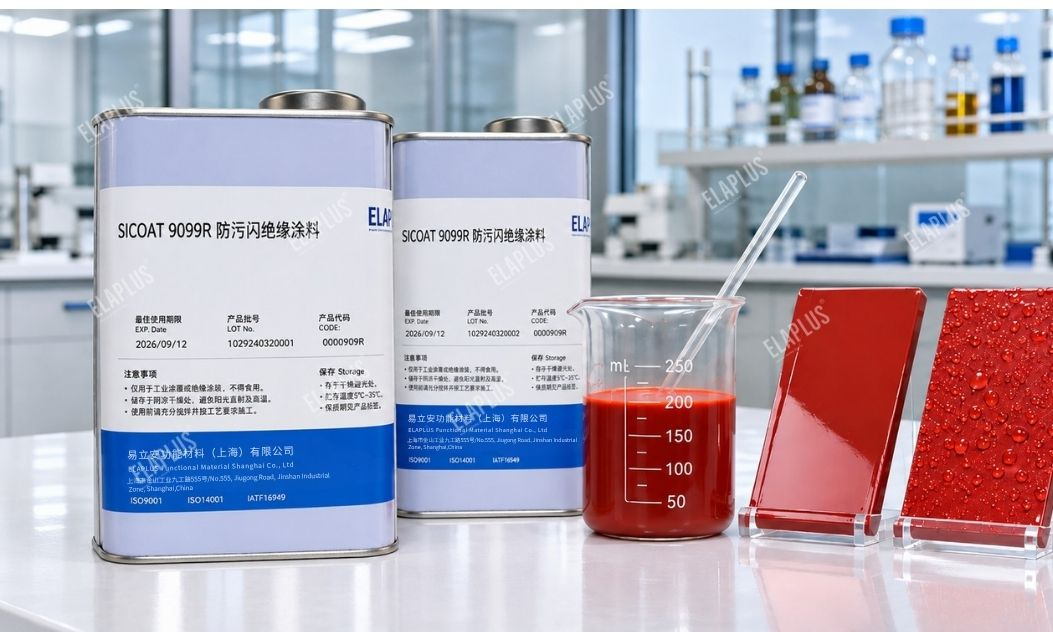
ELAPLUS SICOAT 9099R is a red insulating coating formulated mainly with silicone rubber, compounded with fluorinated and nanoscale fillers. It is developed for anti‑pollution‑flashover protection of external insulation on insulators for substations, transmission lines and other electrical equipment.
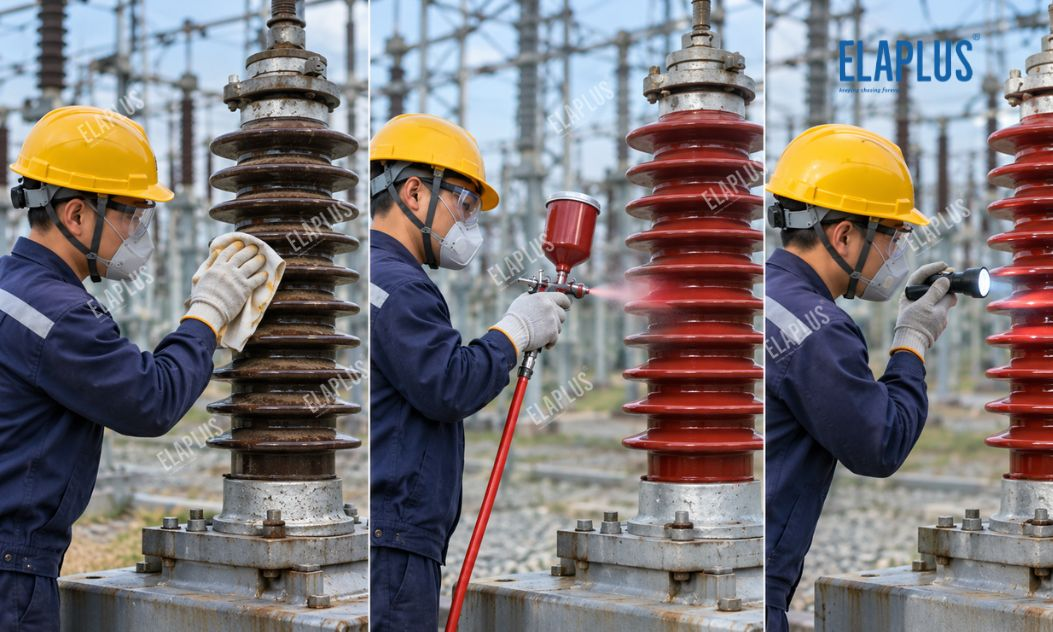
Key attributes of SICOAT 9099R include hydrophobicity, hydrophobicity transfer, electrical insulation, erosion resistance and outdoor ageing tolerance, making it a candidate surface protection material for external insulation in fouling‑prone environments.
For coastal salt‑fog zones, industrial polluted areas and persistently damp locations, compatibility validation shall be performed against insulator substrate material, pollution class and operating regime. Salt, ultraviolet or ozone resistance of the coating does not justify identical application procedures for all field environments.
Furthermore, material properties of anti‑pollution‑flashover coatings cannot replace withstand voltage and pollution flashover qualification of complete insulators. Separate verification is required for different voltage classes and insulator configurations per applicable standards and engineering specifications.
ELAPLUS: Match adhesives to working conditions, rather than overemphasising nominal parameters. The core of external insulation anti‑flashover selection lies in matching the surface electrical performance of the material to actual fouling, wetting and equipment geometry.
5. Selection between Anti‑Pollution‑Flashover Coatings and Other Mitigation Measures
Anti‑pollution strategies for power transmission and transformation external insulation shall be determined according to on‑site fouling severity, equipment operating conditions and maintenance regimes. Coating application does not waive routine inspection and maintenance, nor shall it be applied to cover unresolved structural defects.
| Anti‑Pollution Measure | Primary Function | Evaluation Scope | Key Limitations |
|---|---|---|---|
| SICOAT 9099R anti‑pollution‑flashover coating | Improve surface hydrophobicity and protection of external insulation | Surface protection for eligible insulators | Validate adhesion, erosion resistance and long‑term performance |
| Insulator cleaning | Remove partial surface contaminants | Units with heavy fouling accumulation | Effectiveness constrained by re‑fouling rate |
| External insulation structural optimisation | Improve creepage distance and electric field distribution | New builds or retrofits | Requires complete design appraisal |
| Insulator replacement | Address substrate ageing or structural failure | Units with unacceptable defects | Must match electrical and mechanical requirements |
| Environmental pollution control | Reduce contaminant deposition | Sites where remediation is feasible | Cannot substitute inherent insulation design |
Insulators with cracks, breakages or faulty hardware connections require structural remediation first. For sound substrates suffering severe environmental fouling, the combined efficacy of anti‑pollution‑flashover coating and maintenance schedules may be further evaluated.
6. Why Substrate Inspection Is Mandatory before Application
Insulator surfaces may carry dust, salt, oil, aged residue or legacy coatings, all of which impair adhesion and continuity of fresh coats. Cleaning, drying and surface preparation shall be defined according to insulator material and equipment specifications prior to work.
Compatibility between the coating and actual substrates shall be verified separately for porcelain, glass and other external insulation materials. Where aged coatings remain, the feasibility of retention must be assessed; recoating shall not be applied indiscriminately over unstable surfaces.
During application, follow product specifications to control coating method, film thickness, ambient conditions and cure state. Special attention shall be paid to shed roots, edge corners and other hard‑to‑coat zones.
Strictly observe equipment and construction requirements for hardware junctions, designated electrical contact areas and other no‑coat zones to avoid functional interference.
7. How to Verify Long‑Term Reliability of Anti‑Pollution‑Flashover Coatings
Coupons shall be prepared using authentic insulator substrates and representative surface conditions to evaluate initial adhesion, coating continuity, hydrophobicity and relevant electrical performance. For diverse fouling environments, parallel testing under prescribed contamination and wetting regimes is recommended.
Environmental qualification may include UV ageing, thermal cycling, damp heat and other field‑relevant tests, followed by re‑examination of surface condition. Dedicated assessment for electrical erosion and surface discharge risk shall be conducted in accordance with relevant power insulation test standards.
During field service, analyse coating appearance, fouling accumulation, hydrophobic status and equipment operation logs collectively; colour alone cannot confirm material failure.
Persistent anomalies at a fixed location indicate local electric field or geometric issues; random coating defects across units point to inadequate surface preparation, unstable application or uneven film build.
8. Adaptation for Substation and Transmission Line Scenarios
For coastal substations, priority shall be given to salt deposition, wet weather and surface fouling of insulators. For industrial‑zone power facilities, coating suitability shall be assessed against dust, chemical contaminants and operating surroundings.
For overhead transmission lines, wind, rain, ultraviolet radiation, temperature fluctuation and service accessibility must all be considered. Variations among insulator types, operating voltages and site pollution levels demand customised design and validation for each installation.
FAQ
Q: Are rain‑fog pollution flashovers caused by insufficient coating thickness? A: Not necessarily. Check fouling wetting, electric field distribution, surface hydrophobicity and insulation structure instead of merely increasing coating thickness.
Q: Can SICOAT 9099R be used on high‑voltage insulators? A: It may serve as a candidate anti‑pollution‑flashover coating for external insulation of eligible power transmission and transformation equipment, subject to validation against actual hardware and engineering requirements.
Q: Does good hydrophobicity guarantee immunity to pollution flashover? A: No. Flashover risk also depends on fouling severity, wetting conditions, voltage and insulation geometry.
Q: Can aged insulators be directly recoated? A: Substrate and existing coating condition shall be inspected first to rule out structural and electrical defects before recoating is approved.
Q: Can routine inspections be omitted after anti‑pollution‑flashover coating is applied? A: No. Periodic checks shall continue as required by equipment operation and maintenance protocols.