For applications including motor stators, connectors, temperature sensors, pressure sensors, power modules, industrial control modules and reactors, potting compounds not only serve as filling and protection materials, but also directly determine electrical insulation reliability, high-low temperature resistance stability, crack resistance and long-term service life of finished products.
Especially in scenarios with severe high-low temperature cycling, long-term high-temperature exposure, strict electrical insulation requirements and high dimensional stability, conventional potting materials tend to suffer from cracking, shrinkage, debonding, insulation degradation and bubble residue.
To meet such high-reliability potting demands, ELAPLUS recommends EP 1796 A/B heat-curable potting compound. It is a two-component solvent-free heat-curable epoxy potting material featuring excellent processability and adjustable mixing ratio. With superior high-low temperature aging resistance, it is suitable for potting reactors, connectors, pressure sensors, temperature sensors, industrial control modules and motor stators.
I. Why High–Reliability Potting Compounds Are Required for These Applications
1. Motor Stator Potting: Simultaneous Exposure to High Temperature, Vibration and Thermal Stress
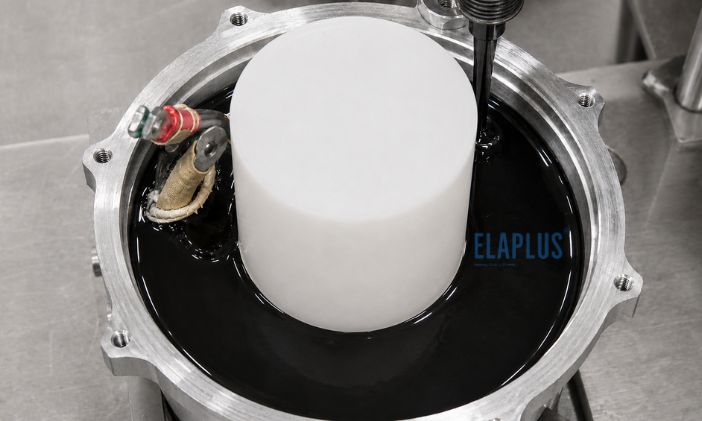
Motor stators continuously generate heat during operation, while windings, iron cores and housings feature different thermal expansion behaviors. Excessively high linear thermal expansion coefficient or large curing shrinkage of potting compounds may cause cracking, coil loosening and insulation degradation.
Therefore, motor potting compounds shall have:
■ High-low temperature shock resistance
■ Low linear thermal expansion coefficient
■ Excellent electrical insulation
■ High hardness and good toughness
■ Long-term heat resistance
EP 1796 features low linear thermal expansion coefficient, low curing shrinkage, high hardness and good toughness, making it ideal for potting protection of motor stators, coils and high-temperature electrical structures.
2. Connector Potting: Insulation, Moisture Resistance and Dimensional Stability Are Critical
Connectors operate under continuous electrical connection, with internal pins, terminals, solder joints and wire harness joints requiring strict insulation and sealing.
Large shrinkage of potting compounds may cause stress concentration around terminals; insufficient temperature resistance may lead to interfacial cracking after long-term thermal cycling; poor insulation may result in electric leakage, short circuit or abnormal signals.
Thus, connector potting compounds shall focus on:
■ Low shrinkage
■ High electrical insulation
■ Low viscosity for easy filling
■ High-low temperature shock resistance
■ Long-term thermal stability
EP 1796 has low mixed viscosity that decreases significantly with rising temperature, facilitating penetration into tiny gaps inside connectors for full filling protection.
As per product data, at a mixing ratio of 100:15, mixed viscosity is 1500±500 mPa·s at 25°C, 600±100 mPa·s at 40°C, 300±50 mPa·s at 60°C and 120±50 mPa·s at 80°C.
3. Temperature Sensor Potting: Temperature Resistance and Thermal Stability Determine Long-Term Reliability
Temperature sensors are frequently exposed to long‑term high temperature or temperature fluctuations, requiring potting compounds with outstanding temperature resistance, thermal stability and insulation performance.
Rated as Class H with an operating temperature range of -60°C~200°C, EP 1796 provides excellent electrical insulation and thermal stability, suitable for long-term environmental-adaptable potting protection of temperature sensors, pressure sensors and more.
4. Power Module Potting: Integrated Thermal, Electrical and Structural Protection
Power modules generate heat and suffer voltage and structural stress during operation. Potting materials shall protect electronic components and reduce cracking risks caused by thermal cycling.
Depending on mixing ratios, EP 1796 achieves thermal conductivity of 1.2 W/m·K or 1.5 W/m·K, along with dielectric strength ≥18 kV/mm and volume resistivity of 1.0E+15 Ω·cm, enabling integrated thermal conduction, electrical insulation and structural protection for power modules.
II. Recommended Product: EP 1796 A/B Heat–Curable Potting Compound
Developed by ELAPLUS for high-low temperature aging resistance, high-temperature electrical protection, low-shrinkage potting and filling of complex structures, EP 1796 A/B features core advantages as follows:
■ Low linear thermal expansion coefficient
■ Low curing shrinkage
■ High hardness and good toughness
■ Excellent electrical insulation and thermal stability
■ Low viscosity for easy filling
■ Class H temperature resistance
■ Operating temperature range: -60°C~200°C
■ Superior high-low temperature shock resistance
■ Adjustable mixing ratio for high process adaptability
III. Analysis of Core Performance Advantages of EP 1796
1. Low Linear Thermal Expansion Coefficient: Reduces Cracking Risks from Thermal Cycling
Differences in thermal expansion among various materials are major causes of cracking in potting applications for motor stators, connectors, sensors and power modules.
EP 1796 has a low linear thermal expansion coefficient. According to PDS data:
Mixing ratio 100:15: 33 μm/(m·℃) below Tg, 80 μm/(m·℃) above Tg
Mixing ratio 100:12: 23 μm/(m·℃) below Tg, 70 μm/(m·℃) above Tg
This helps lower internal stress during thermal cycling and reduce risks of compound cracking and interfacial failure.
2. Low Curing Shrinkage: Protects Precision Electronic Components
Excessive curing shrinkage exerts tensile stress on solder joints, coils, terminals, sensor cores and internal module structures, impairing long‑term product reliability.
EP 1796 has low curing shrinkage: 0.99% at 100:15 and 0.86% at 100:12, suitable for potting applications sensitive to dimensional stability and structural stress.
3. Low Viscosity: Full Filling Even for Complex Structures
Connectors, temperature sensors, pressure sensors and industrial control modules usually have narrow gaps, small cavities and irregular internal spaces. High-viscosity potting compounds tend to cause incomplete filling, local voids and bubble residue.
EP 1796 features low viscosity with further improved fluidity upon heating. At a mixing ratio of 100:15, mixed viscosity drops to 120±50 mPa·s at 80℃, enabling penetration into tiny gaps and improving potting integrity.
4. Class H Temperature Resistance: Ideal for Long‑Term High‑Temperature Applications
Rated Class H with an operating temperature range of -60℃~200℃, EP 1796 fits long-term high-temperature or high-low temperature shock environments for temperature sensors, motor stators, reactors and power modules.
For products operating under harsh conditions, Class H temperature resistance and wide‑range thermal stability enhance overall reliability.
5. Excellent Electrical Insulation: Safeguards Electrical Performance
Potting compounds for motors, connectors, sensors and power modules must provide stable electrical insulation.
EP 1796 delivers dielectric strength ≥18 kV/mm, volume resistivity of 1.0E+15 Ω·cm and dissipation factor of 0.002, providing reliable insulation protection for electrical structures and reducing risks of electric leakage, short circuit and electrical breakdown.
6. Adjustable Mixing Ratio: Adapts to Diverse Application Requirements
EP 1796 supports mixing ratios of A:B = 100:15 or 100:12 to achieve varied performance:
| Item | 100:15 | 100:12 |
| Mixed viscosity at 25°C | 1500±500 mPa·s | 2500±500 mPa·s |
| Tg | 165°C | 140°C |
| Thermal conductivity | 1.2 W/m·K | 1.5 W/m·K |
| Curing shrinkage | 0.99% | 0.86% |
| Hardness | Shore D 90–95 | Shore D 85–90 |
| Dielectric strength | ≥18 kV/mm | ≥18 kV/mm |
The 100:15 ratio is preferred for applications prioritizing high Tg and hardness, while the 100:12 ratio is suitable for scenarios requiring higher thermal conductivity and lower curing shrinkage.
IV. Typical Applications of EP 1796
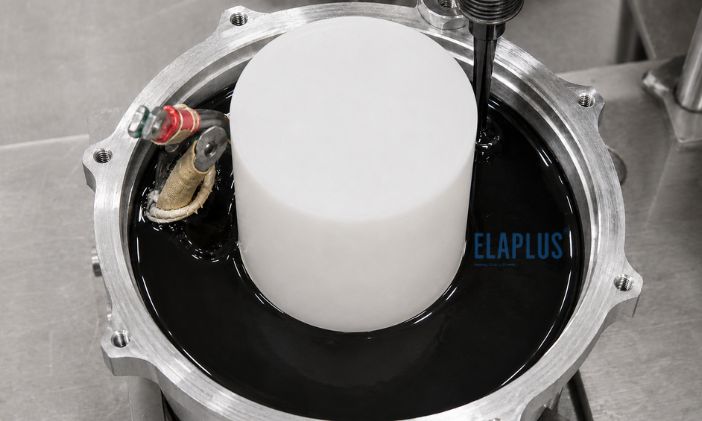
Applied to potting of motor stator windings, coils and electrical cavities for fixing, insulation, temperature resistance and thermal-shock protection.
Recommended keywords: motor potting compound, stator potting compound, motor coil potting compound, high-temperature resistant motor potting compound, low-CTE motor potting compound
2. Connector Potting Compound
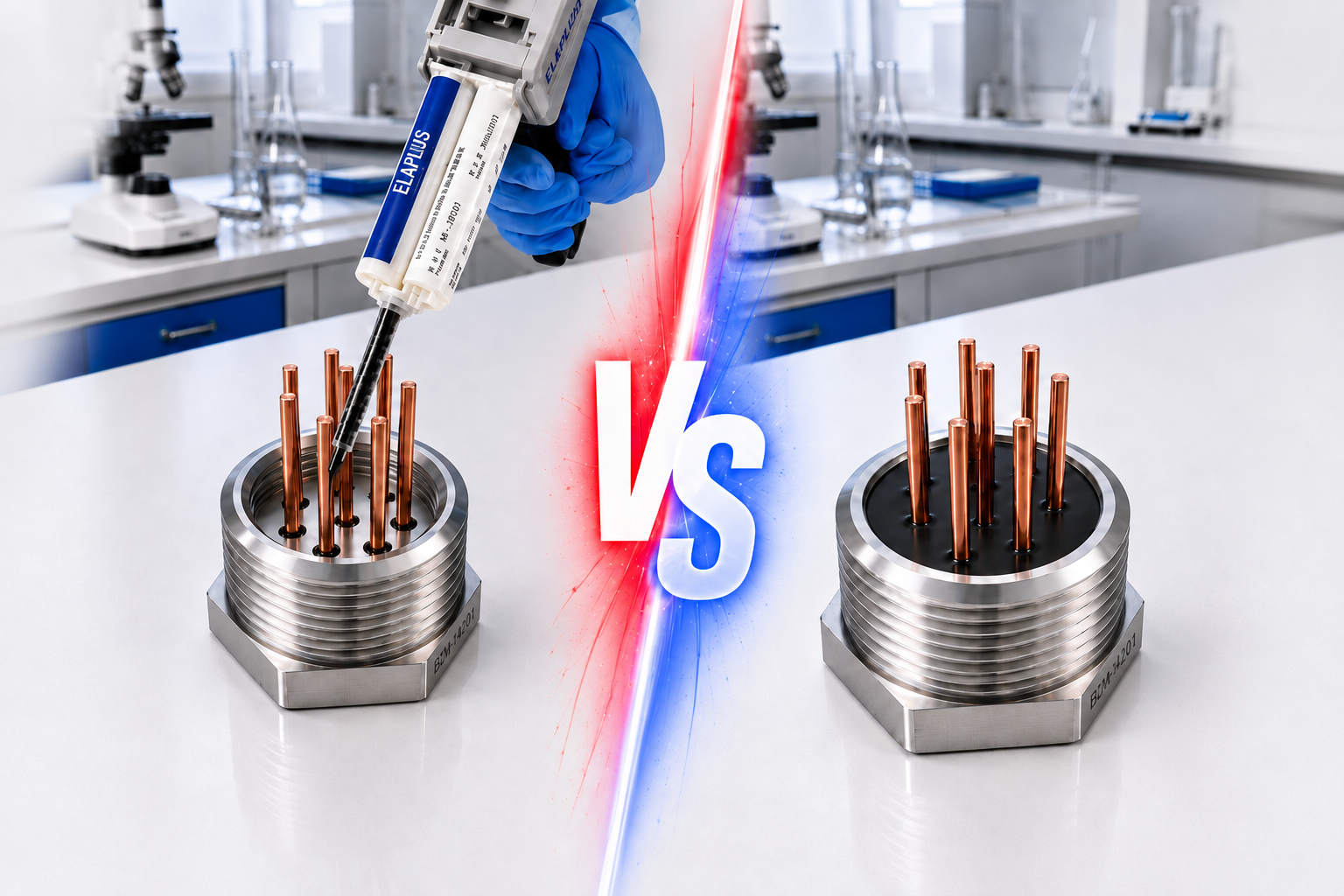
Used for potting terminals, pins and wire harness joints of connectors to improve moisture resistance, insulation, temperature resistance and structural protection.
Recommended keywords: connector potting compound, terminal potting compound, electrical connector potting compound
3. Temperature Sensor Potting Compound
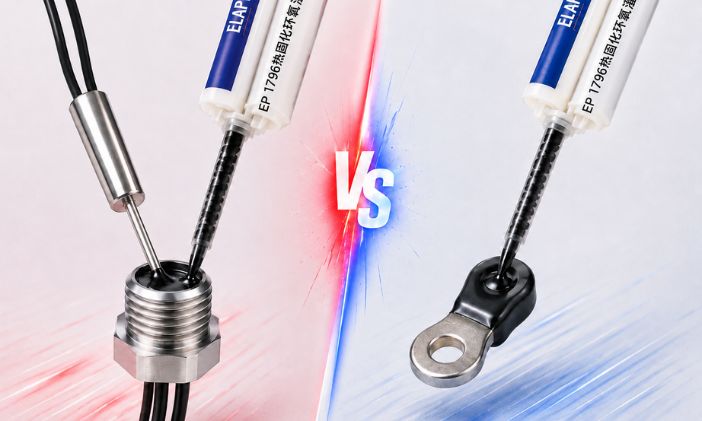
Suitable for packaging protection of temperature and pressure sensors under high-low temperature cycling, high-temperature aging and long-term insulation requirements.
Recommended keywords: temperature sensor potting compound, pressure sensor potting compound, epoxy potting compound for sensors, high-temperature resistant sensor potting compound
4. Power Module Potting Compound
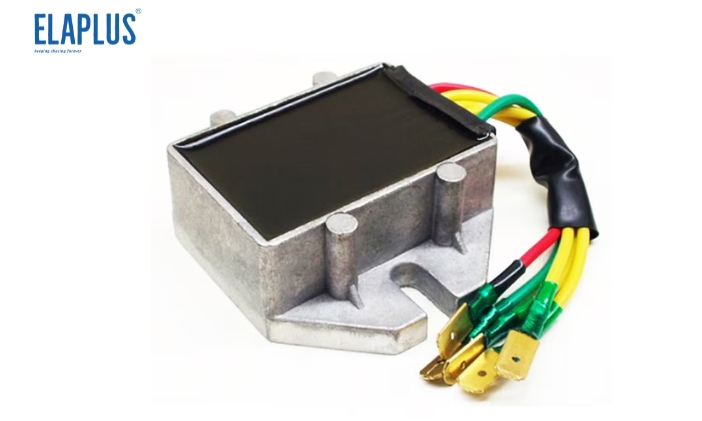
Applied to packaging protection of power electronic modules, industrial control modules and reactors, balancing low shrinkage, electrical insulation, thermal stability and thermal conductivity.
Recommended keywords: power module potting compound, industrial control module potting compound, reactor potting compound, high‑temperature epoxy potting compound
V. Process Recommendations for EP 1796
To achieve stable potting performance, follow these process tips:
1.Fully stir Component A before use
Component A of EP 1796 may stratify or settle during storage. Stir thoroughly before use. In winter, preheat Component A in a 60℃ oven for 1 hour and stir evenly to reduce viscosity and improve weighing and mixing stability.
2.Select mixing ratio based on applications
Choose A:B = 100:15 or 100:12 as required. Different ratios affect viscosity, Tg, thermal conductivity, hardness and curing shrinkage.
3.Vacuum defoaming after mixing
Vacuum-defoam uniformly mixed A/B components to eliminate bubbles that impair electrical insulation, thermal conduction and appearance.
4.Secondary vacuum pumping after potting
For complex structures such as connectors, sensors and power modules, secondary vacuum pumping after potting is recommended to enhance electrical performance.
5.Recommended curing conditions
80℃×2h + 130℃×2h
This curing regime is also adopted for post‑curing performance testing in PDS.
VI. FAQ
Q1: What material is suitable for motor potting?
Motor potting compounds shall feature low linear thermal expansion coefficient, low curing shrinkage, excellent electrical insulation, high-low temperature shock resistance and high temperature resistance. ELAPLUS EP 1796 A/B, a two-component heat-curable epoxy potting compound with an operating temperature range of -60℃~200℃, is ideal for motor stators, reactors and industrial control modules.
Q2: Why do connector potting compounds need low viscosity?
Connectors have internal terminals, pins, wire harnesses and tiny gaps. Low-viscosity potting compounds easily penetrate narrow spaces to avoid incomplete filling and bubble residue. EP 1796 has low viscosity with improved fluidity upon heating, perfect for connector potting.
Q3: Why shall temperature sensor potting compounds resist high temperature?
Temperature sensors are widely used in long‑term temperature monitoring environments, requiring potting compounds stable under high temperature and thermal cycling. Class-H-rated EP 1796 with an operating range of -60℃~200℃ suits temperature and pressure sensor potting.
Q4: What performance requirements are there for power module potting compounds?
Power module potting compounds shall provide electrical insulation, thermal stability, low shrinkage, low CTE, thermal-shock resistance and moderate thermal conductivity. EP 1796 features dielectric strength ≥18 kV/mm, volume resistivity of 1.0E+15 Ω·cm and thermal conductivity up to 1.5 W/m·K, suitable for industrial control modules, power modules and reactors.
Q5: What are the curing conditions for EP 1796?
Recommended curing conditions: 80℃×2h + 130℃×2h. Fully stir Component A before curing, mix A/B at 100:15 or 100:12 and conduct vacuum defoaming.
VII. Conclusion: EP 1796 for High–Temperature, Low–Shrinkage and Low–CTE Scenarios
For potting applications including motors, connectors, temperature sensors and power modules, materials must simultaneously satisfy high-low temperature resistance, low linear thermal expansion, low curing shrinkage, stable electrical insulation, easy filling and long-term reliability.
ELAPLUS EP 1796 A/B heat-curable potting compound delivers reliable potting solutions for motor stators, connectors, temperature sensors, pressure sensors, industrial control modules and power modules, thanks to its Class-H temperature resistance, wide operating range of -60℃~200℃, low CTE, low shrinkage, low viscosity, excellent insulation and thermal-shock resistance.
ELAPLUS enables more reliable high-temperature potting and long-term stable operation of electronic modules.
Previous post: How to Select Motor Potting Compound?EP 1716 High-Thermal-Conductivity Epoxy Potting Compound Delivers One-Stop Thermal Dissipation & Reliability for Motors
Next post: Potting Adhesive Selection for Humanoid Robot Joint Motors: ELAPLUS Helps Frameless Torque Motors Break Heat Dissipation Bottlenecks