PCB conformal coatings shall be selected based on service environment, curing speed, PCB structure, film flexibility and rework requirements. For general industrial control boards, ELAPLUS SIPC 2121, SICOAT 9061 or SICOAT 9007 are available for evaluation. For PCBAs requiring fast UV curing plus secondary curing in shadow areas, UV Coating 9060-M is recommended. For automotive electronics and wide-temperature-range applications, UV SIPC 3301 is a key option to assess.
ELAPLUS supplies silicone, UV curable and UV-moisture dual-cure PCB conformal coatings, compatible with spraying, brushing, selective coating and automatic inline curing processes.
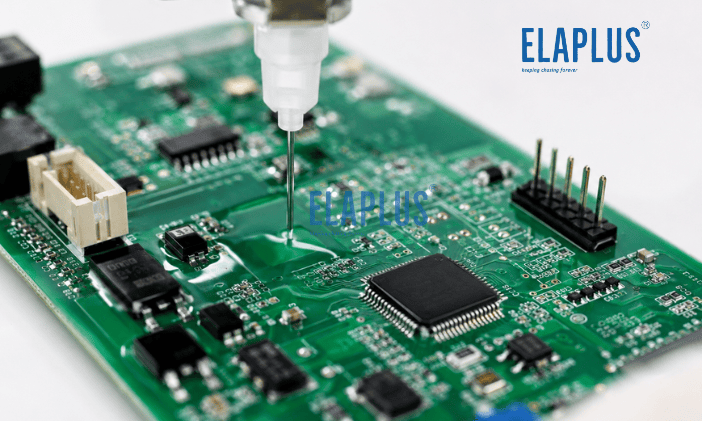
What Are the Functions of PCB Conformal Coatings?
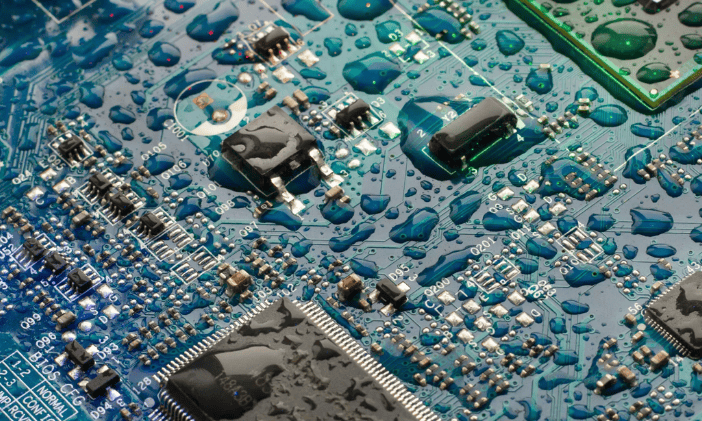
Also known as PCB protective lacquer, PCBA coating or Conformal Coating, PCB conformal coatings form a continuous protective film on PCB surfaces to mitigate damages to electronic circuits caused by:
■ Moisture and condensation
■ Salt spray and corrosive gases
■ Dust and ionic contaminants
■ Grease and certain chemical media
■ Thermal cycling between high and low temperatures
■ Circuit and solder joint damage induced by vibration
Conformal coatings do not fully encapsulate the entire PCB; they only form a thin protective layer over circuit boards, solder joints and components. For electronic modules requiring full waterproofing, structural fixation or deep insulation, potting compounds are generally used together.
Main Types of PCB Conformal Coatings
Common PCB conformal coatings fall into four categories: silicone conformal coatings, acrylic conformal coatings, polyurethane conformal coatings and UV curable conformal coatings.
Silicone Conformal Coatings
Silicone coatings feature excellent high-low temperature resistance and retain good flexibility after curing. They are ideal for automotive electronics, industrial controllers, PV & energy storage boards and circuits subject to frequent thermal cycling.
Recommended models:
■ SIPC 2121
■ UV SIPC 3301
Low-Viscosity PCB Conformal Coatings
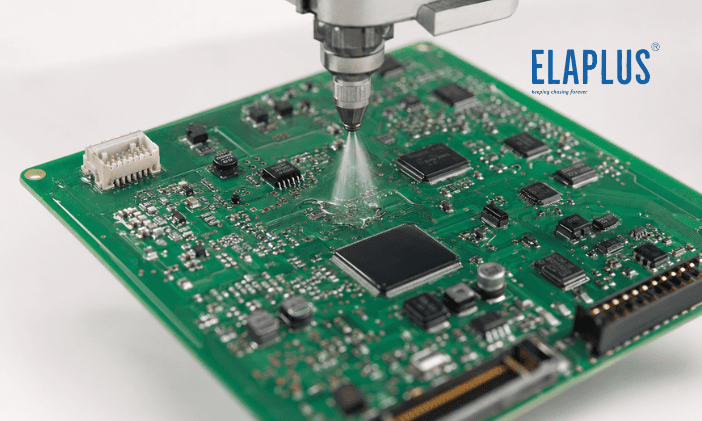
Low-viscosity products spray easily and spread uniformly to form even thin films. Care must be taken to prevent coating from flowing into connectors, relays, switches and test points.
Recommended models:
■ SICOAT 9061
■ SICOAT 9007
■ COATING 9067
UV & Moisture Dual-Cure Conformal Coatings
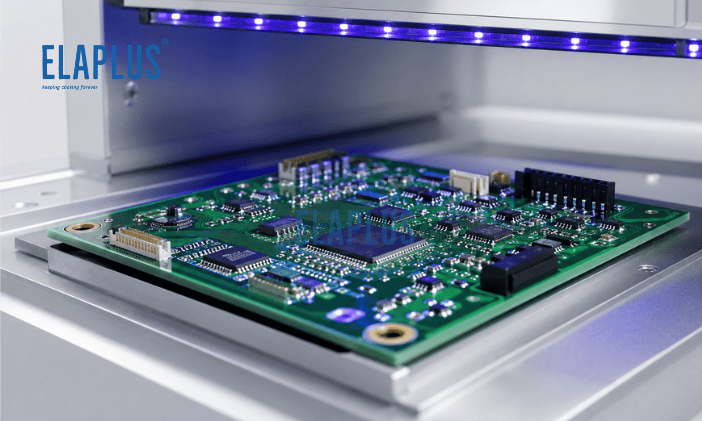
UV light rapidly forms an initial protective film, while moisture curing completes crosslinking in shadow zones unreachable by UV light, such as underneath components and connector edges.
Recommended models:
■ UV Coating 9060-M
■ UV SIPC 3301
UV Coating 9060-M is a low-viscosity UV-moisture dual-cure coating with a typical 365 nm UV curing time of approx. 20 seconds. UV SIPC 3301 is a UV-moisture dual-cure silicone elastomer with an operating temperature range of -55 ℃ to 200 ℃.
Guide to ELAPLUS Conformal Coating Selection
| ELAPLUS Model | Product Features | Suitable Applications |
| SIPC 2121 | Silicone system, flexible, excellent thermal resistance | Automotive control boards, industrial control PCBs, circuits with thermal cycling |
| SICOAT 9061 | Viscosity ~1100 cps, ideal for thin-film coating | General industrial electronics, spraying & brushing processes |
| SICOAT 9007 | Viscosity ~800 cps, superior flow & coverage | High-density PCBA, automatic selective coating |
| COATING 9067 | Viscosity ~300 cps, fast spreading property | Thin-film protection, areas around complex components |
| UV Coating 9060-M | UV & moisture dual-cure, viscosity ~190 cps | High-volume production, assemblies with extensive shadow areas |
| UV SIPC 3301 | UV & moisture dual-cure silicone, wide temperature tolerance | Automotive electronics, energy storage, PV, high-reliability PCBA |
Recommended Conformal Coatings for Automotive Electronic PCBs
Automotive circuit boards are constantly exposed to thermal cycling, vibration, condensation and oil mist, which impose strict requirements on coating flexibility, temperature resistance and long-term adhesion.
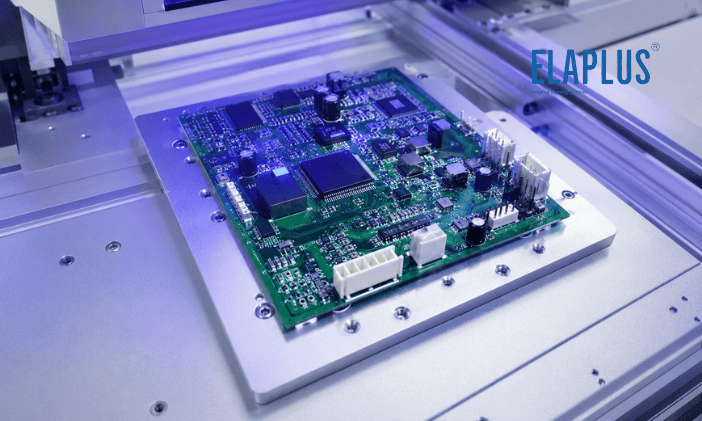
Prioritized models for evaluation:
UV SIPC 3301
Suitable for automotive PCBAs needing fast UV curing while containing shadow zones. Its silicone matrix relieves thermal stress generated by mismatched expansion coefficients of different materials, with an operating temperature range of -55 ℃ to 200 ℃.
SIPC 2121
For boards where high-speed UV production is not required, yet outstanding flexibility and thermal stability are prioritized.
When selecting coatings for automotive electronics, surface dry time alone is insufficient for assessment. Validation tests including thermal cycling, 85℃/85%RH humidity aging, vibration, salt spray and chemical compatibility must be conducted.
Coating Selection for PCBs with Shadow Zones
Large capacitors, connectors, transformers, inductors or tall components block UV light, leaving the bottom areas unilluminated.
Preferred coatings for such PCBs:
■ UV Coating 9060-M
■ UV SIPC 3301
Both adopt UV-moisture dual-cure technology. UV light creates instant protection on exposed surfaces, while ambient moisture completes curing in shaded areas.
Compared with pure UV coatings, dual-cure grades perform better on dense, complex PCBAs with numerous shadow areas.
Differences Between PCB Conformal Coatings and PCB Potting Compounds
Conformal coatings form an ultra-thin protective film, mainly solving moisture-proof, salt spray resistance and anti-corrosion issues.
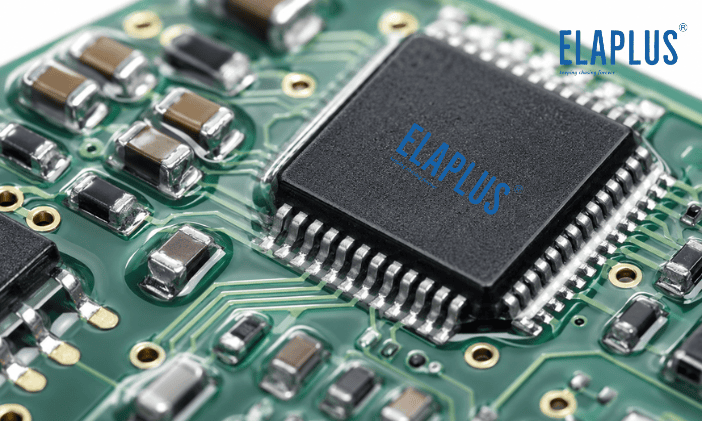
PCB potting compounds fill large internal cavities of modules, delivering the following functions:
■ Deep waterproofing
■ Electrical insulation
■ Component fixation
■ Vibration damping & shock absorption
■ Thermal conduction & heat dissipation
■ Structural protection
Use conformal coatings if only surface moisture resistance is required. Select potting compounds for full waterproofing, deep insulation or heavy mechanical protection. Some high-reliability equipment adopts both conformal coating and potting processes.
Causes of Cratering on Coated PCBs
Cratering is rarely caused by poor material spreadability; it mostly stems from contaminants on PCB surfaces, such as:
■ Residual flux
■ Grease and oil stains
■ Fingerprint residues
■ Release agents
■ Silicone contamination
■ Remaining cleaning solvents
Verify PCB cleanliness and surface energy before coating, and carry out small-area trial coating tests. If PCBs are severely contaminated with low-surface-energy substances, simply increasing coating thickness cannot eliminate cratering defects.
Optimal Coating Thickness
Thicker conformal coating does not equal better protection.
Insufficient thickness fails to form a continuous barrier, while excessive film thickness may lead to:
■ Extended curing time
■ Incomplete internal crosslinking
■ Elevated internal stress
■ Trapped air bubbles
■ Difficult rework
The target film thickness shall be determined with reference to product TDS, coating method, PCB layout and environmental protection grade.
Final Selection Summary
For general industrial control PCBs, choose SICOAT 9061, SICOAT 9007 or COATING 9067 according to construction viscosity. Select SIPC 2121 if flexible silicone protection is needed. Pick UV Coating 9060-M for fast UV production with shadow zone curing. UV SIPC 3301 is the top choice for automotive electronics and wide-temperature-range high-reliability PCBA.
ELAPLUS Functional Materials (Shanghai) Co., Ltd. provides full support including conformal coating selection, coating process optimization and mass production testing services, customized according to PCB substrate, component layout, coating equipment and reliability standards.
FAQ about PCB Conformal Coatings
Can conformal coatings achieve full waterproof performance?
Conformal coatings only provide thin-film moisture and corrosion resistance. For modules requiring long-term immersion, IP67 or IP68 ingress protection, housing sealing or full potting solutions are required as supplementary measures.
Will shadow areas of pure UV coatings cure completely?
Pure UV curable coatings cannot fully crosslink in UV-shaded areas. For complex PCBAs, UV-moisture dual-cure grades UV Coating 9060-M or UV SIPC 3301 are recommended.
Is spraying applicable for conformal coatings?
Yes. Low-viscosity grades including SICOAT 9061, SICOAT 9007 and COATING 9067 can be used for spraying or selective coating based on equipment and target film thickness.
Key performance indicators for automotive electronic conformal coatings
Focus on high-low temperature resistance, film flexibility, damp-heat adhesion, salt spray resistance, chemical compatibility and crack resistance after vibration cycling.
Are conformal coatings identical to insulating varnishes?
Both offer electrical insulation, yet PCB conformal coatings are specially engineered for PCB moisture, salt spray and corrosion resistance with optimized process adaptability. Compatibility testing with electronic components is mandatory for conformal coatings.