Analysis of the Application Solution of EP 1721 in High-Reliability Electrical Connection Sealing
In new energy vehicles, electric drive systems, industrial motors, and power modules, three-phase copper busbars not only handle high-current transmission tasks but also serve as critical nodes for structural sealing and reliability.
Once the seal fails, the ingress of lubricating oil, coolant, or oil vapor can lead to insulation degradation in mild cases, or corrosion, short circuits, and even system failure in severe cases.
Therefore, the sealing adhesive for three-phase copper busbars is by no means “just about sticking.”.
Three-phase copper busbar sealing
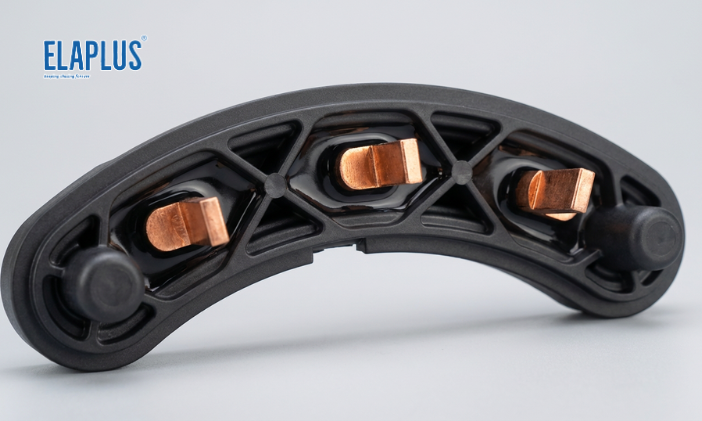
- What are the core requirements for adhesives in the sealing of three-phase copper busbars?
Considering actual working conditions, three-phase copper busbar sealing typically faces multiple challenges simultaneously, including metal, plastic, oil media, and temperature shock
✅ 1. Reliable bonding capability to copper and its coatings
It exhibits excellent wetting and adhesion on bare copper/brass
The copper busbar with a nickel-plated layer should not delaminate or edge climb
Long-term use without interface failure due to oxidation
✅ 2. Stable bonding to plastic housings
Compatible with common engineering plastic housings
No detachment or chipping under thermal expansion and contraction conditions
✅ 3. Maintain airtightness after high and low temperature shock
The bonding strength remains stable after thermal cycling
The airtightness test is passable, with no leakage
✅ 4. Excellent chemical resistance
It can withstand lubricating oil, engine oil, and coolant for extended periods
Resistant to oil and gas erosion, not softening or cracking
II. Recommended Solution: EP 1721 Conductive Epoxy Encapsulation / Sealing Compound
For the high-reliability application scenario of three-phase copper busbar sealing, EP 1721 demonstrates exceptional stability in both practical testing and mass production applications.
🔧 Core Advantages of EP 1716
Dual bonding capability for both metals and plastics
It exhibits excellent adhesion to bare copper, copper, and nickel-plated copper busbars while also ensuring bonding with plastic housings
Excellent oil resistance
After long-term aging in a 130–150°C hot oil environment:
The colloid does not crack
The bonding interface does not develop cracks
Structural integrity remains stable
Maintains sealing performance after high and low temperature shock
After passing the thermal shock test, it can still successfully pass the air tightness test
Suitable for long-term reliable sealing scenarios
The seal shall not fail due to immersion in the medium or temperature changes
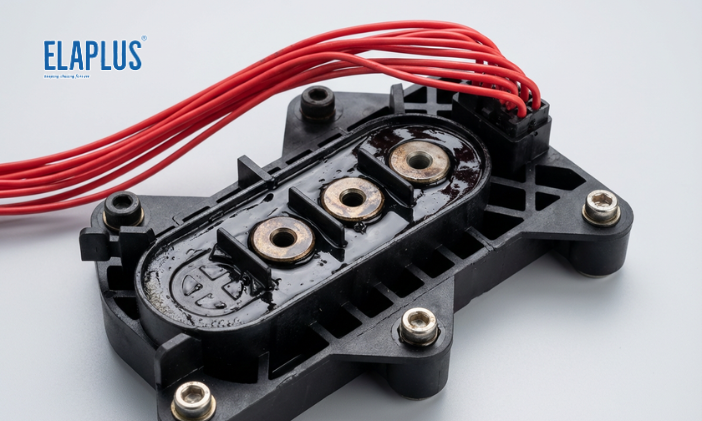
- Typical Applications of EP 1721 in Three-Phase Busbar Systems
EP 1721 is not only suitable for the sealing of three-phase copper busbars but also proven reliable in the following scenarios:
🔹 Copper Busbar Sealing for Electric Drive Systems in New Energy Vehicles
🔹 Terminal and busbar sealing of power modules
🔹 Inverter / Electric Control Cabinet Conductive Parts Sealing
🔹 Sealing of High Current Connectors for Industrial Motors
🔹 Sealing of Electrical Connections in Oil-Cooled and Electric Drive Systems
- Why is EP 1721 the better choice for sealing three-phase copper busbars?
In one sentence:
Under the combined conditions of “copper + plastic + oil + thermal shock,” EP 1721 still reliably passes the airtightness and durability tests.
It is not merely a matter of “sealing,” but addresses the core pain points of three-phase copper busbar sealing from three dimensions: interface adhesion, medium resistance, and long-term sealing reliability.
Label: Three-phase Copper Busbar Potting Compound · potting Compound