Why are more and more engineers giving up O-rings?
If you have disassembled a car engine or electronic controller, you must have seen a large number of rubber O-rings and sealing gaskets.
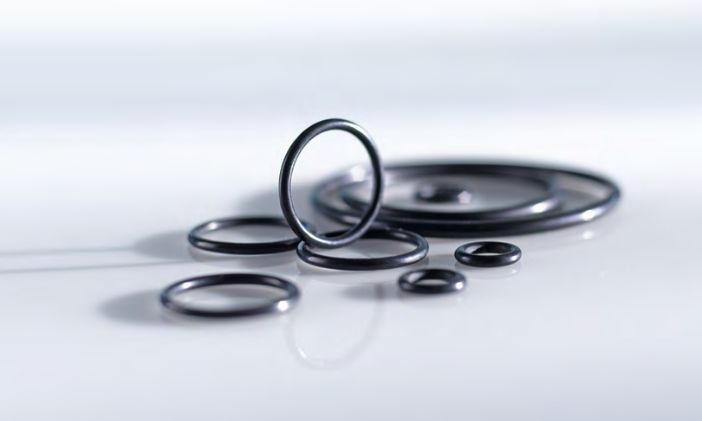
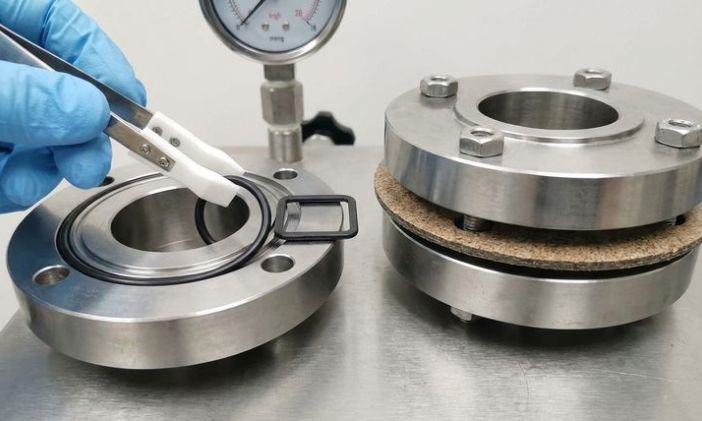
These seemingly inconspicuous small parts undertake important tasks:
Prevent liquid leakage and maintain shell sealing.
But as the structures of new energy vehicles and electronic devices become increasingly complex,
Traditional seals are exposing more and more problems:
❌ Low assembly efficiency
❌ Installation is prone to errors
❌ Structural design is limited
❌ Low degree of automation
So, a new sealing process is rapidly becoming popular: CIPG (Cured In Place Gasket) in-situ molding sealing technology.
What is CIPG sealing process?
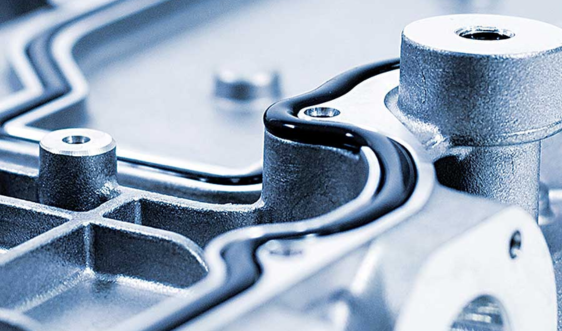
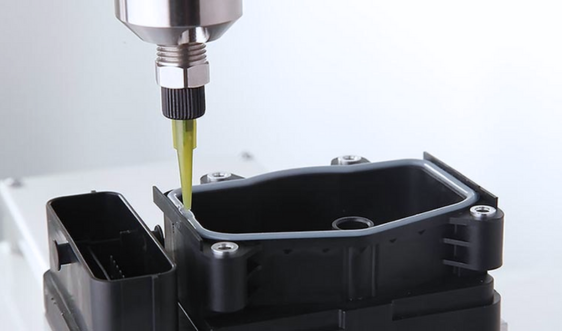
Simply put, there is no need to prefabricate seals, simply glue to form a sealing ring.
CIPG in-situ forming sealing technology
Practical application of CIPG seal
Traditional production process vs CIPG production process:
⚡ CIPG process: automatic dispensing of flange surface → assembly of shell → solidification to form sealing ring
🔧 Traditional process: purchase O-ring → install O-ring → lubricate → position → prevent distortion → assemble
This method has significant advantages compared to traditional O-rings.
The three major advantages of CIPG technology
🎨
High degree of design freedom
Glue dispensing in any shape, irregular sealing structure, multi-layer sealing path, hollow sealing structure
🤖
High assembly efficiency
Fully automatic dispensing assembly, assembly efficiency increased by 3-5 times
🛡️
Good sealing reliability
Longer sealing path, more uniform contact surface, better surface adhesion
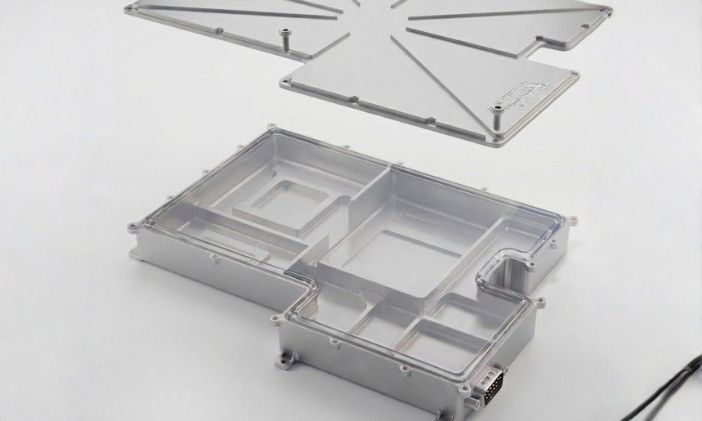
① Higher degree of freedom in sealing structure design
O-rings are standard components and can only be used for simple structures. CIPG glue can be dispensed in any shape, and engineers can customize the best sealing solution according to the product structure, supporting complex designs such as irregular sealing structures, multi-layer sealing paths, and hollow sealing structures.
② Automated assembly has higher efficiency
Traditional assembly requires: installation of O-rings → lubrication → positioning → anti twisting. The CIPG process can achieve: automatic dispensing → assembly → curing. The entire process can be fully automated, increasing assembly efficiency by 3-5 times.
③ Better sealing reliability
CIPG sealing rings have longer sealing paths, more uniform contact surfaces, and better surface adhesion. Liquid glue can also fill the micro unevenness of the flange surface, thus ensuring higher sealing reliability.
SIPC UV 3306 Core Performance
SIPC UV 3306
UV+moisture dual curing silicone | CIPG special sealant
viscosity
The viscosity of the paste is 200000-400000 mPa. s, and it does not collapse due to thixotropy.
hardness
Shore A 30-40
tensile strength
2MPa
Operating Temperature
-55℃~200℃
Core Performance 1: Ultra high viscosity design
SIPC UV 3306 paste has a viscosity of 200000-400000 mPa. s and does not collapse due to thixotropy, bringing the following advantages:
✔ The rubber strip does not collapse
✔ Can form adhesive strips with a height of 3-5mm
✔ Support complex dispensing paths
Simultaneously possessing excellent thixotropic properties (Ti ≈ 4.5) to ensure dispensing accuracy.
Core Performance 2: UV+Moisture Dual Curing
SIPC UV 3306 adopts a dual mechanism of UV curing and moisture curing:
⚡ UV irradiation: rapid surface curing (second level positioning)
🛡 Moisture curing: Further deep curing inside
Typical UV conditions: wavelength of 365nm, light intensity of 70-100 mW/cm ², irradiation time of 20-40s. This dual curing mechanism brings dual advantages of fast positioning and deep complete curing.
Core Performance Three: Rubber Elastic Sealing Structure
After curing, the material forms a soft rubber elastomer:
Hardness: Shore A 30-40
Tensile strength:>2MPa
Tensile elongation at break: 300-400%
It can still maintain good sealing performance under high compression ratios.
Core Performance 4: Wide Temperature Operating Range
Working temperature range: -55 ℃ to 200 ℃, with excellent heat resistance, cold resistance, and heat cycling performance, suitable for new energy vehicles and industrial electronic environments.
Core Performance 5: Excellent Electrical Insulation Performance
Dielectric strength:>18 kV/mm
Volume resistivity:>3.5 × 10 Ω· cm
In addition to sealing, it can also provide electrical insulation and moisture protection.
Typical application scenarios
SIPC UV 3306 can be widely used in:
Practical application of CIPG seal
new energy vehicle
Sealing of MCU motor controller
Sealing of OBC car charger
Sealing of DC-DC converter housing
Power battery system
Sealing of battery pack shell
Module shell sealing
Electronic and electrical equipment
Sealing of sensor housing
Waterproof sealing of controller
Sealing of industrial equipment casing
Why are engineers increasingly favoring CIPG?
Because it simultaneously solves three problems:
✔ Sealing reliability
✔ production efficiency
✔ Automated manufacturing
And UV+moisture dual curing silicone gel like SIPC UV 3306,
It is the key material for realizing this process.
With the development of new energy vehicles and electronic devices towards highly integrated and automated manufacturing,
Traditional seals are gradually being replaced by CIPG sealing technology.
ELAPLUS SIPC UV 3306
By virtue of:
✔ Ultra high viscosity
✔ UV rapid curing
✔ Deep curing of moisture
✔ Rubber elastic seal
Provide efficient and reliable solutions for shell sealing.
Tags: CIPG Sealing · CIPG Process · ELAPLUS · O-ring Replacement · SIPC UV 3306 · UV Curing Sealing Adhesive · UV Moisture Double Curing · In situ Molding Sealing · Shell Sealing · Sealing Adhesive Manufacturer · New Energy Vehicle Sealing · Moisture Curing Silicone · Motor Controller Sealing · Battery Pack Sealing · Automation Sealing · Waterproof Sealing