In new energy vehicles, energy storage systems, and industrial control equipment, electrode controllers play an important role in current control and signal processing.
Due to its internal integration of power devices, control chips, electrode interfaces, and drive circuits, it will face complex environments such as high temperature, humidity, vibration, and electrical shock during long-term operation.
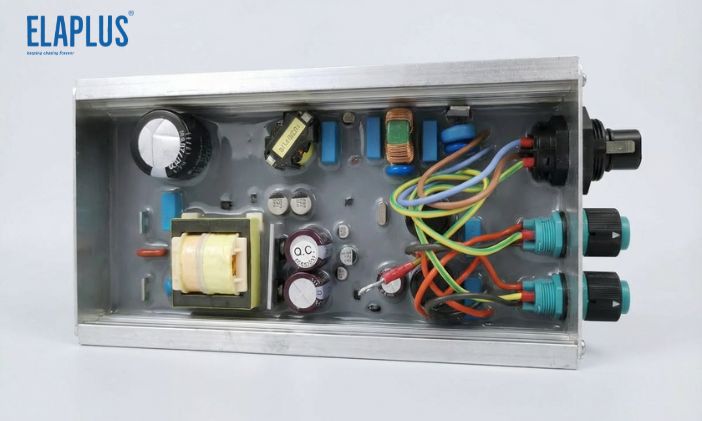
Thermal conductive sealant for industrial controllers
Thermal conductive sealant for industrial controllers
If there is a lack of reliable packaging protection, it is easy to:
Moisture in components can cause short circuits or failures
High power devices generate heat, resulting in excessive temperature rise
Fatigue of solder joints or loosening of components under vibration environment
Dust or corrosive gases entering, causing a decrease in electrical performance
Therefore, in the fields of industrial electronics and automotive electronics, potting has become a key link in the reliability design of electrode controllers.
Why does the electrode controller need encapsulation protection?
Electrode controllers are typically used for:
New energy vehicle system
Electric vehicle charging equipment
Energy storage battery management system
Industrial control equipment
Inverter power module
These application environments generally have the following characteristics:
- High temperature operating environment
Power MOS, IGBT and other devices will continue to generate heat during operation. If the heat dissipation design is insufficient, it may lead to performance degradation or even failure. - Moisture and environmental erosion
In outdoor equipment or industrial environments, air humidity, dust, and corrosive gases can all affect the stability of electronic systems.
3 Mechanical vibration and impact
New energy vehicles and industrial equipment experience significant vibrations during operation, requiring colloids to provide buffering and fixing effects. 4. High electrical insulation requirements
The internal circuit of the electrode controller is dense and requires good electrical insulation protection to prevent leakage and breakdown.
Therefore, an excellent potting material needs to possess both:
Thermal conductivity
electrical insulation performance
Waterproof and moisture-proof performance
Low stress protection
Ability to withstand high and low temperatures
Recommended solution: SIPA 1850-15 silicone thermal conductive sealant
For the packaging requirements of electrode controllers, it is recommended to use SIPA 1850-15 two-component thermal conductive silicone sealant.
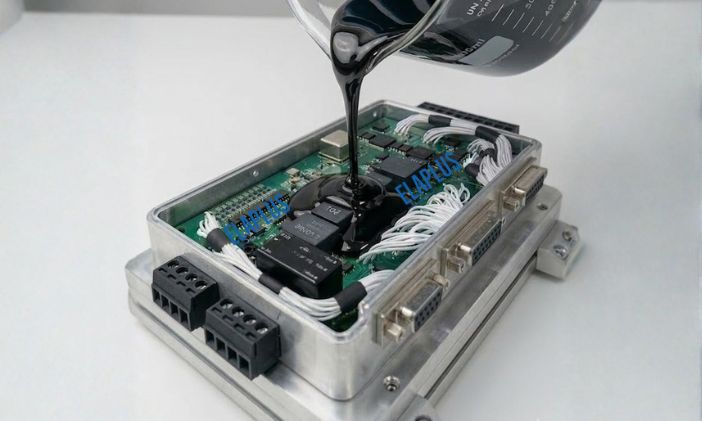
This product belongs to two-component addition molded silicone rubber material, which has good flowability and stable curing performance after mixing, and can achieve deep encapsulation protection for complex electronic structures.
Its material system takes into account:
Thermal conduction and heat dissipation
electrical insulation
Environmental sealing
Mechanical buffering
Suitable for packaging various electronic modules and power devices.
SIPA 1850-15 Product Core Features
1 two-component addition molded silicone rubber system
Adopting an additive silicone rubber formula, there is no release of by-products during the curing process, and the curing is stable and reliable.
2 1:1 mixing ratio
A/B component ratio mixing, suitable for automated dispensing or sealing equipment, with simple process operation.
3 Excellent Flow Performance
After mixing, it has good fluidity and can be easily filled:
PCB component gap
coil structure
Power module gap
Realize cavity free sealing.
- Low hardening shrinkage rate
The volume change during the curing process is small, which can effectively reduce the mechanical stress on electronic components.
Especially suitable for:
Precision Circuit
power module
sensor component
5 Excellent Electrical Insulation Properties
Organic silicon materials themselves have excellent electrical insulation properties and can maintain stable performance in high temperature environments.
6 Good waterproof and moisture-proof capabilities
After sealing, a complete sealing layer is formed, which can effectively block:
moisture intrusion
Dust pollution
corrosive gas
Significantly improve the reliability of electronic modules.
7 room temperature deep curing
The product can be deeply cured at room temperature and is suitable for potting structures of different thicknesses.
Environmental and safety standards
SIPA 1850-15 fully complies with international environmental standards:
RoHS Directive
REACH regulation
SVHC high concern substance requirements
Suitable for application in automotive electronics and export electronic devices.
Typical application areas of SIPA 1850-15
This thermal conductive silicone sealant is widely used in the electronics and new energy industries
Automotive Electronics
Electrode controller
power module
ECU electronic module
new energy sector
Electric vehicle charging station module
Solar junction box
Inverter power module
electronic power supply
LED power driver module
power adapter
Power control module
Energy storage and battery system
lithium battery pack
Capacitor pack packaging
Battery Management System
electromagnetic component
Magnetic induction coil
transformer
Inductive components
The role of sealant in electrode controller
Using thermal conductive sealant to encapsulate electrode controllers can achieve multiple protections:
Thermal management
Improve module heat dissipation efficiency and reduce device temperature rise.
Structural fixation
Prevent components from loosening or falling off in a vibrating environment.
electrical insulation
Protect the circuit from leakage and breakdown.
Environmental sealing
Block the entry of water vapor, dust, and corrosive media.
Extend equipment lifespan
Significantly improve the long-term reliability of electronic modules.
Conclusion
With the development of new energy vehicles, energy storage systems, and industrial electronic equipment, the requirements for reliability and environmental adaptability of electronic modules are becoming increasingly high.
By using SIPA 1850-15 thermal conductive silicone sealant for electrode controller packaging, the following issues can be effectively addressed:
Heat dissipation issue
waterproofing issue
Electrical insulation issues
Mechanical protection issues
Thus comprehensively improving the stability and service life of the equipment

